Date: 09/06/2025 09/07/2025
Location: Star River Meditation Center
Teacher: Yunquan Huang
Dharma Knowledge
Is Liberation an Escape from the World
When people hear the word “liberation” in a Buddhist context, they often imagine it as an escape from the world—detachment from society, renunciation of life, or disappearance into some void. But from the standpoint of authentic Dharma, liberation is not a departure from the world, but a profound transformation of one’s relationship to it. It is not about physically leaving the world behind, but about freeing the mind from bondage—freeing it from craving, aversion, and ignorance.
The Buddha described liberation (nibbāna) as the cessation of suffering, the ending of clinging, the extinguishing of the fires that drive the cycle of birth and death. Yet, this doesn’t mean that one who is liberated ceases to exist or detaches from life itself. Rather, they see clearly the nature of things: impermanence, non-self, interdependence. This clarity dissolves the delusions that cause suffering. A liberated person still walks, eats, speaks, and interacts—but they do so without ego, without grasping, and without fear.
Thus, liberation is not withdrawal from life, but a different way of living. It is a state of complete freedom within the conditions of existence. One may live in a forest or a city, remain silent or teach publicly—the outer form is not the measure of liberation. What matters is whether the heart is free. As the Buddha himself said, “Not by seclusion alone does one become a sage; it is by freedom of mind.”
Many of the Buddha’s enlightened disciples continued to serve, teach, and engage with the world after their awakening. In Mahāyāna traditions, Bodhisattvas vow to remain in the world, returning again and again to benefit sentient beings—even though they themselves are already free from the cycle of rebirth. They do not cling to nirvana, nor are they trapped by samsara. They move through both with wisdom and compassion.
The Buddha’s own life is the best example of liberation-in-action. After his awakening, he did not retreat into silence or isolation. He spent forty-nine years walking among people—teaching kings and outcasts, tending to the sick, responding to praise and insult alike. His life shows that the awakened mind is not above the world, but fully present within it—untainted, yet responsive.
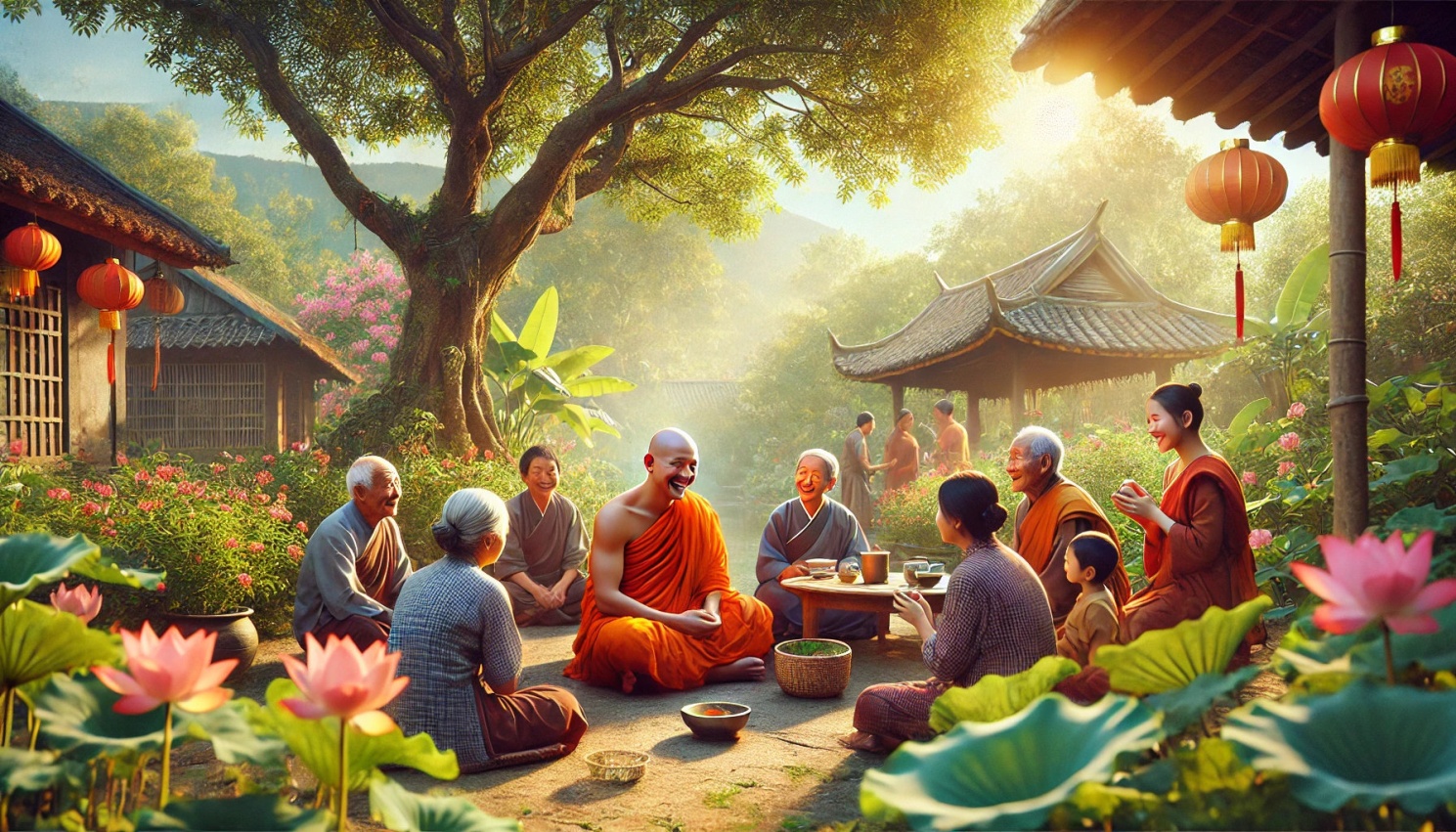
True liberation, then, is not about removing oneself from the world, but about removing the delusion that we are bound by it. It is the end of inner bondage, not the erasure of external conditions. The liberated one is like a lotus in muddy water—rooted in the world but untouched by its stains. He or she lives simply, clearly, wisely—not driven by greed or fear, but moved by compassion and understanding.
This state of freedom is not beyond reach. The Buddha called his path “immediately effective, visible here and now.” Even before full enlightenment, we can experience glimpses of freedom—each time we let go of attachment, each time we meet life with awareness instead of reactivity. Liberation is a process, not a binary. It begins the moment we turn toward truth.
So, liberation is not about leaving the world—it is about living deeply within it, but not being defined by it. It is not escape, but realization. Not avoidance, but understanding. Not rejection, but transcendence. A truly liberated being does not vanish from the world, but becomes its most awakened participant—moving through life with clarity, love, and unshakable peace.