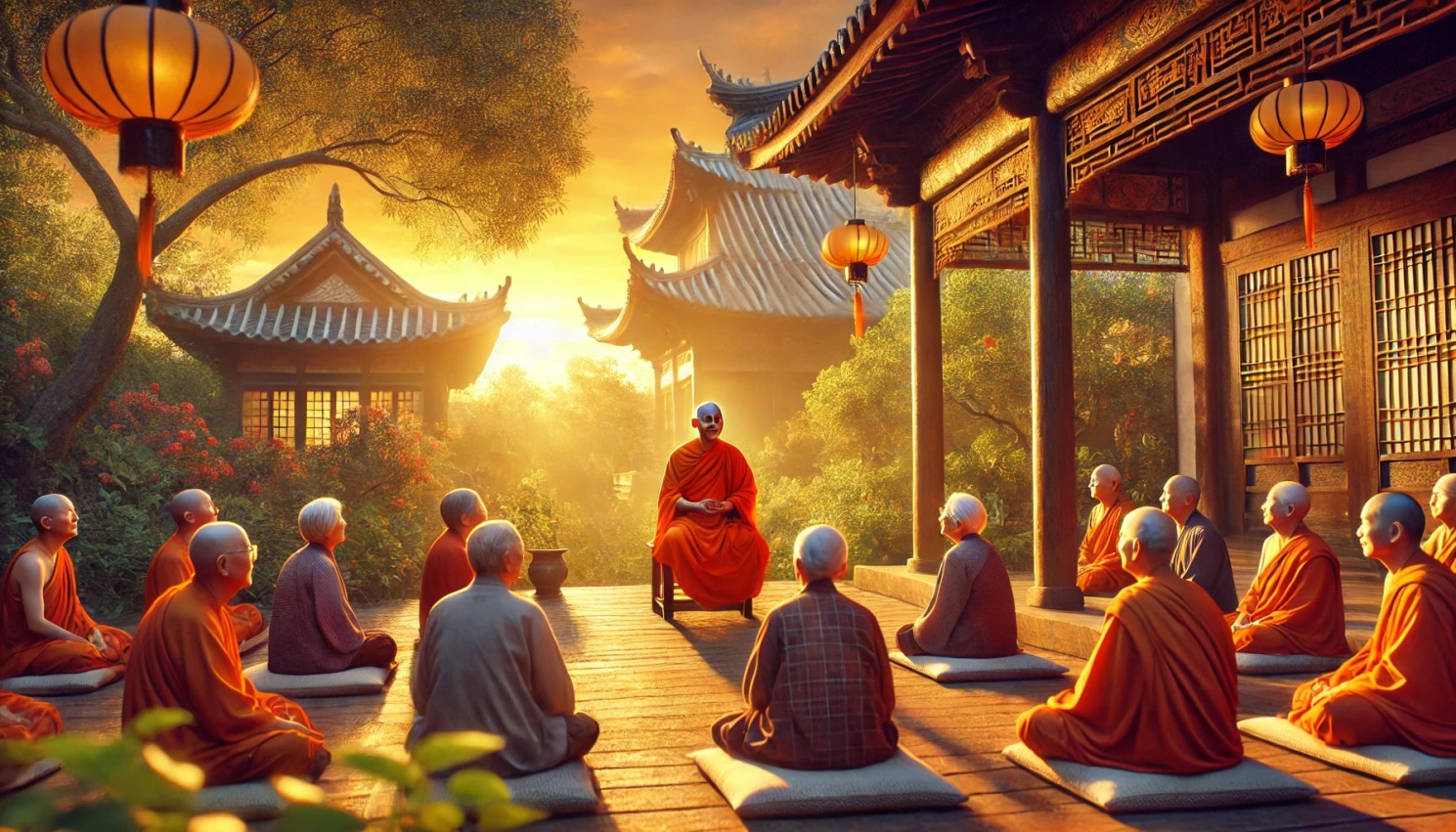
Date: 07/06/2024 07/07/2024
Location: Star River Meditation Center
Teacher: Yunquan Huang
Dharma Knowledge
The Truth of Suffering: Why Life Involves Suffering
In Buddhism, suffering is not presented as an emotional judgment or a pessimistic outlook on life, but as a clear and honest description of human existence. After his awakening, the Buddha did not begin by offering consolation or ideal visions of salvation. Instead, he began with reality as it is: life involves suffering. This insight is known as the First Noble Truth—the Truth of Suffering. Its purpose is not to depress, but to awaken clarity and open the way toward liberation.
When the Buddha spoke of suffering, he was not referring only to intense pain, tragedy, or misfortune. He was pointing to all experiences that are unstable, unsatisfactory, and incapable of providing lasting fulfillment. Birth, aging, illness, and death are the most obvious forms of suffering, unavoidable for all living beings. Beyond these are subtler forms: separation from what we love, association with what we dislike, failure to obtain what we desire, and the inherent pressure of the body and mind constantly changing. As long as one is alive, these forms of suffering inevitably arise in one way or another.
Crucially, the Buddha did not identify the external world as the true source of suffering. He observed that pain does not arise solely from events themselves, but from how the mind relates to them. The nature of reality is impermanence—everything changes, passes, and cannot be fully controlled. Yet human beings habitually expect permanence, stability, and certainty. When life fails to conform to these expectations, disappointment, fear, anxiety, and grief emerge. Suffering grows precisely from the attempt to hold onto what cannot be held.
At a deeper level, the root of suffering lies in attachment to a fixed sense of self. People instinctively believe in an enduring, independent “I” that owns experiences and must be defended. When the body deteriorates, relationships dissolve, status is lost, or death approaches, this imagined self feels threatened or erased. The Buddha saw that this fear is grounded in a fundamental misunderstanding. What we call the “self” is not a permanent entity, but a temporary combination of physical and mental processes arising through conditions. Because this illusion of self is taken as real, suffering becomes inevitable whenever change occurs.
The Buddha’s teaching on suffering is not a rejection of happiness or meaning in life. Rather, it reveals why even pleasurable experiences are unreliable. Joy fades not because it is wrong, but because it is conditioned and impermanent. When we demand permanence from what is by nature transient, suffering follows. The wisdom of the First Noble Truth lies in recognizing impermanence without resistance, allowing life to unfold without clinging.
Thus, the Truth of Suffering is not the conclusion of the Buddhist path, but its beginning. Only by honestly acknowledging suffering can one stop denying, distracting from, or suppressing inner unease. This acknowledgment creates the conditions for understanding its causes and discovering freedom. The Buddha did not merely state that life involves suffering; he went on to show why suffering arises, how it can cease, and how that cessation can be realized.
Life involves suffering not because existence is flawed, but because it is misunderstood. As long as ignorance persists, suffering continues. When wisdom arises, suffering may still appear, but it no longer controls the heart. This is the profound purpose of the First Noble Truth: to awaken insight, not despair; to reveal reality, not condemn life; and to guide beings toward genuine freedom through understanding.