Date: 12/27/2025 12/28/2025
Location: Star River Meditation Center
Teacher: Yunquan Huang
Dharma Knowledge
Buddhism and the Life of the Elderly
Old age is a profound and unique chapter in the journey of human life. As the body weakens, roles shift, loved ones pass away, and the end of life draws closer, many elderly individuals experience uncertainty, loneliness, or fear. Yet, from the perspective of Buddhism, aging is not the beginning of decline—it can be the ripening of wisdom, clarity, and spiritual maturity. When the noise of ambition fades and desires soften, it becomes easier to turn inward and contemplate the deeper truths of existence.
One of Buddhism’s central teachings is impermanence (anicca). Everything—our body, emotions, achievements, and relationships—is conditioned and constantly changing. In youth, we often cling to vitality and status; in old age, these naturally fade. Buddhism encourages us not to resist this impermanence but to accept it as part of the natural flow of life. Aging becomes less a loss and more a process of letting go, a training in freedom from attachment. When one no longer clings to being “young,” peace begins to blossom.
Another essential teaching is non-self (anattā). In our earlier years, we build up a strong sense of identity: “I am this job,” “I am this role,” “I own this.” But in aging, these identities begin to fall away—retirement, illness, and changing family dynamics gradually dissolve the ego’s structures. Rather than grieving these losses, Buddhism encourages us to use them as a gateway to deeper understanding. The self is not a fixed entity but a fluid process. Recognizing this brings a sense of spaciousness and relief.
When illness and the nearness of death become part of daily experience, the Dharma offers deep support. Buddhism does not see death as an end but as a transition in the ongoing cycle of causes and conditions. The purpose of practice is not to escape death but to meet it with awareness and peace. Elderly practitioners who engage in chanting, mindfulness, or reflection often report a greater sense of meaning and serenity, even in the face of physical decline. Such practices offer a sense of inner refuge that no external condition can disturb.
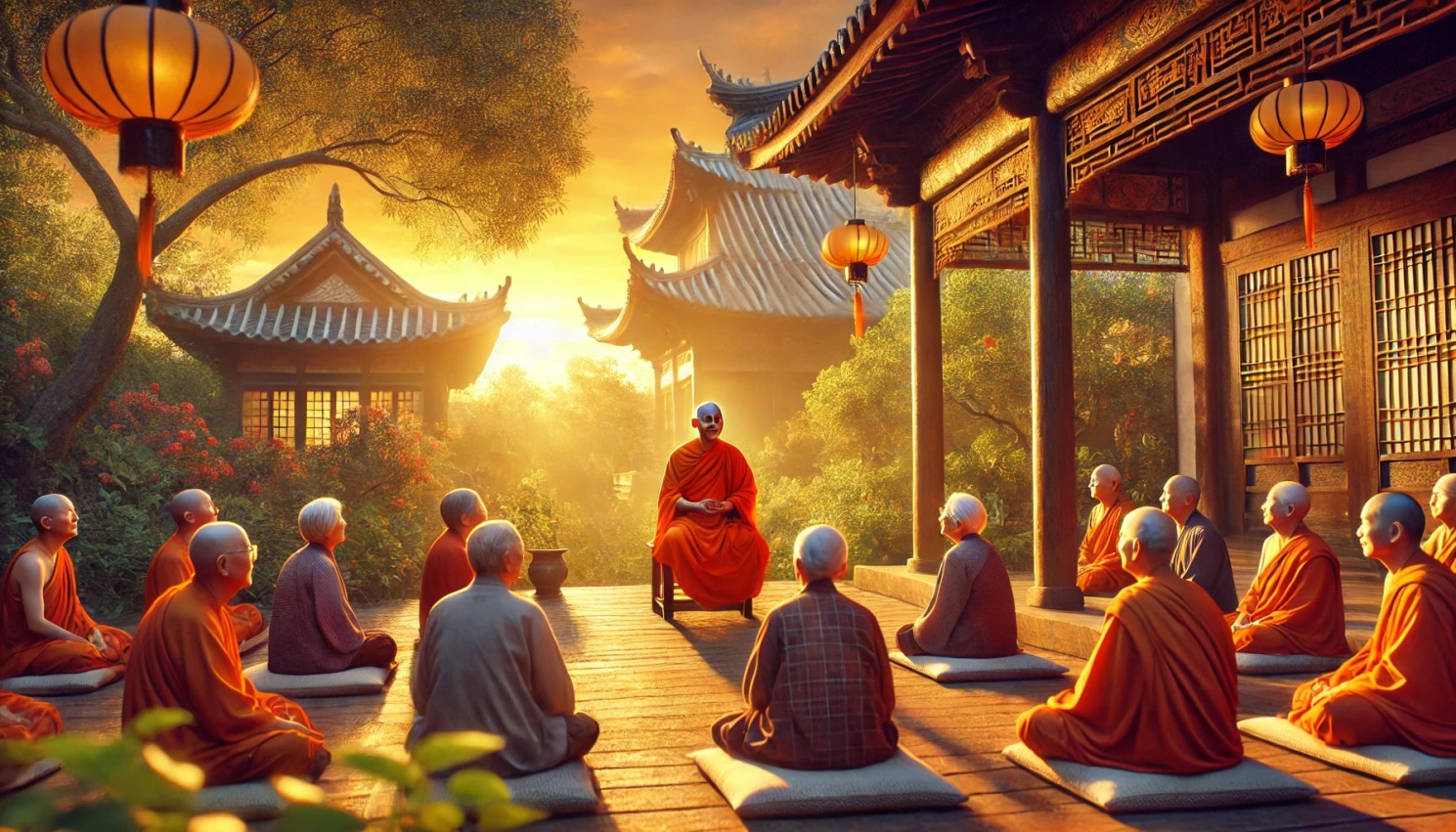
Socially, aging can bring a sense of isolation or invisibility. But Buddhism teaches the value of compassion and service, regardless of age. Even without physical strength, elders can offer kindness, wisdom, and presence to others. In fact, many elderly Buddhists become teachers—not through formal roles, but through their gentle example and steady heart. The Dharma asks not for youth, but for sincerity. Age becomes not a hindrance, but a field for ripened insight.
Ultimately, Buddhism reframes aging as a sacred opportunity, not a decline. It doesn’t deny the physical realities of aging, but teaches us how to transform those realities into spiritual strength. Through mindfulness, compassion, and letting go, elderly life becomes a time of beauty and depth. A person who walks slowly but sees clearly may go further on the path of awakening than one who runs aimlessly. In this way, the twilight years can become the most luminous stage of life.
Whether by supporting others, practicing meditation, or simply being present with awareness, the elderly have a profound role to play—not only in society, but in the unfolding of the Dharma itself. Aging, from a Buddhist view, is not the closing of a book—it is the final chapter of learning, letting go, and liberating the heart.