Date: 06/08/2024 06/09/2024
Location: Star River Meditation Center
Teacher: Yunquan Huang
Dharma Knowledge
How the Dharma Was Transmitted
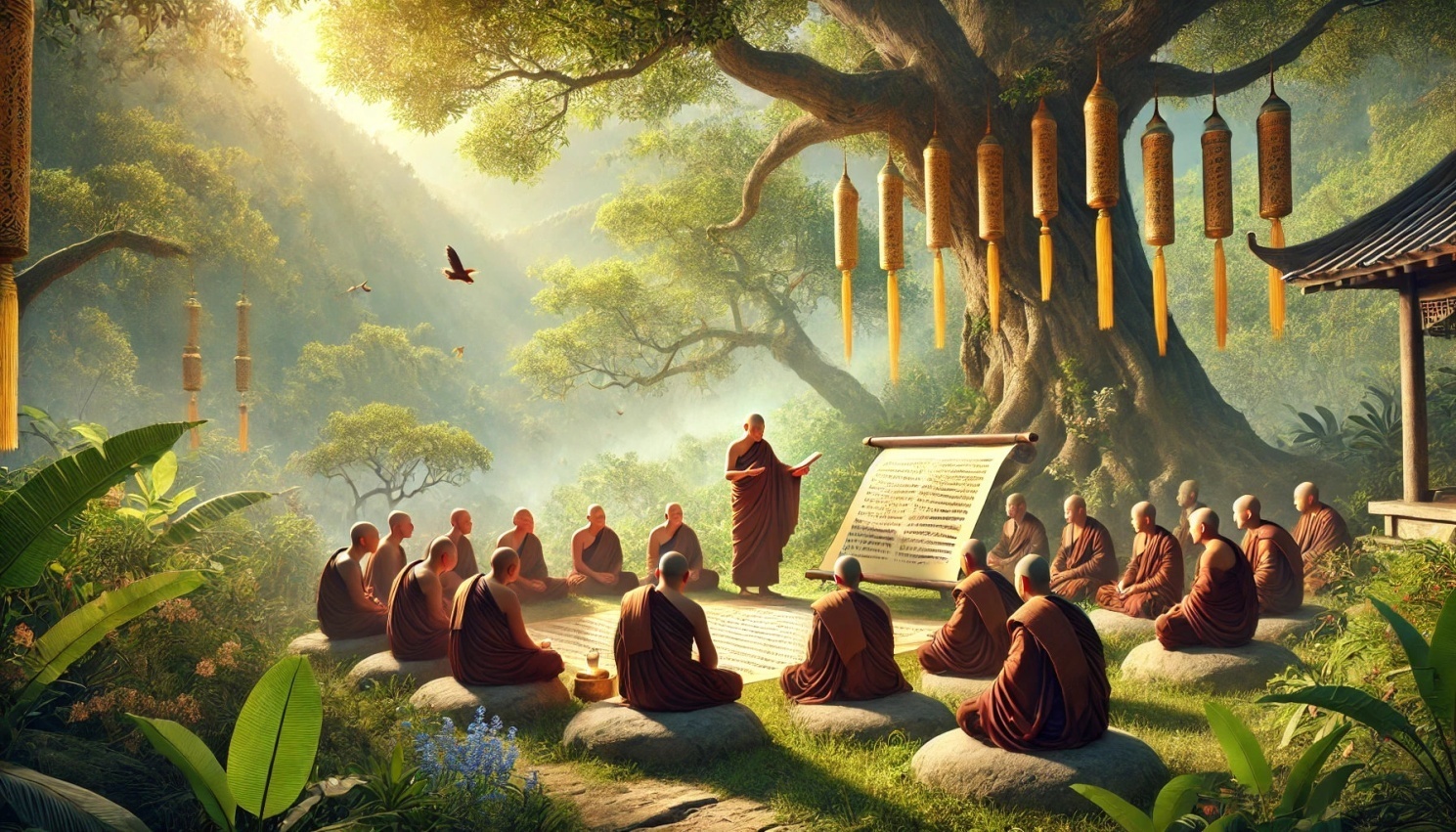
The transmission of the Dharma over more than 2,500 years is not a story of conquest or forced conversion, but a profound unfolding of wisdom passed heart-to-heart across generations. In the Buddha’s lifetime, the teachings were preserved and shared orally. His disciples listened, practiced, realized, and then taught others—forming a living chain of experience and realization. This oral tradition, rooted in direct teacher-student transmission, was the foundation of early Dharma preservation.
After the Buddha’s passing, the community of enlightened disciples recognized the urgent need to systematize and safeguard the teachings. Under the leadership of Mahākāśyapa, the First Council was convened, where five hundred arahants gathered to recite and verify the Buddha’s discourses and disciplinary rules. These oral recitations became known as the Sutta (discourses) and Vinaya (discipline) collections—the beginnings of the Buddhist canon and the structural backbone of the tradition.
As the Dharma spread geographically, different schools and interpretations emerged, shaped by the unique experiences and insights of various communities. The Theravāda tradition flourished in the south, while Mahāyāna and Vajrayāna traditions took root in the north. Despite doctrinal differences, these traditions share a common goal: liberation from suffering through ethical living, meditation, and insight.
A significant turning point came when the teachings were first written down. Several centuries after the Buddha’s death, monks in Sri Lanka, fearing the loss of memory due to war and famine, recorded the Pāli Canon on palm leaves. This was the first written preservation of the Tripiṭaka. Later, Mahāyāna texts such as the Prajñāpāramitā Sūtras, the Lotus Sūtra, and the Avataṃsaka Sūtra were also compiled and recorded in Sanskrit and other languages, forming a vast and diverse scripture heritage.
The monastic community (Saṅgha) played a central role in transmitting the Dharma. Through ethical discipline, teachings, and example, monks and nuns preserved the purity of the teachings and served as living conduits of the Dharma. Across cultures—from Chinese Chan monasteries to Tibetan gompas and Japanese Zen temples—the Sangha established lineages of study, practice, and transmission that ensured the Dharma’s survival and flourishing.
Translation efforts were pivotal in spreading the Dharma beyond India. In China, master translators such as Kumārajīva, Xuanzang, and Yijing brought thousands of Sanskrit texts into Chinese, often at great personal cost. Their translations laid the foundation for East Asian Buddhism. Elsewhere, similar efforts translated the Dharma into Tibetan, Mongolian, Japanese, Korean, and eventually Western languages—each adapting expression while preserving essence.
Art also became a powerful vehicle of Dharma transmission. From Indian cave murals and Gandhāran sculptures to Tibetan thangkas and Japanese mandalas, Buddhist art preserved symbols, stories, and sacred imagery. These visual representations inspired devotion, conveyed teachings, and provided cultural continuity—allowing even the illiterate to connect with the Dharma.
In modern times, the Dharma continues to spread through books, recordings, films, academic study, and digital technology. From meditation apps to YouTube Dharma talks, from global monastic tours to interfaith dialogues, the teachings of the Buddha reach seekers across continents and cultures. This global transmission is not driven by institutional power, but by the timeless relevance of the Dharma to the human heart.
Ultimately, the Dharma survives and thrives not because of structures, but because of truth. It resonates with the deep yearning in every being for freedom, peace, and understanding. It endures because there have always been those who practiced, preserved, translated, taught, and lived it—not for fame or gain, but out of compassion. Thus, the Dharma is not only a set of teachings—it is a living, breathing wisdom kept alive by the sincere efforts of awakened hearts across generations.