Date: 04/13/2024 04/14/2024
Location: Star River Meditation Center
Teacher: Yunquan Huang
Dharma Knowledge
A Summary of the Buddha’s Life
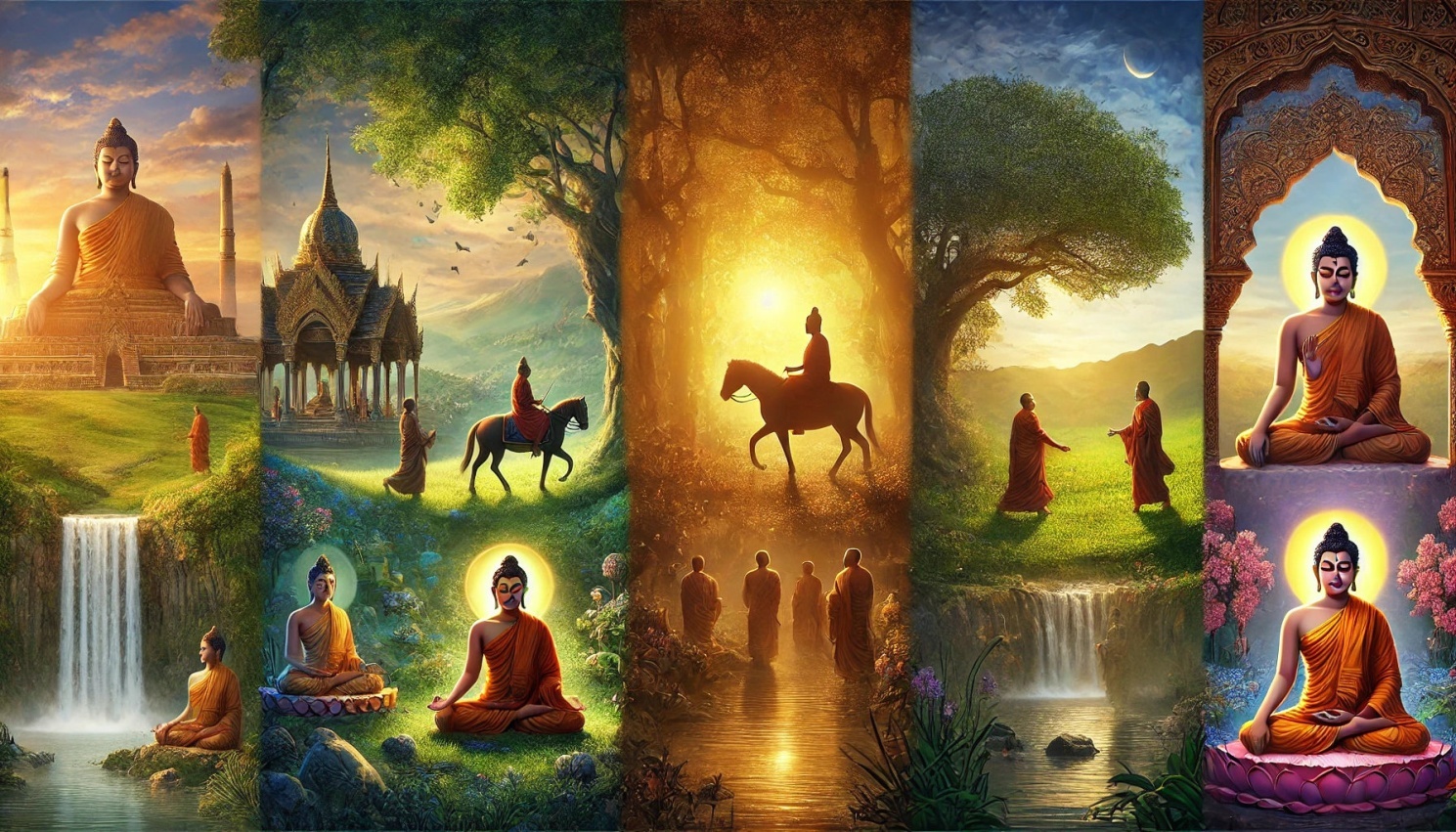
The life of the Buddha, from prince to awakened teacher, is a profound journey of renunciation, realization, and compassionate action. He was not a god nor a supernatural figure, but a human being who directly confronted the nature of suffering and attained complete freedom. His life is not only the foundation of Buddhism but a timeless inspiration for all who seek wisdom and liberation.
The Buddha was born as Siddhartha Gautama around the 6th century BCE in the kingdom of Kapilavastu, in present-day Nepal or northern India. His father was King Suddhodana, and his mother was Queen Māyā. According to legend, Siddhartha’s birth was accompanied by auspicious signs—he took seven steps and declared, “I alone am the world-honored one,” symbolizing his future awakening. A prophecy at his birth foretold that he would either become a great king or a fully enlightened sage. Hoping for the former, his father shielded him from all forms of suffering and immersed him in luxury.
However, Siddhartha’s life took a decisive turn when, at the age of 29, he encountered the “four sights” during excursions outside the palace: an old man, a sick man, a dead body, and a wandering ascetic. These experiences revealed to him the inevitability of aging, illness, and death, and awakened a deep spiritual crisis. He began to question the purpose of life and whether there existed a path beyond suffering. Determined to find answers, he left his royal life, his wife Yasodharā, and his newborn son Rāhula, and entered the forest to live as a renunciant.
In his quest, Siddhartha studied under renowned meditation masters and achieved high levels of concentration, but realized that mental absorption alone could not free him from suffering. He then practiced extreme asceticism, nearly starving himself to death. But this too failed to bring liberation. Recognizing the futility of extremes, he adopted the Middle Way—a balanced approach that avoids both indulgence and self-torture, emphasizing mindfulness, ethical conduct, and wisdom.
Sitting beneath the Bodhi Tree near the Nerañjarā River, Siddhartha made a solemn vow not to rise until he attained the truth. After seven days and nights of deep meditation, he realized the nature of existence: the cycles of birth and death, the workings of karma, and the interdependent arising of all phenomena. He saw that suffering originates from ignorance and craving, and that liberation is possible through insight and letting go. At age 35, he became the Buddha—the Fully Awakened One.
The Buddha did not keep this realization to himself. Out of compassion, he resolved to teach others what he had discovered. His first discourse, delivered at Deer Park in Sarnath to five former companions, introduced the Four Noble Truths and the Noble Eightfold Path, laying the foundation of the Dharma. For the next 45 years, the Buddha traveled across northern India, teaching kings and beggars alike, crossing castes and boundaries with a message of universal compassion and wisdom.
He accepted disciples from all walks of life—men, women, rich, poor, and outcasts. He founded the monastic community (Sangha), not as a hierarchical institution, but as a living embodiment of the Dharma. He emphasized direct experience over dogma, reason over blind faith, and ethical living as the root of spiritual growth. He encouraged people to “be a lamp unto yourselves,” urging personal inquiry rather than dependence on authority.
In his final days, the Buddha remained serene and mindful. At age 80, he entered parinirvana beneath twin sal trees in Kusinagara. His final words were: “All conditioned things are impermanent. Strive with diligence.” Rather than leaving behind a religion of worship, he left a path of practice and transformation—a legacy of awakening available to all.
The Buddha’s life was a living example of the path he taught. He moved from worldly comfort to spiritual hardship, from solitude to compassionate teaching. He renounced privilege not out of rejection, but out of love for all beings. His story shows that awakening is not confined to mystics or gods, but lies within the reach of anyone who seeks truth, lives mindfully, and cultivates the heart. His life is a beacon that continues to guide countless beings on the path of freedom.