Date: 07/19/2025 07/20/2025
Location: Star River Meditation Center
Teacher: Yunquan Huang
Sitting Meditation
The Arising of Meditative Joy: Where Does Happiness Come From?
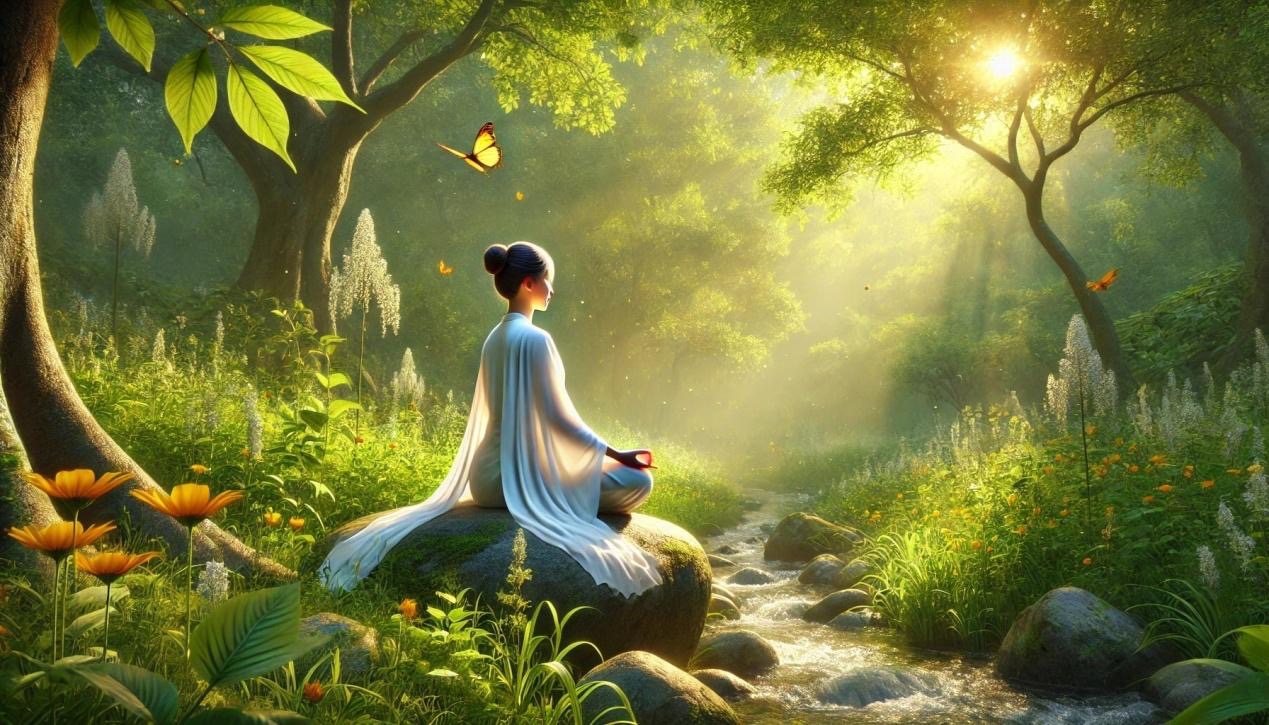
“Meditative joy” (pīti or prīti) is a deep, inner happiness that arises naturally in meditation.It does not depend on external stimulation but emerges when the mind grows quiet, relaxed, and purified.Understanding its source prevents practitioners from mistaking it for spiritual attainment or chasing it as an object of desire.
1.What Is Meditative Joy?
1.A joy not dependent on external conditions
It arises from within, not from sensory pleasure.
2.Calm, gentle, and stable happiness
It feels serene rather than excited.
3.A natural result of concentration
As the mind settles, joy begins to blossom.
4.A sense of inner nourishment
It refreshes the heart and dissolves fatigue.
2.Where Does This Joy Come From?
1.Relaxation of the body
A stable, comfortable posture releases tension and invites ease.
2.Mental tranquility
Fewer thoughts and reduced agitation create fertile ground for joy.
3.Letting go of grasping and resistance
Freedom from inner struggle opens space for delight.
4.The clarity of steady awareness
Bright awareness naturally produces a gentle happiness.
5.Temporary quieting of defilements
When greed, anger, and ignorance subside, joy arises on its own.
3.How Does Meditative Joy Feel?
1.Physical joy
Warmth, lightness, gentle vibrations, or a sense of floating.
2.Emotional joy
Softness, peace, gratitude, and contentment.
3.Spiritual joy
Clarity, openness, and a sense of inner expansion.
4.Why Is Joy Important in Practice?
1.A sign of growing concentration
It indicates that mind and body are aligning with meditation.
2.Nourishment for long-term practice
Joy sustains motivation and dissolves resistance.
3.A bridge toward deeper calm
Joy gradually matures into profound tranquility.
4.Support for wisdom
A joyful, gentle mind perceives truth more clearly.
5.Common Misunderstandings
1.Mistaking joy as the goal
Joy is a byproduct, not the endpoint.
2.Mistaking joy for awakening
It is pleasant but not liberating by itself.
3.Confusing meditative joy with sensual pleasure
Meditative joy is calm and stable, not stimulating or addictive.
4.Worrying when joy fades
All experiences are impermanent—including joy.
6.How to Allow Joy to Arise Naturally
1.Relax the body
Comfort without sloth, stability without stiffness.
2.Breathe naturally
Let the breath soften and refine itself.
3.Rest in awareness
Neither suppress nor chase thoughts.
4.Drop expectations
Joy arises when the mind stops demanding.
Conclusion
Meditative joy is a natural expression of a relaxed body and a quiet, clear mind.It arises on its own—unforced and uninvited—when tension and grasping dissolve.Do not chase it; simply practice with ease, and joy will naturally bloom.

