Date: 12/20/2025 12/21/2025
Location: Star River Meditation Center
Teacher: Yunquan Huang
Dharma Knowledge
Buddhism and Modern Technology
Modern technology has transformed human life in profound ways. The internet, artificial intelligence, biotechnology, and digital communication have made the world faster, more connected, and more efficient—yet also more fragmented, anxious, and ethically complex. Buddhism does not reject technology, nor does it idealize a return to a pre-modern past. Instead, it offers a foundational insight: technology itself is neutral; the mind that uses it determines whether it becomes a cause of suffering or a support for well-being.
From a Buddhist perspective, technology arises through dependent origination. It is the result of collective intentions, needs, intelligence, and conditions. As such, technology carries no inherent moral status. It can heal or harm, liberate or enslave. The Dharma asks not, “Is technology good or bad?” but rather, “Does it increase greed, aversion, and delusion—or does it reduce them?” When technology fuels endless consumption, manipulation, or environmental destruction, it amplifies suffering. When it supports education, healthcare, communication, and compassion, it becomes a beneficial condition.
One defining feature of modern technology is speed. Information travels instantly; attention is constantly pulled. Buddhism responds not by resisting speed, but by cultivating mindfulness within it. Mindfulness invites us to notice how we use devices, why we scroll, what emotions are triggered, and how our attention is shaped. When awareness accompanies our technological habits, technology no longer dominates the mind—it serves it.
The rise of artificial intelligence has also prompted deep questions about consciousness, creativity, and agency. Buddhism offers a calm and clarifying framework. It distinguishes between cognitive processing and awakening awareness. Even the most advanced AI operates through conditioned patterns and data; it does not possess awareness or liberation. This perspective helps us avoid both fear and over-identification. At the same time, AI can be used skillfully—to enhance learning, support medicine, and serve humanitarian goals—when guided by ethical intention and compassion.
Biotechnology and medical innovation raise similar questions. Extending life and alleviating suffering are noble aims, yet Buddhism warns against clinging to life out of fear of impermanence. The Dharma teaches acceptance of change and wise care for the present. Integrating Buddhist wisdom into medical contexts means honoring dignity, reducing suffering, and making decisions grounded not only in capability, but in compassion. Technology then becomes a servant of life, not an object of obsession.
On a social level, technology reshapes relationships. It connects us widely but can isolate us deeply. Communication is rapid, yet misunderstanding spreads just as fast. Here, Buddhist principles such as Right Speech, patience, and loving-kindness are more important than ever. Every post, message, or generated output becomes an ethical act, planting seeds that can heal or harm. Technology magnifies impact—and with it, responsibility.
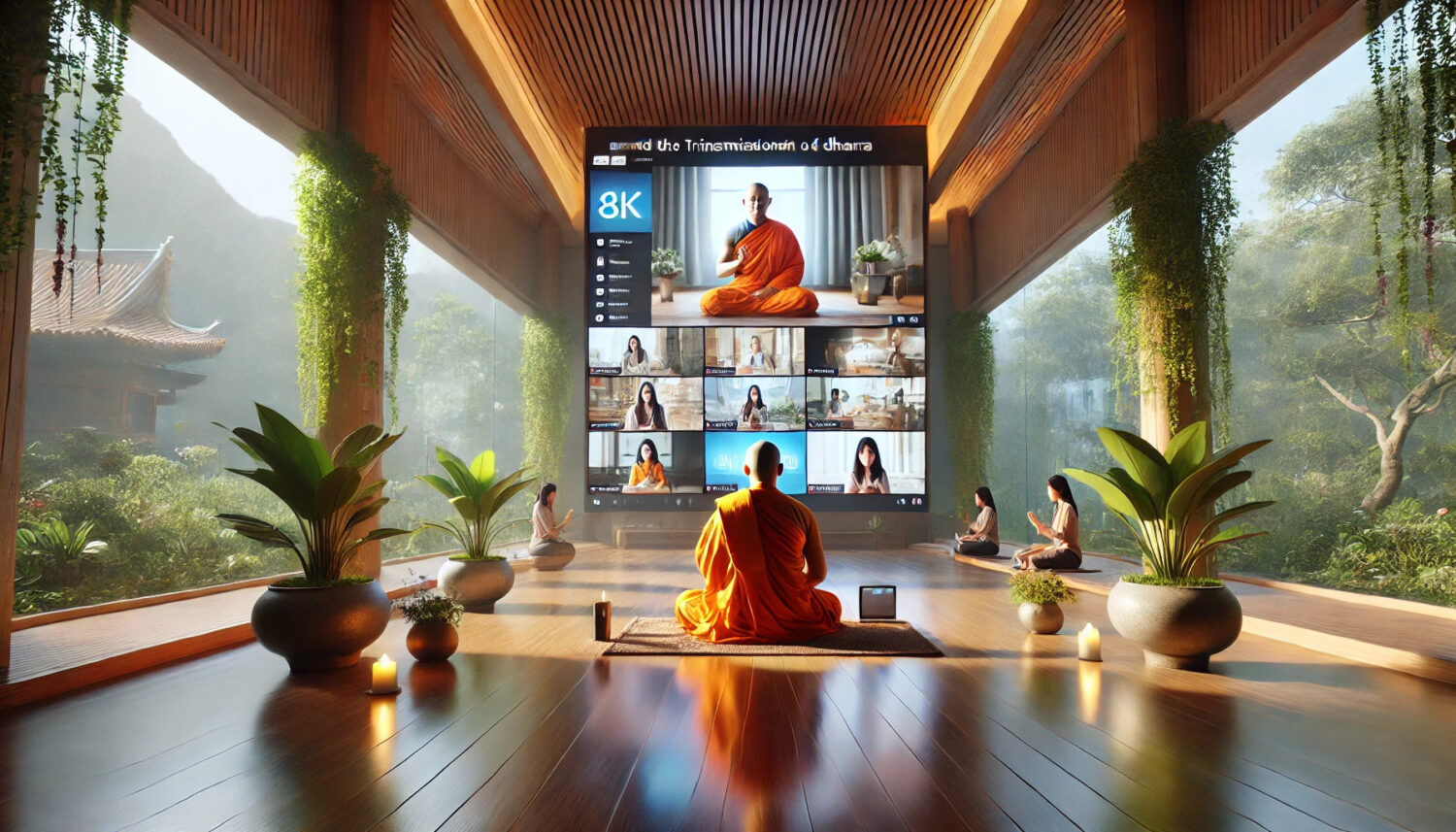
Ultimately, Buddhism and modern technology are not opposites. Buddhism provides direction and restraint; technology provides capacity and reach. Without wisdom, technology accelerates suffering; without practical engagement, wisdom remains abstract. When technology is guided by mindfulness, compassion, and ethical clarity, it can support human flourishing. When the Dharma is expressed through modern tools, its benefits can reach further than ever before.
True progress, from a Buddhist view, is not measured only by innovation or efficiency, but by the maturity of the human heart. When our technologies reflect clarity rather than craving, and our minds remain awake amid constant change, modern life itself becomes a field of practice—where awakening is not postponed, but lived here and now.