Date: 04/26/2025 04/27/2025
Location: Star River Meditation Center
Teacher: Yunquan Huang
Dharma Knowledge
Practice and Daily Life
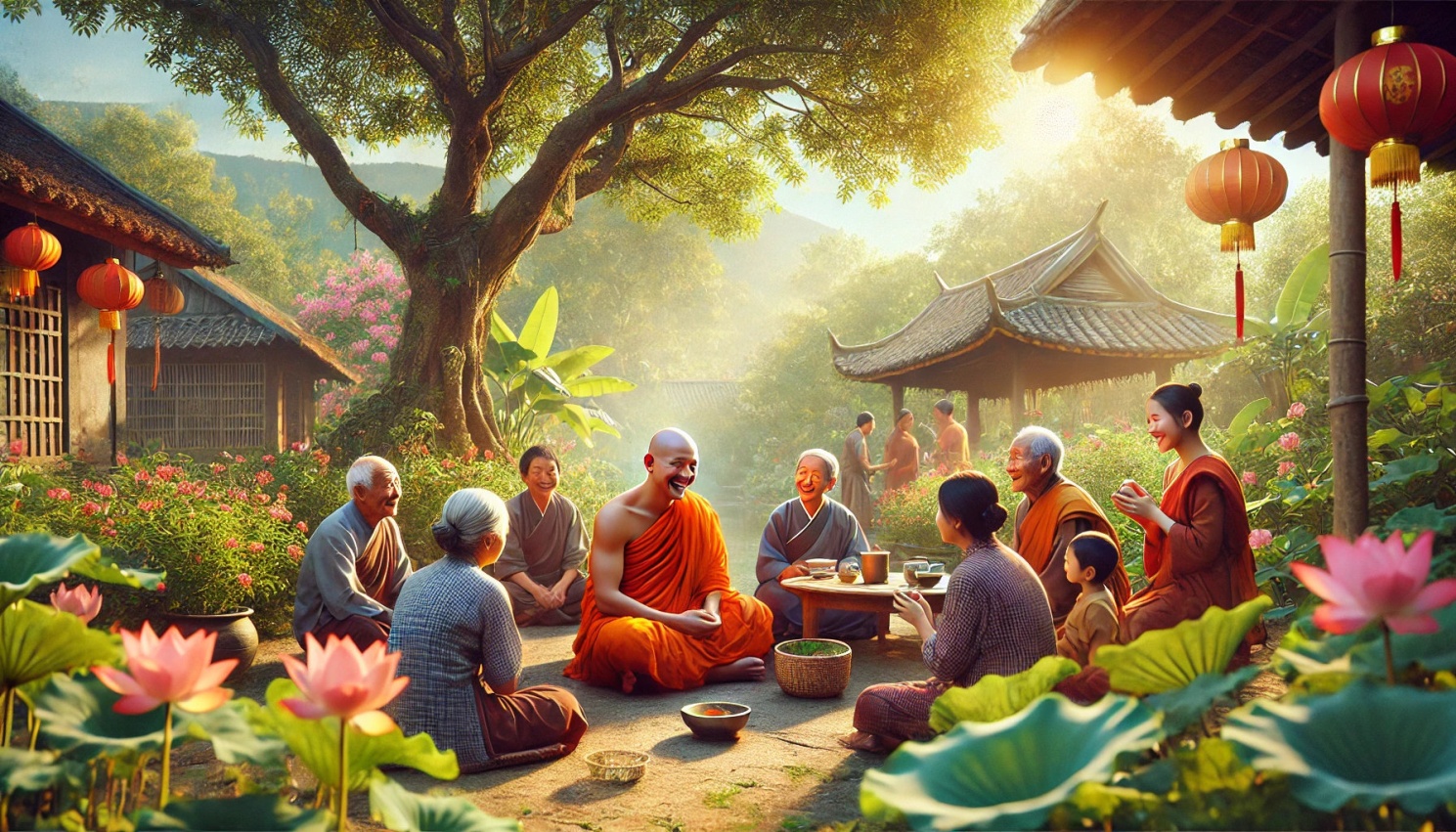
Spiritual practice is not confined to temples, monasteries, or silent meditation halls. True practice does not require withdrawal from the world—it unfolds in the midst of daily life. If one’s practice only exists during meditation sessions or religious rituals, but does not transform their way of speaking, relating, and reacting, then it remains superficial. The Dharma, by its very nature, is not limited to special settings—it permeates all realms and can be lived in every situation. Daily life is not a hindrance to practice; it is the very ground of awakening.
In family life, practice shows as patience, care, and understanding. Can we respond to a loved one’s anger with compassion? Can we let go of the need to control and instead listen deeply? In work, practice manifests as integrity, responsibility, and non-greed. Can we uphold ethical conduct under pressure? Can we remain kind amidst competition, clear amidst ambition? These are the places where practice is tested and refined.
Practice is not just about the hour we spend on the cushion—it’s about how we stand up from that cushion. Meditation trains stability; life tests it. If one can focus on the breath but not notice anger rising in a conversation, awareness has not matured. The purpose of practice is to transform the way we live, and that transformation must reach our choices, our speech, our relationships.
The Buddha did not teach withdrawal from life; he taught awakening within it. After his enlightenment, he spent 49 years walking among kings and beggars, marketplaces and forests, using ordinary life—birth, death, sickness, love, loss—to convey the profound truths of Dharma. This shows that spiritual life is not about escaping reality but engaging it with awareness.
Daily life is where defilements arise—and thus, where wisdom begins. Every conflict is an opportunity to see ego. Every delay trains patience. Every failure teaches letting go. Because life constantly presents challenges, it becomes the most potent ground for practice. As the Zen saying goes, “Walking is Zen, sitting is Zen; speaking and silence, motion and stillness—all are the Way.” What matters is not what we’re doing, but with what awareness we do it.
Of course, integrating practice into life doesn’t mean abandoning formal discipline. Daily recitation, meditation, or chanting builds the foundation for inner steadiness. These forms are not ends in themselves, but tools to support mindfulness and clarity. When we carry this clarity into daily interactions—speaking with care, eating with awareness, working without attachment—we bring the fruits of practice into living experience.
Eventually, the aim is seamlessness—not being a practitioner only in sacred settings, but in every moment. When we wash dishes and reflect on impermanence, when we drive and practice patience, when we care for others and cultivate compassion, when we face insult and let go of pride—that is practice. It means Dharma has left the texts and entered our breath, our hands, our choices.
Therefore, true practice is not separate from daily life—it is daily life transformed. It is not about escape, but engagement. Not about retreating from society, but refining how we live within it. A genuine practitioner is not measured by robes or rituals, but by their ability to remain kind when tired, honest when afraid, and mindful when life is loud. When Dharma lives in each meal, each smile, each breath—then real practice has begun.