Date: 01/04/2025 01/05/2025
Location: Star River Meditation Center
Teacher: Yunquan Huang
Dharma Knowledge
Is Ordination Necessary to Practice Buddhism
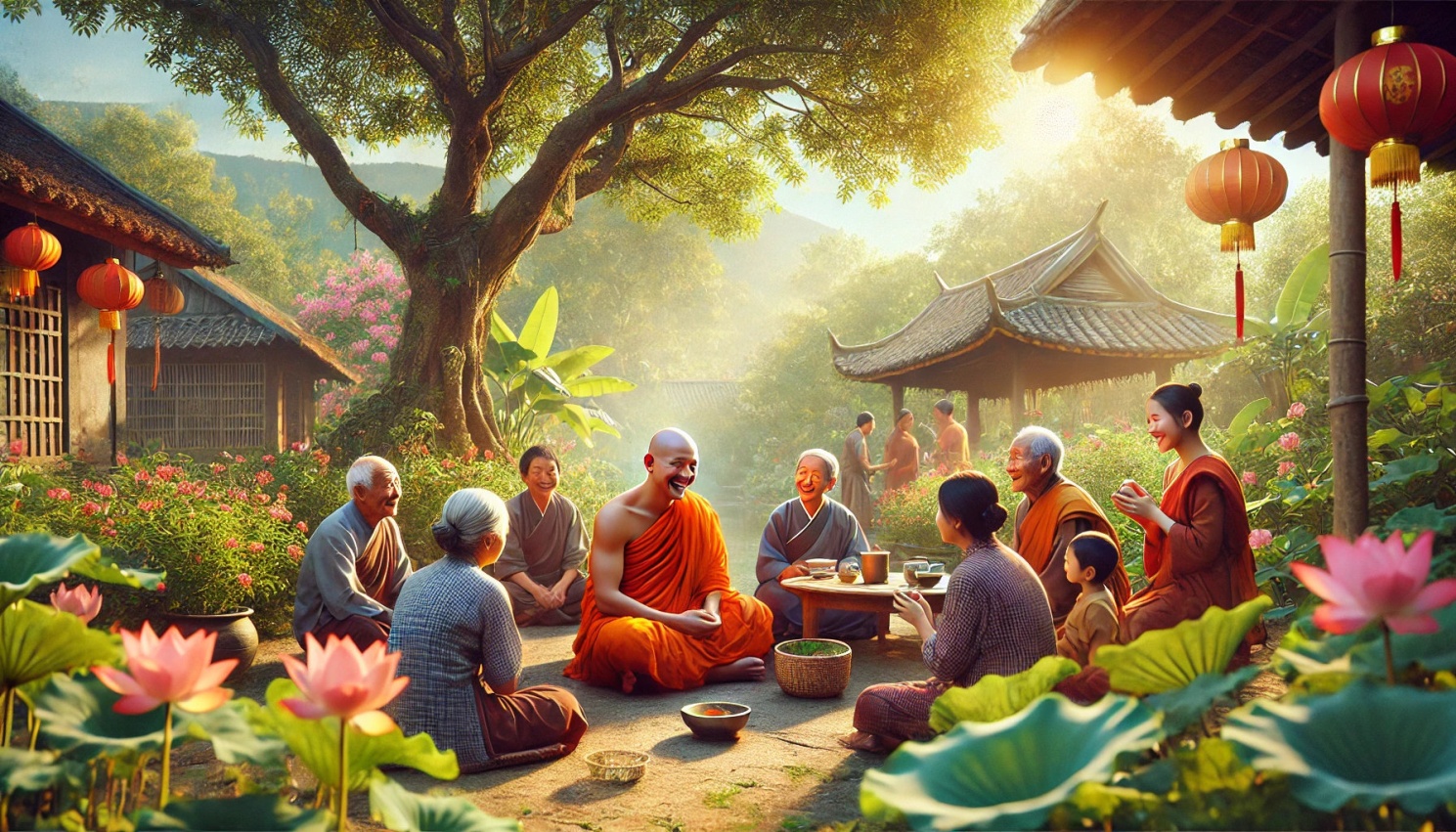
“Do you have to become a monk or nun to practice Buddhism?” This is a common question among those new to the path. In popular perception, Buddhism is often associated with monastic life—shaved heads, robes, silent retreats, and renunciation of the world. While monasticism is indeed a powerful and respected form of practice, the essence of the Dharma transcends external roles. One does not have to leave home to follow the path of awakening. What truly matters is one’s understanding, intention, and conduct—not whether one wears robes or lives in a monastery.
The Buddha did establish the monastic Sangha as a vital part of the Buddhist community. Monks and nuns live by strict precepts, renounce worldly obligations, and devote themselves fully to meditation, study, and ethical conduct. For those who deeply aspire to liberation and are ready to let go of sensual attachments, the monastic life provides a stable and supportive environment. But the Buddha never taught that only monastics can attain enlightenment. In fact, the scriptures are filled with examples of laypeople—householders, merchants, kings, and women—who realized deep insights and even became arhats or bodhisattvas, such as Vimalakirti, the merchant Sudatta, or Queen Mallika.
In Buddhism, what is most valued is not social identity butright view and right action. A monastic who lacks sincerity or acts contrary to the Dharma is not necessarily closer to awakening than a layperson. Conversely, a layperson who lives ethically, practices generosity, cultivates mindfulness, and seeks wisdom is already walking the path. TheUpāsaka Precepts Sutra emphasizes that lay practitioners who keep precepts and practice diligently will not lose their merit; and in theMahāparinirvāṇa Sūtra, the Buddha declares: “If a layperson follows the true Dharma, they are to be considered as truly ordained.”
Lay practitioners do face specific challenges—balancing work, family, and social responsibilities while maintaining a path of inner cultivation. But these challenges can become powerful practice grounds. How do we practice patience with our spouse or children? How do we speak truthfully in the workplace? How do we remain generous and kind in a competitive world? These are not obstacles to the path—they are the path. For laypeople, the world itself becomes the monastery, and everyday life becomes the arena of practice.
The goal of Buddhism is not to escape the world, but totransform one’s relationship with it. True practice means facing life with awareness, compassion, and equanimity. It means not necessarily abandoning one’s family, but living in the family with a mind of non-attachment and responsibility. That’s why the Buddha offered clear ethical and spiritual guidelines for lay practitioners—such as the Five Precepts, the Ten Wholesome Actions, the Six Perfections, and the Noble Eightfold Path—so that one can walk the Dharma path without leaving the world behind.
Of course, for some, a time may come when the aspiration to ordain arises naturally from deep reflection and renunciation. That, too, is a valid and honorable path. But ordination is not “better” than lay life—it is simply a different vehicle. What matters most is the inner direction of the heart. As the Buddha said, “Though one may shave the head and wear robes, if one acts with delusion, they are not truly a renunciant. If one lives at home and follows the Dharma, they are truly ordained.”
In conclusion, becoming a monk or nun is not required to practice Buddhism. True practice means transforming the mind, living ethically, cultivating wisdom, and walking with compassion. Whether in robes or in a household, what counts is not form, but the quality of awareness and intention. Ordination is a form;liberation is the essence. And the path to that liberation is open to all who seek it with sincerity and courage.