Date: 05/18/2024 05/19/2024
Location: Star River Meditation Center
Teacher: Yunquan Huang
Dharma Knowledge
The Daily Life of the Buddha
The Buddha’s life after enlightenment was not one of seclusion, mysticism, or privileged comfort. Instead, it was a life of deep simplicity, constant mindfulness, and tireless service. He chose not to live in palaces or temples, did not accumulate wealth or possessions, and never placed himself above others. His daily routine reflected his teachings—unadorned by ego, rooted in clarity, and fully devoted to the well-being of all beings. Through his daily life, the Buddha embodied the Dharma, making his actions a living example for generations to follow.
The Buddha’s day typically began in the pre-dawn hours. He would rise early and enter meditation, abiding in a state of deep clarity and stillness. During this time, he contemplated the mental and karmic states of his disciples and other beings, discerning who was ready to hear the Dharma and what teachings would benefit them most. Then, as daylight approached, he would prepare his robes and alms bowl and set out on foot with his monastic community for the morning alms round.
The Buddha walked barefoot through villages and cities, accepting whatever food was offered without judgment or preference. He never sought rich offerings or honored houses, and he received gifts from the wealthy and the poor with the same gratitude. The alms round was not merely a way to obtain food—it was part of his practice, a daily expression of humility, mindfulness, and interdependence. He taught his disciples to remain serene during alms rounds, not clinging to food or reacting to praise or scorn.
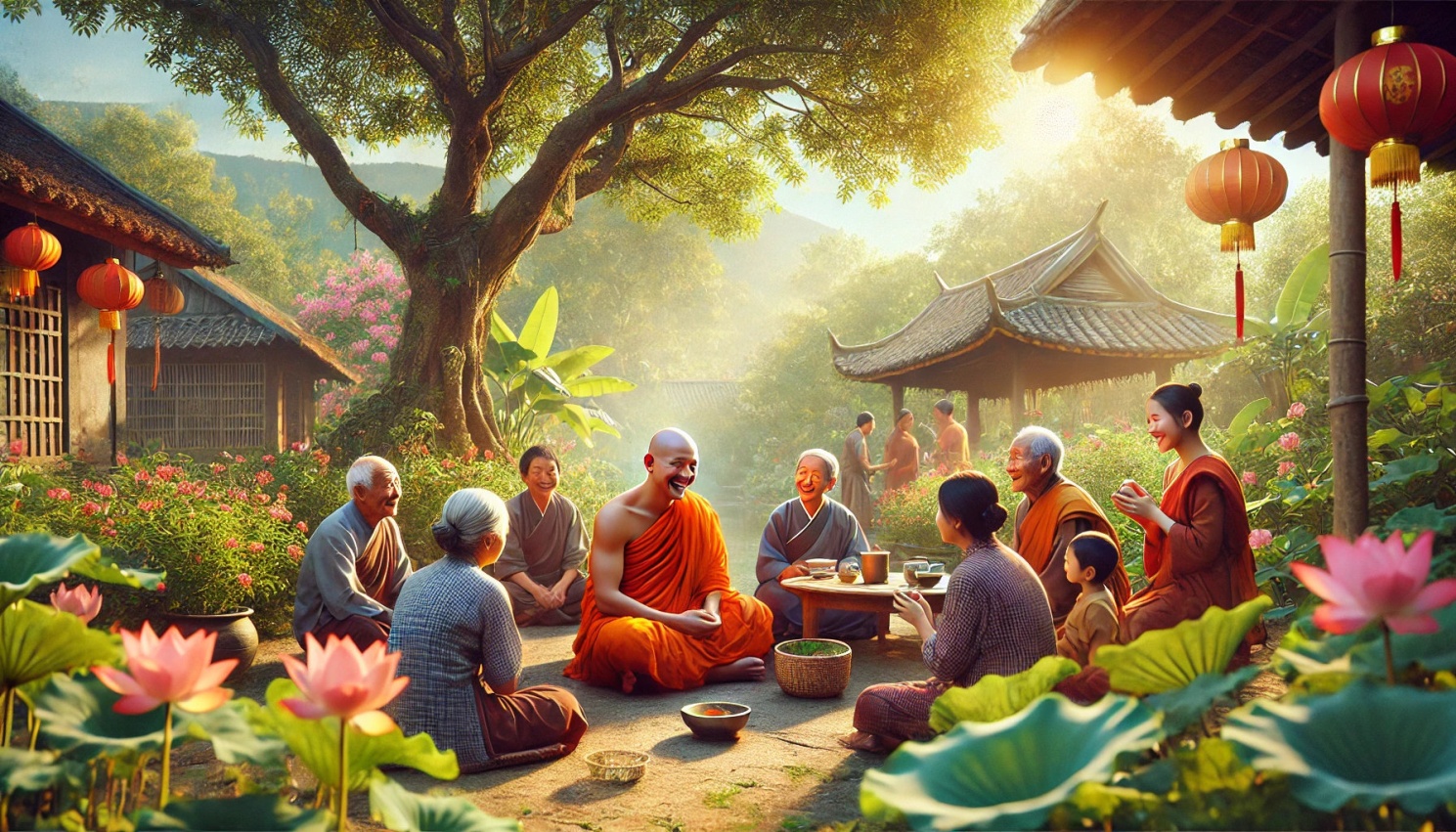
After returning from alms and eating the simple midday meal—his only meal of the day—the Buddha would rest briefly. In the afternoon, he would often meet with monks, nuns, or laypeople who came to seek guidance. He taught in clear, practical language, adapting his message to the individual’s needs. For beginners, he spoke of ethical living, generosity, and mindfulness; for advanced practitioners, he expounded on deeper truths such as emptiness and dependent origination. He did not lecture from a distance but engaged in warm, direct dialogue.
Later in the day, the Buddha would walk in quiet contemplation or sit in meditation. He also spent time supervising the monastic community, offering advice, settling disputes, and correcting errors in conduct. His leadership was never authoritarian. He guided through insight, patience, and example. He observed each disciple with great care, recognizing their unique tendencies and guiding them with compassion and precision.
Evenings were often devoted to more teachings or meditation. Sometimes visitors came late at night to ask questions or request instruction, and the Buddha would receive them without irritation. His life was fully dedicated to helping others. Despite constant travel, frequent teaching, and little rest, he showed no signs of fatigue or frustration. His energy flowed not from desire, but from compassion and inner peace.
Outside of his daily rhythm, the Buddha frequently traveled on foot to different regions—villages, forests, mountains, and royal courts—bringing the Dharma wherever it was needed. Whether teaching kings or comforting the sick and poor, he maintained the same gentle presence and clarity. He wore simple robes, slept on the ground or in forest shelters, and lived without possessions. His dignity came not from material wealth, but from integrity and realization.
Although revered as “Teacher of gods and humans,” the Buddha’s daily life was deeply human. It was a rhythm of meditation, ethical conduct, teaching, and mindful presence. Every step, every gesture, and every word was a reflection of his awakening. He made no distinction between the sacred and the mundane—his entire life was the Dharma in motion.
In this way, the Buddha demonstrated that enlightenment is not distant or supernatural. It is a way of living. Through his daily conduct—quiet, consistent, compassionate, and wise—he showed that freedom is not found in escape from life, but in engaging life fully with understanding and compassion. His life remains a model of what it means to live awake.