时间:08/30/2025 08/31/2025
地点:星河禅修中心
主讲:黄云全
佛法修行
罗汉与大象
从前,有兄弟二人随佛出家。哥哥每天精进持戒,打坐参禅,却忽略了随众作务,只勤修定慧,少修福德;弟弟则是勤劳工作,布施济众,广修福德,但不能守持如来清净戒律,多有毁犯。
后来哥哥往生之后转世为佛陀的弟子,修得了罗汉道,而弟弟却投生到大象群中,变成了象王。因为这头象前世布施修福,这一生有大福报,不但色泽美丽光滑,更是力大无比。国王非常宠爱这头大象,把大象封为「百户王」,并用金银珠宝把它装饰起来,并派专人照顾大象的饮食起居,让它在宫廷过着舒适奢华的生活。
修成罗汉的哥哥情况就不一样了,一次国内饥荒,罗汉哥哥他衣衫褴褛,托钵七日,都是空钵而回,饥饿和寒冷一直困扰着他。他饿得连腰都直不起来了,有时只得少许饮食,茍延生命。
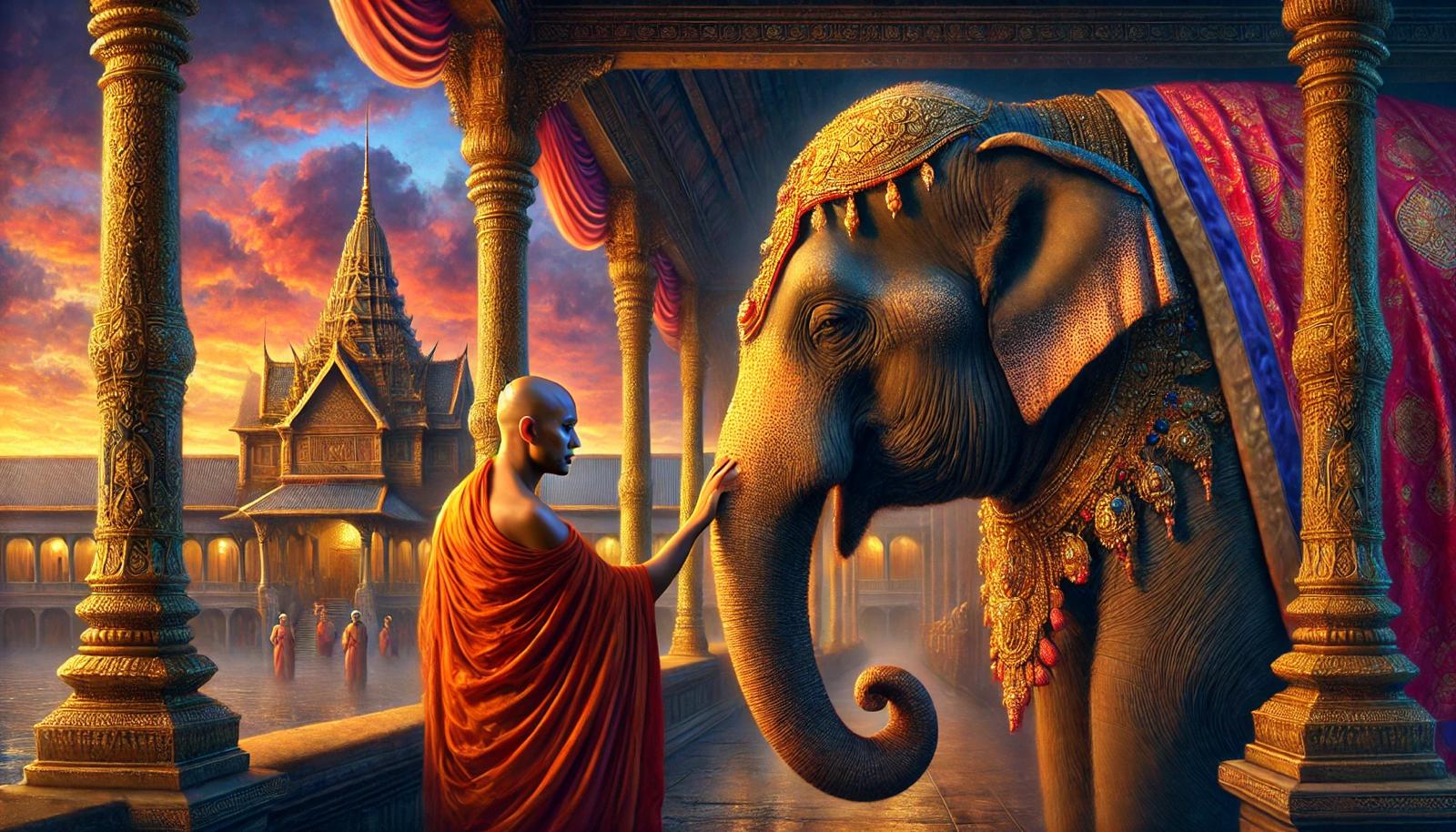
一日,罗汉哥哥在路上托钵时,看到前世的弟弟投身在畜生道成为一头大象,但却身套绫罗绸缎,披挂璎珞珠宝游行街道,城里百姓都以美味佳肴来供养它。
罗汉知道过去世他与大象的因缘,于是在黄昏时去象住的地方,对大象说:
「我和你前世都有罪业,你好好回忆往事吧!」
大象蒙罗汉哥哥加持,当下回想起过去世的种种因缘。大象自知前世所造的罪业,忧愁不乐,从此绝食。
国王知道大象绝食,便派人查明原因,才知道日前黄昏有一沙门抚摸象耳,喃喃自语,当夜大象就不再进饮食了。
「那沙门到底说了什么?」国王有点愤怒地问。
「没有听清楚他说什么。」象王的守卫回答。
国王立刻吩咐卫士:「你马上带几个人去请那位沙门过来一趟。」
不一会儿,卫士便将那位沙门请来。
「尊贵的沙门,请问您跟我的象王说了什么?它自从见了您之后,就闷闷不乐、不再饮食。」国王着急地问着。
「我只与它说我与你过去都有罪业,并没有多说别的。」沙门回答说。
沙门并向国王说明他与大象过去的因缘,国王听了以后,深深体会到因果报应,果然丝毫不爽。后来就流传着这么一首偈:「修慧不修福,罗汉托空钵;修福不修慧,大象披璎珞。」
Date: 08/30/2025 08/31/2025
Location: Star River Meditation Center
Teacher: Yunquan Huang
Dharma Talk
The Arhat and the Elephant
In times of old, there were two brothers who renounced the household life and followed the Blessed One into the monastic path.
The elder brother, diligent in upholding precepts, daily applied himself to meditative cultivation and contemplation, yet was negligent in communal duties. He pursued concentration and wisdom alone, yet did not nurture the roots of merit.
The younger brother, by contrast, was zealous in labor and generous in giving, ever engaged in acts of charity and benefaction, and thus amassed vast stores of merit. Yet he lacked restraint in the discipline of the Tathāgata’s pure Vinaya, and was often found in transgression.
Thereafter, when the elder passed from this life, he was reborn in the time of the Buddha and entered the Saṅgha, swiftly attaining the fruit of Arhatship.
But the younger, by the force of his former karma, took birth among the elephants, and became a king of that species. By the power of past merit and the blessings of his former giving, the elephant’s body was wondrous in form and color, with strength surpassing all others.
The king of the land cherished this elephant greatly, bestowing upon him the title “Lord of a Hundred Households.” He adorned the elephant’s form with gold, silver, and precious jewels, and appointed servants to attend to its nourishment and comfort. Thus did the elephant enjoy a life of pleasure and opulence in the royal court.
As for the elder brother, now an Arhat, his circumstances were otherwise. At a time when famine struck the land, he wandered with tattered robes and a mendicant’s bowl, receiving not a morsel for seven days. Hunger and cold assailed him; so weak was he that he could no longer stand upright. Subsisting on scant offerings, he barely sustained his life.
One day, as the Arhat walked the roads seeking alms, he beheld his former brother reborn as a mighty elephant, adorned with silken cloth and strings of pearls, paraded through the streets. Townspeople offered the elephant fragrant foods and fine delicacies.
The Arhat, recognizing the karmic bond of past lives, went in the evening to where the elephant was housed and addressed him thus:
“We both in former times committed unwholesome deeds. Recall now the deeds of your past lives.”
The elephant, by the spiritual power of the Arhat’s words, immediately awakened remembrance of past lives.
Recalling the deeds he had performed and the karma thereof, the elephant was seized by deep remorse and sorrow, and from that day refused food.
Hearing that the elephant had ceased to eat, the king dispatched officials to inquire of the cause. They learned that, on the previous evening, a monk had spoken softly into the elephant’s ear. From that night onward, the elephant would no longer accept food.
“What words did that monk speak?” asked the king, with rising concern.
“We could not discern clearly,” replied the keepers.
The king then ordered, “Bring that monk before me at once.”
Soon after, the monk was brought before the king. The king inquired, “Venerable one, what words did you speak to my elephant? Since seeing you, it has neither eaten nor rejoiced.”
The monk replied, “I merely said to him: ‘You and I both have past karmic faults.’ Nothing more did I speak.”
Then the monk explained in detail the former-life connection between himself and the elephant. Hearing this, the king was filled with awe and reverence, gaining deep faith in the law of karma and its unfailing retribution.
Thereafter, a verse was recited and widely transmitted:
“He who cultivates wisdom but neglects merit,
An Arhat with an empty bowl shall be.
He who gathers merit but not wisdom,
A bejeweled elephant in royal halls shall he become.”