时间:09/14/2024 09/15/2024
地点:星河禅修中心
主讲:黄云全
佛法修行
焰摩迦的我见
有一次,尊者舍利弗到憍萨罗国的首都舍卫城游化,住在城南郊外的祇树给孤独园。
那时,有一位名叫焰摩迦的比丘,起了一个错误的念头,对人说:
「依我理解世尊的说法,解脱的阿罗汉一旦命终后,流转生死的『我』就断灭无余,一无所有了。」
其它比丘知道焰摩迦比丘这么说后,都纷纷跑去劝他:
「焰摩迦学友!佛陀不会这样说,请你不要诬陷世尊、诽谤世尊!你应当赶快抛除这样的邪见。」
然而,焰摩迦比丘一直不认为他的想法是错的,对来劝他的比丘们说:
「诸位尊者,我这样说才是对的,你们都不对!」
比丘们眼见说服不了焰摩迦比丘,就去向尊者舍利弗求援。
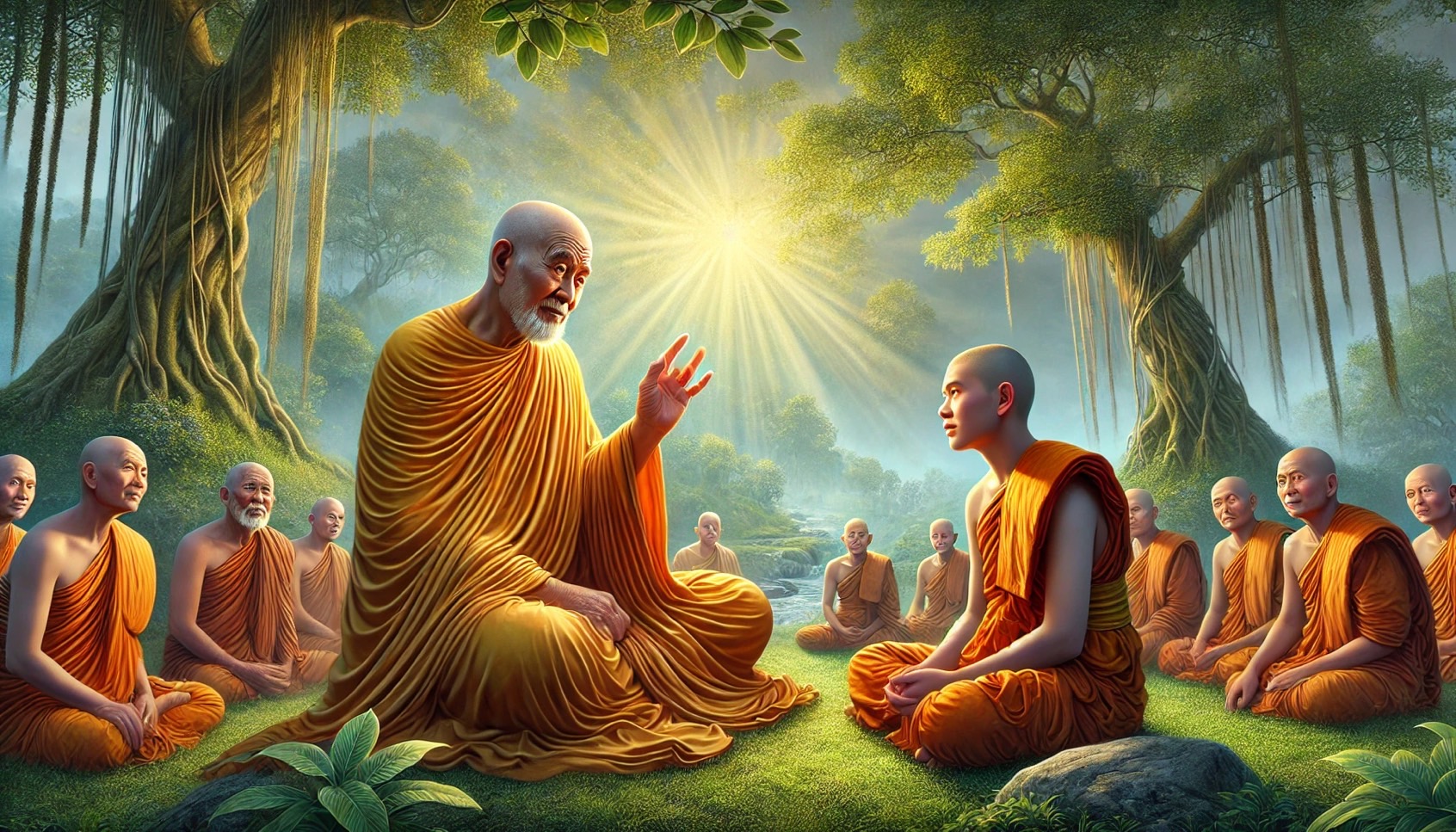
尊者舍利弗了解了原委后,找了个空,专程去见焰摩迦比丘。
见了面后,尊者舍利弗首先澄清他的耳闻,当面向焰摩迦比丘问道:
「焰摩迦学友!你曾说:『依我理解世尊的说法,解脱的阿罗汉一旦死了以后,流转生死的我就断灭无余,一无所有了。』对吗?」
「确实是这样,学友!」
「焰摩迦学友!让我来问你一些问题,你要照你想的回答。
五蕴中的色,是不变的常呢?还是无常?」
「舍利弗学友!是无常。」
「如果是无常的,会生起苦,是苦吗?」
「是苦。」
「若是无常、苦,那是变易之法了。多闻的佛弟子,会对这变易之法的色,认为这色就是我,或者认为这色是我所拥有的,或者认为色中有我、我中有色吗?」
「不能,舍利弗学友!」
「五蕴中的其它四蕴:受、想、行、识也一样。
再来,五蕴中的色,是从前世,经今生,到来世的主体;在生死流转中来来去去的『如来』吗?」
「不是的,舍利弗学友!」
「那受、想、行、识是如来吗?」
「也不是的,舍利弗学友!」
「那异于色有如来吗?异于受、想、行、识有如来吗?」
「没有,舍利弗学友!」
「或者,色中有如来吗?受、想、行、识中有如来吗?」
「没有,舍利弗学友!」
「如来之中有色吗?如来之中有受、想、行、识吗?」
「没有,舍利弗学友!」
「离开色、受、想、行、识,其它处有如来吗?」
「没有,舍利弗学友!」
「焰摩迦学友!世尊体证法,亲证真实,在真实中,无所执着、无所施舍,你怎么会说:『依我理解世尊的说法,解脱的阿罗汉一旦死了以后,流转生死的我就断灭无余,一无所有了。』呢?这样说对吗?」
「不对,舍利弗学友!」
「焰摩迦学友!既然如此,那之前你为何要那样说呢?」
「舍利弗学友!之前,我因为无知,所以那样说,现在听了你的解说,已经断除先前的邪见,体悟正法了。」
「焰摩迦学友!如果是这样,那你说说看,假如现在有人问你,解脱的阿罗汉命终以后怎么了,你会怎么回答?」
「舍利弗学友!我会这样回答:解脱阿罗汉的色、受、想、行、识都是无常的,因为无常,所以是苦,解脱阿罗汉的苦已经息灭、寂静、清凉、永没了。」
「善哉!善哉!焰摩迦学友!正是应该这样回答。为什么呢?因为解脱阿罗汉的色、受、想、行、识都是无常的,无常,所以是苦的,所有无常、苦的事物,都是生灭变化的,不存在着永恒不变的主体,可以说常、说断的。」
经过了尊者舍利弗这番开导,焰摩迦比丘远尘离垢,得法眼清净。
接着,尊者舍利弗又为焰摩迦比丘说了一个譬喻:
「如果有人与一大户人家的主人结怨,为了报仇,就混入这大户人家充当卑微的仆人,每天晚晚睡早早起,隐忍屈辱,全意奉承取悦主人。当取得主人信任后,在主人对他毫无戒心之下,就一刀取了主人的性命。
焰摩迦学友!那位仇家,一开始就决定要谋害大户人家的主人,而大户人家从来就不能觉察,不是吗?」
「正是这样,舍利弗学友!」
「如果,一开始大户人家就知道那人想要杀害主人,而加以防范,那么,那大户人家的主人就不会遇害了,不是吗?」
「是的,舍利弗学友!」
「所以,焰摩迦学友!愚痴无闻的凡夫对自己的五蕴有了是常、是安稳、不病、是我、我所的想法,对他爱惜保护,最后,终于会被执着五蕴的这个仇家所害,就像那大户人家的主人,被假装仆人的仇家所害了都不知道一样。
焰摩迦学友!多闻的佛弟子对自己的五蕴,观察他多病、像烂脓包、像刺、像杀手,是无常、是苦、是空,非我、非我所,对五蕴不起执着、不领受,就能自证涅槃:知道生死已尽,清净的修行已经确立,该作的都已完成,不再有往生下一辈子的后有爱了。」
这番深入的譬喻解说,更让焰摩迦比丘进一步断除了所有烦恼,证得了解脱。
Date: 09/14/2024 09/15/2024
Location: Star River Meditation Center
Teacher: Yunquan Huang
Dharma Talk
Yammaka’s View of Self
Once, Venerable Shariputra visited the capital city of Kosala, Shravasti, and stayed in the Anathapindika’s Park, south of the city.
At that time, there was a monk named Yammaka who had a wrong view and said to others:
”According to my understanding of the Blessed One’s teaching, once an Arahant, who has achieved liberation, dies, the ‘self’ that transmigrates through birth and death is completely annihilated and ceases to exist.”
When other monks learned of Yammaka’s statement, they went to him and tried to correct his view:
”Friend Yammaka, the Buddha did not say this. Please do not misrepresent the Blessed One or slander him. You should abandon such wrong views.”
However, Yammaka did not think he was wrong and said to the monks who came to advise him:
”Revered ones, I am correct. You are all mistaken!”
Seeing that they could not persuade Yammaka, the monks sought the help of Venerable Shariputra. Understanding the situation, Venerable Shariputra found an opportunity to meet with Yammaka.
When they met, Venerable Shariputra first confirmed what he had heard by asking Yammaka:
”Friend Yammaka, did you say, ‘According to my understanding of the Blessed One’s teaching, once an Arahant, who has achieved liberation, dies, the ‘self’ that transmigrates through birth and death is completely annihilated and ceases to exist.’? Is this correct?”
”Yes, friend, it is,” Yammaka replied.
”Friend Yammaka, let me ask you some questions, and you should answer according to your understanding.
Is the form (rupa) in the five aggregates permanent or impermanent?”
”Friend Shariputra, it is impermanent.”
”If it is impermanent, does it give rise to suffering?”
”Yes, it does.”
”If it is impermanent, suffering, and subject to change, would a wise disciple of the Buddha consider it as the self, the possession of the self, or the self within the form?”
”No, friend Shariputra, he would not.”
”The same applies to the other four aggregates: feeling (vedana), perception (sanna), mental formations (sankhara), and consciousness (vinnana). Next, friend Yammaka, is the form in the five aggregates the ‘Tathagata’ (Thus Come One) that transmigrates through birth and death?”
”No, friend Shariputra, it is not.”
”Are the other four aggregates—feeling, perception, mental formations, and consciousness—the Tathagata?”
”No, friend Shariputra, they are not.”
”Is there a Tathagata separate from the form? Is there a Tathagata separate from feeling, perception, mental formations, and consciousness?”
”No, friend Shariputra, there is not.”
”Does the Tathagata exist within the form? Does the Tathagata exist within feeling, perception, mental formations, and consciousness?”
”No, friend Shariputra, he does not.”
”Is there a Tathagata in any other place apart from form, feeling, perception, mental formations, and consciousness?”
”No, friend Shariputra, there is not.”
”Friend Yammaka, the Blessed One has directly realized and fully comprehended the Dharma. In that reality, there is no clinging, no conceptual proliferation. Why do you say, ‘According to my understanding of the Blessed One’s teaching, once an Arahant, who has achieved liberation, dies, the ‘self’ that transmigrates through birth and death is completely annihilated and ceases to exist.’? Is this correct?”
”No, friend Shariputra, it is not correct.”
”Friend Yammaka, if that is the case, why did you say so before?”
”Friend Shariputra, it was out of ignorance that I said so. Now, having heard your explanation, I have abandoned my wrong views and realized the true Dharma.”
”Friend Yammaka, if someone were to ask you now, ‘What happens to an Arahant after death?’ how would you answer?”
”Friend Shariputra, I would answer: The form, feeling, perception, mental formations, and consciousness of an Arahant are all impermanent. Because they are impermanent, they are suffering. The suffering of an Arahant has ceased, it is extinguished, cooled, and gone forever.”
”Well said, well said, friend Yammaka! That is the correct way to answer. Why? Because the form, feeling, perception, mental formations, and consciousness of an Arahant are all impermanent. Being impermanent, they are suffering. All impermanent, suffering things are subject to birth and death and cannot be regarded as permanent or annihilated.”
With this explanation, Venerable Shariputra helped Yammaka to attain the pure vision of the Dharma.
Venerable Shariputra then gave Yammaka a simile:
”If someone has enmity with the head of a large household and wants revenge, he might infiltrate the household as a lowly servant, enduring hardships and flattering the master. Once he gains the master’s trust and the master becomes complacent, he will kill the master in one strike.
Friend Yammaka, the enemy had decided to kill the head of the household from the start, but the household head was unaware of it. Is this correct?”
”Indeed, friend Shariputra.”
”If the household head had known from the start about the enemy’s intentions and taken precautions, he would not have been killed. Is this correct?”
”Yes, friend Shariputra.”
”Therefore, friend Yammaka, foolish and ignorant people regard their five aggregates as permanent, stable, healthy, as self or belonging to the self. They cherish and protect them but are ultimately harmed by their attachment to the aggregates, just as the household head was killed by the enemy disguised as a servant.
Wise disciples of the Buddha observe their five aggregates as afflicted, like a boil, a thorn, or a murderer. They see them as impermanent, suffering, empty, not-self, and do not cling to or identify with them. By not clinging, they realize Nibbana, knowing that birth and death have ended, the pure life has been established, what should be done has been done, and there will be no further existence.”
With this profound simile and explanation, Venerable Shariputra further helped Yammaka to eliminate all defilements and attain liberation.