时间:10/17/2026 10/18/2026
地点:星河禅修中心
主讲:陈双双
佛法修行
四位比丘讨论什么让人感到痛苦
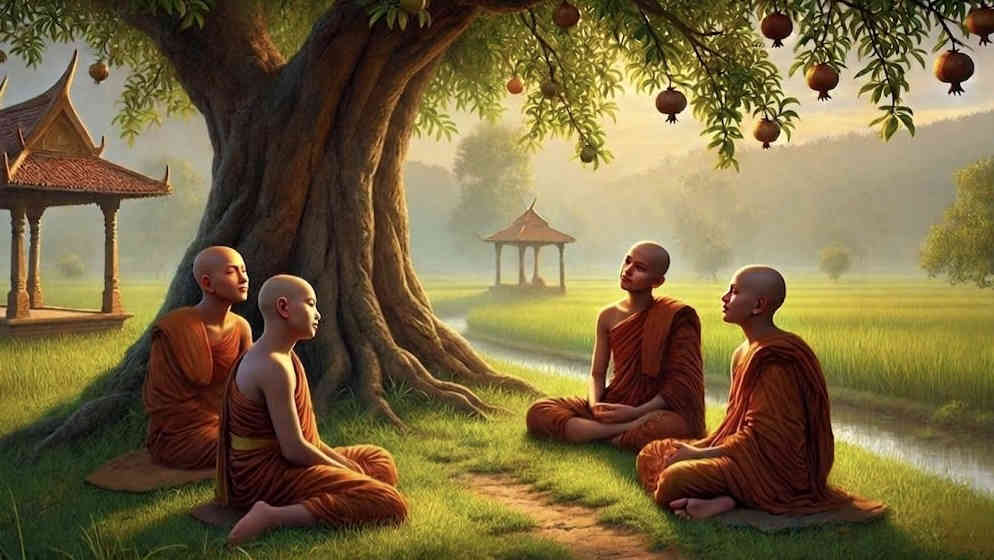
佛祖释迦牟尼还在舍卫城讲习佛法的时候,有一次,他的四位弟子在听完他的讲解后,结伴来到了一个僻静之处。那时候正是盛夏,暑热难当,所以他们只好坐在一棵硕大的石榴树下交换各自修习佛法的心得。
说着说着,不知不觉中就转到了另外的问题上了。其中一个弟子向大家问道:“你们说一说,在这个世界上所有的事物中,到底什么最让人感到痛苦?”一个弟子回答说:“这有什么难的,我认为在这个世界上最让人感到痛苦的是淫欲之心,我想没有别的能够超过它了。当这种淫欲之心产生时,往往会给人带来极大的痛苦,甚至杀身之祸。”
这个弟子的话刚结束,另一个弟子说道:“我认为你说得不对,在这个世界上最令人感到痛苦的是饥渴,一个人吃不上饭,喝不到水,还有什么比这更痛苦的呢?”
另外一个弟子也不甘寂寞,说道:“你们两个说的都不对,世界上最让人痛苦的是突然遇到让人感到害怕和恐惧的事情。”
这时候,那位最先提问的弟子也开了腔:“你们三个人都回答错了,世界上最让人感到痛苦的是嗔怪愤怒之心,这种嗔怪愤怒一方面使产生的人感到痛苦,另一方面,如果这种嗔怪愤怒又化成了一种力量一种行为后,又会使力量的对象,行动的对象承受无尽的痛苦,所以我认为嗔怪和愤怒才是这个世界上最让人感到痛苦的事情。”
可是当他刚表明完自己的意见,就马上招致了另外三个人一致反对。随后,就上演了一出精彩的舌战,四个人各执己见,莫衷一是,闹闹嚷嚷争论不休。
这场争论一直持续到太阳西沉,旭日东升也毫无结果。
这件事后来让佛祖释迦牟尼知道了,佛祖随即到了他们所住的僧房中,向他们询问争论的情况以及各自的论点。这四个弟子都一五一十地告诉了佛祖。
佛祖释迦牟尼静静地听完了他们的话,沉吟了一会儿,才对这四个弟子说道:“你们四个人的意见都没有抓住痛苦的实质,所说的都只是表面上的东西,其实天下最痛苦的事莫过于人的肉体的存在。这才是最主要的东西。所有的淫欲之心、饥渴之念、嗔怪愤怒之心,以及害怕和恐惧的心情都是源于这个肉体的。”
这四个弟子听佛祖这样一讲方才开了窍,不住地点头称是。
接下去,佛祖释迦牟尼又说道:“人的肉体的存在才是痛苦产生的根源,也是各种灾祸苦难的根源。一个人生下来后,他的肉体要承受生苦、老苦、病苦、死亡等各种痛苦,另外,人在世俗中苦苦挣扎求生,甚至还互相残杀、生生死死永不停息,承受着无边的痛苦,都是因为有了肉身的存在才会这样。如果一个人能够收心摄意,不胡思乱想,消除一切杂念,使心境清净安详,就可以得到涅槃,涅槃才是人生最快乐的事。”
Date: 10/17/2026 10/18/2026
Location: Star River Meditation Center
Teacher: Shuangshuang Chen
Dharma Talk
What Truly Causes Suffering? — A Discussion Among Four Bhikkhus
While Śākyamuni Buddha was teaching the Dharma in Śrāvastī, four of his disciples, after listening to his discourse, went together to a quiet place. It was the height of summer, and the heat was intense, so they sat beneath a large pomegranate tree, exchanging insights from their practice.
As they talked, the conversation gradually shifted. One of them asked:
“Tell me, among all things in this world, what causes the greatest suffering?”
One monk replied:“That is easy. I believe the greatest suffering comes from sensual desire. When such desire arises, it brings immense distress, even leading to ruin or death. Nothing surpasses it.”
Another immediately disagreed:“I think you are mistaken. The greatest suffering is hunger and thirst. When a person has no food to eat and no water to drink, what could be more painful than that?”
A third monk added:“You are both wrong. The greatest suffering is fear—when one suddenly encounters something terrifying, the mind is overwhelmed with dread. That is the deepest suffering.”
Then the monk who had first asked the question spoke again:“All of you are incorrect. The greatest suffering is anger and resentment. Anger torments the one who harbors it, and when it turns into action, it brings endless suffering to others as well. Therefore, anger is the greatest suffering in the world.”
As soon as he finished, the other three strongly opposed him. Soon, a heated debate arose. Each clung to his own view, arguing endlessly without reaching any conclusion. The dispute continued until sunset—and even into the next day—without resolution.
Eventually, the Buddha learned of their argument. He went to their dwelling and asked them to explain the matter and their respective views. The four monks recounted everything truthfully.
After listening quietly, the Buddha paused for a moment and then said:
“None of your views have grasped the true essence of suffering. What you have described are only its outward manifestations. In truth, the greatest source of suffering is the existence of the physical body itself.
All forms of desire, hunger and thirst, anger, fear—these all arise because of the body.”
Hearing this, the four monks began to understand and nodded in agreement.
The Buddha continued:
“The existence of the body is the root of suffering and the source of all calamities. From birth onward, the body undergoes the suffering of birth, aging, sickness, and death. In worldly life, beings struggle endlessly for survival, even harming one another, cycling through birth and death without end—all because of attachment to the body.
If one can collect the mind, restrain thoughts, eliminate distractions, and abide in purity and peace, one can attain Nirvāṇa. Nirvāṇa is the highest happiness.”
Through this teaching, the monks awakened to a deeper understanding:true suffering is not merely external conditions, but the very attachment to embodied existence—and liberation lies in transcending it.