时间:06/21/2025 06/22/2025
地点:星河禅修中心
主讲:黄云全
佛法修行
师子将军的皈依
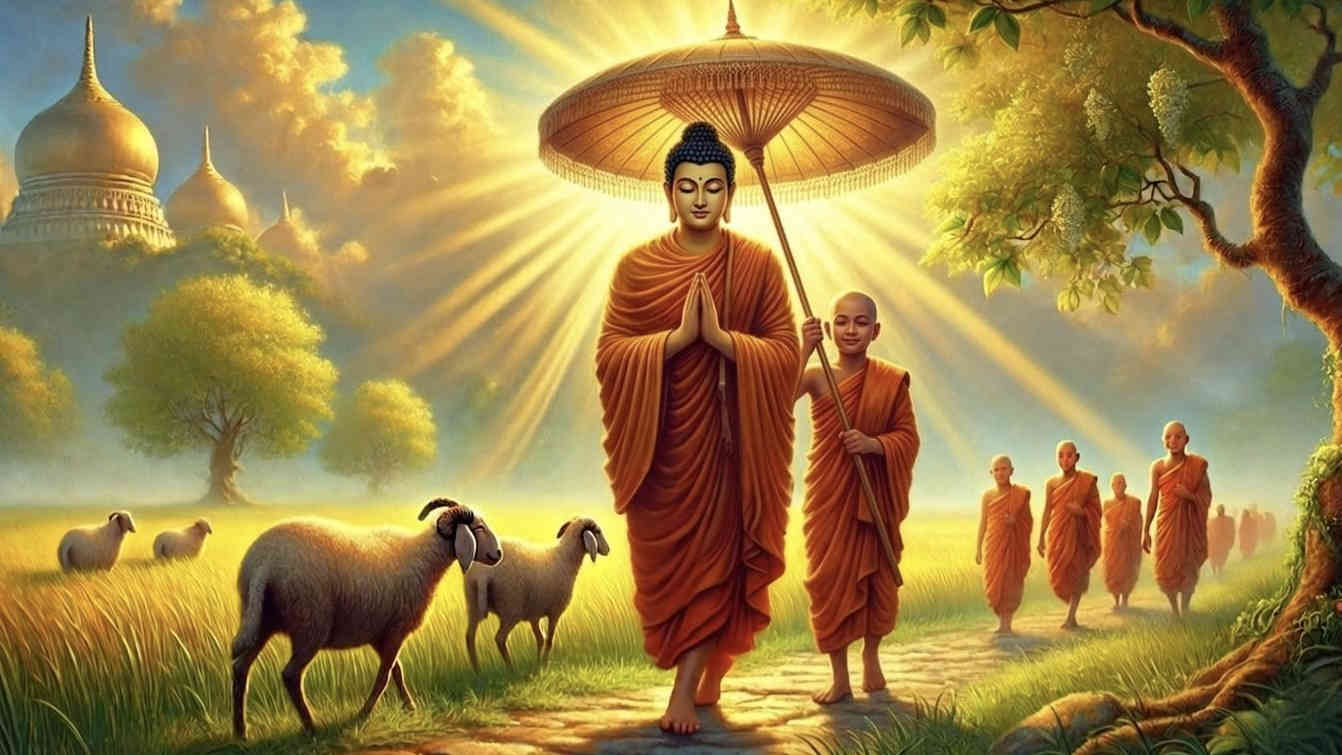
有一次,佛陀游化到跋祇国的首府毘舍离城,住在附近的大林精舍。
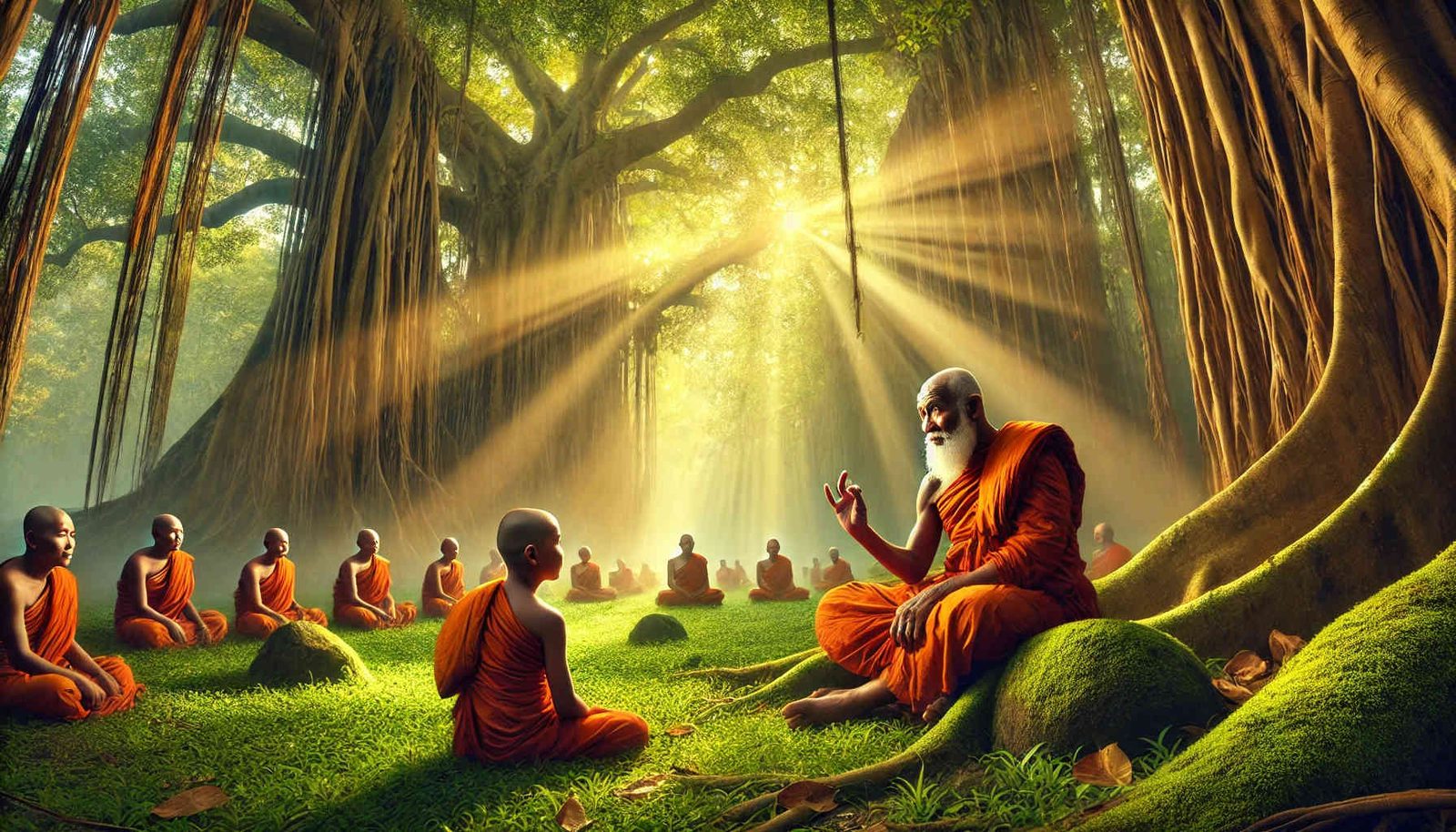
佛陀到来的旋风,让当地离车族名流聚会的议事厅里,不断地传出赞叹佛陀、赞叹佛法、赞叹比丘众的声音。
议事厅中,有一位将军大臣,名叫师子,他是外道尼干的信徒,听到了这么多对佛陀的赞叹,不禁心想:那一定是位世上最尊贵的、真正值得供养的解脱者了,我应当去拜见他。
不过,质朴的师子将军,还是先去向他的师父尼干报备。外道尼干当然不希望自己的信徒去见佛陀,就喝斥将军说:
「师子!不要去见那位沙门瞿昙!那位沙门是位教人这也不能做、那也不能做的消极非作业论者,而你是个做大事、有大事业的将军,你如果去见他,或供养他,那会对你很不利。」
师子将军被他的师父这么一说,动摇了,就放弃拜见佛陀的想法。
可是,将军回去后,还是不断地在议事厅中,听到那些社会精英们对佛陀的赞叹,又动了想去见佛陀的心念。但第二次又遭到尼干的阻止。
第三次,当将军又听到大家对佛陀的赞叹时,想见佛陀的心意已决,就直接前往,不再去问他的师父尼干子了。
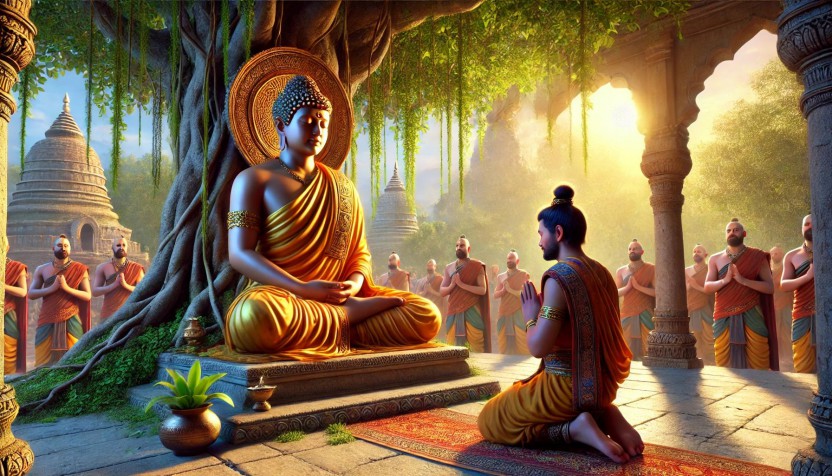
师子将军领着大队人马,来到佛陀的住处,一番礼敬问讯后问道:
「大德!我听说您是位非作业论者,要人不可以做许多事,这是真的吗?还是有人在诽谤世尊呢?如果是真的,这合乎真理吗?经得起别人的质疑吗?」
「师子!我确实教导人家不要做任何坏事,你可以依此而说我是非作业论者。不过,在此同时,我也教人要做所有的好事,所以你也应当说我是作业论者才对。不但这样,我还教人断除贪、瞋、痴等一切恶行,也可以被说成是断灭论者;教人要厌恶种种恶行,也可以被说成是厌恶论者;教人调伏贪、瞋、痴等一切恶行,也可以说成是调伏论者;教人刻苦坚忍,以烧尽自己的恶行,正如斩草除根一样,也可以被说成是苦行论者;教人舍弃入胎于来世的后有爱,也可以说成是离胎论者;教人最殊胜的安稳法,也可以被说成是安稳论者。」
师子将军听了,当场茅塞顿开,立刻皈依了佛陀,请求为在家佛弟子。
但是,师子将军既是当地有名望的人,又是人尽皆知的尼干信徒,这样特殊的背景,佛陀不得不为他作特别的考量,所以对他说:
「师子!像你这么有名望的人,应当再慎重考虑才好!」
师子将军这么一听,对佛陀的体谅,以及不带世俗功利的善意,更加折服了,又二度地皈依佛、法、及比丘众,请求终生为在家佛弟子。
这时,佛陀又说了:
「师子!你供养尼干与他的门徒已经很久了,如果日后他们到你家,你应当要和从前一样供养他们。」
听佛陀这么说,师子将军以前听闻人家说,佛陀要求只能供养自己,不许供养别人的谣言,就不攻自破了。于是,再次受到感动的师子将军,作了第三度的皈依,请求终生为在家佛弟子。
于是,佛陀为师子将军说法,从布施、持戒、生天等世间一般的善行教导起,然后进入佛法价值观的善行:说欲爱、邪见、染着的祸患,出离、超越欲爱的种种功德等,让师子将军生起柔软心与欢喜心,营造将军一个领纳佛法的良好心境,再导入苦、集、灭、道等佛法的核心教导。
将军经过佛陀这番循序渐进的善巧教导,当下见法、知法、入法,断除了对正法的疑惑,心中荡然而无所畏惧,证入初果。于是,师子将军诚心地邀请佛陀和比丘们,隔天到他家中接受饮食供养,佛陀也默许了。
师子将军皈依佛陀,要在家里供养佛陀饮食的消息,很快地就传遍了毘舍离城的每一个角落。可是,隔天众多外道尼干的门徒,竟开始在城中奔相哭泣走告,说师子将军要杀大牛,设宴款待佛陀,而且佛陀也知情。消息传到将军的耳里,将军赶快出来澄清,告诉大家他并没有为了宴请佛陀而杀生,他只是用了库存的肉而已。
佛陀与比丘们如期地来到师子将军的家,接受他的饮食供养。饭后,佛陀依例为师子将军说法,教导、慰勉、鼓励一番才离去。
Date: 06/21/2025 06/22/2025
Location: Star River Meditation Center
Teacher: Yunquan Huang
Dharma Talk
The Conversion of General Siṃha
Thus have I heard:
At one time, the Blessed One was dwelling near the capital city of Vaiśālī, in the country of Vajji, staying at the Great Forest Monastery.
The arrival of the Blessed One stirred the land, and within the Assembly Hall of the Licchavi nobles, voices continually arose in praise of the Buddha, in praise of the Dharma, and in praise of the Saṅgha.
Now among the nobles was a prominent general named Siṃha, a devoted follower of the Nigaṇṭhas, the ascetic order of naked wanderers. Hearing the ceaseless acclaims of the Blessed One, he thought to himself:
“Surely this recluse Gotama is the most worthy, the most noble being in the world—one truly deserving of offerings. I ought to go and see him.”
Yet, being straightforward and sincere, the general first went to inform his teacher, the Nigaṇṭha. That ascetic, unwilling to lose a disciple, sternly forbade him:
“Siṃha! Do not go to see that recluse Gotama! He teaches a doctrine of inaction, forbidding this and prohibiting that. You are a man of great deeds and vast responsibilities. If you approach him or offer him alms, it will only bring harm upon yourself!”
Thus discouraged, General Siṃha wavered and gave up his intent to visit the Blessed One.
But again and again, in the Assembly Hall, he heard the nobles extolling the Buddha. His wish to visit the Blessed One rekindled. Yet a second time, the Nigaṇṭha restrained him.
On the third occasion, having once more heard praise of the Buddha, General Siṃha resolved:
“This time I shall go. I shall no longer ask leave.”
Then, accompanied by a large retinue, he approached the Blessed One, paid homage, and sat to one side. He said:
“Venerable Sir, I have heard that you are a teacher of inaction, a non-doer who prohibits many things. Is this truly so? Or are such words but slander against the Blessed One? If it is so, is such a doctrine in accordance with truth? Can it stand up to inquiry?”
The Blessed One replied:
“Siṃha, indeed I teach that one should abstain from all evil. From this, some say I am a teacher of inaction.
Yet I also teach that one should cultivate all wholesome deeds—thus, I may also be called a teacher of action.
Moreover, I teach the abandoning of greed, hatred, and delusion; thus, I may be called one who teaches cessation.
I teach revulsion toward unwholesome acts; thus, I may be called one who teaches disenchantment.
I teach the taming of unwholesome tendencies; thus, I may be called one who teaches self-restraint.
I teach austere effort to uproot defilements like a man cutting weeds at the root; thus, I may be called one who teaches ascetic exertion.
I teach the letting go of craving for future becoming; thus, I may be called one who teaches the release from rebirth.
I teach the supreme peace; thus, I may be called one who teaches tranquility.”
Hearing these words, General Siṃha’s mind was opened. At that moment, he took refuge in the Blessed One, requesting to become a lay follower.
However, knowing Siṃha’s high status and his background as a known supporter of the Nigaṇṭhas, the Blessed One advised him:
“Siṃha, a person of your stature should give this matter careful thought.”
Struck by the Buddha’s sincerity and the absence of self-interest in his words, General Siṃha was even more inspired. A second time, he declared his refuge in the Buddha, the Dharma, and the Saṅgha, asking to be a lay follower for life.
The Blessed One then said:
“Siṃha, you have long supported the Nigaṇṭhas and their disciples. In the future, should they come to your home, you ought to continue offering them alms just as before.”
These words dispelled a rumor Siṃha had once heard—that the Buddha forbade offerings to others. Deeply moved by the Buddha’s openness, he made a third declaration of refuge, vowing again to follow the Buddha, the Dharma, and the Saṅgha for life.
Then, the Blessed One gave him teachings, beginning with ordinary virtues: the merit of giving, the observance of precepts, and the attainment of heavenly rebirth. Then the Blessed One expounded the perils of craving, of false views, and of attachment, followed by the blessings of renunciation and the transcendence of desire.
Having thus prepared Siṃha’s heart with gentle and gradual instruction, the Blessed One introduced the core truths: suffering, its origin, its cessation, and the path.
As a result of this skillful teaching, General Siṃha saw the truth, understood the Dharma, entered the Dharma, and dispelled all doubts. His heart was free from fear, and he attained the **fruit of stream-entry**.
With a joyful mind, he invited the Blessed One and the Saṅgha to his home the next day for alms.
News of this spread swiftly throughout the city of Vaiśālī. But the disciples of the Nigaṇṭhas, alarmed by this, began to wail and spread false rumors:
“General Siṃha is preparing to slaughter a great bull to feast the recluse Gotama—and the recluse is aware of it!”
When this reached Siṃha, he came forward to clarify:
“I have not killed any creature for this offering. I am using meat already in my stores.”
The following day, the Blessed One and the Saṅgha came as invited and received Siṃha’s offering. After the meal, the Blessed One taught the Dharma to him once more—encouraging, uplifting, and guiding him before taking his leave.