时间:05/31/2025 06/01/2025
地点:星河禅修中心
主讲:黄云全
佛法修行
证初果的天帝释
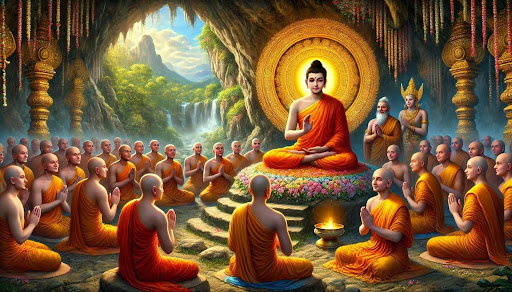
有一次,佛陀在摩揭陀国游化,住在王舍城东边、庵婆罗村北边的毘陀山因陀娑罗窟中。
这天,天帝释想起了佛陀,发现佛陀正住在因陀娑罗窟中,就邀集了一群三十三天的天众,一同去见佛陀。一群天众就这样来到了毘陀山,毘陀山因诸天众的群集,而发出了异常的光亮,附近村落的民众不明所以,以为发生了火烧山,十分恐惧。
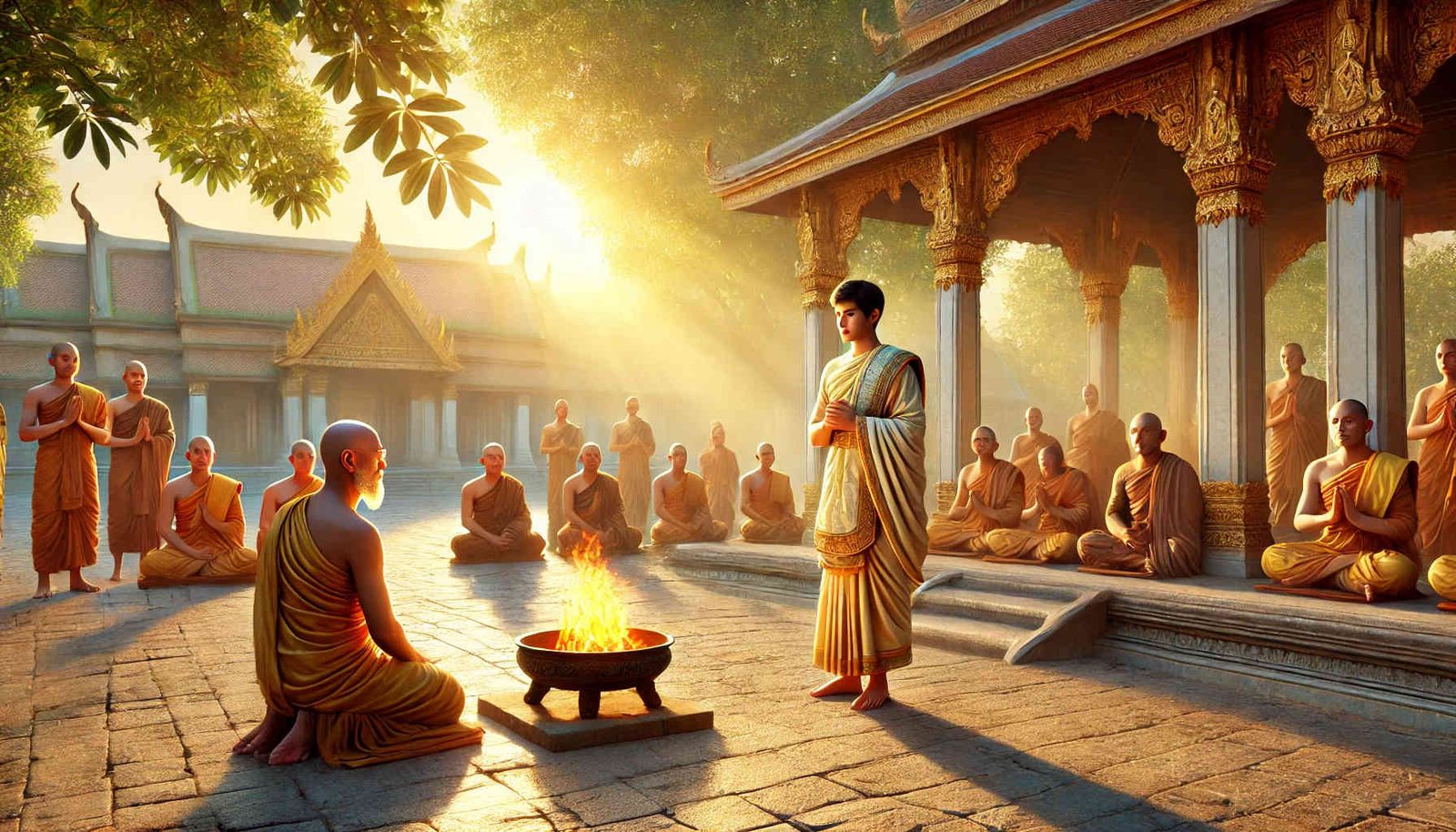
天帝释怕打扰佛陀的清修,不敢贸然前往佛陀安住的山洞,就先派遣他的乐神「般遮翼」先去通报。乐神来到了山洞外面,弹唱一首加入赞叹佛、法、僧伽的情歌,想取悦佛陀,同时也作为通报。佛陀知道乐神的来意,表示愿意见天帝释以及诸天众,于是,天帝释与诸天众就鱼贯地进入山洞,一一向佛陀问讯顶礼。
天帝释闲话过去托其它天众礼敬佛陀的情谊后,佛陀就将话题引入,请天帝释就心中的疑惑发问。天帝释问道:
「是什么原因,致使天、人、阿修罗、干闼婆、罗剎以及其它众生,心中虽然希望能和谐安详,没有敌对怨仇、刀杖相向,无瞋恨心地过日子,然而实际上却都作不到呢?」
佛陀说:「是啊,帝释!那是因为众生贪嫉、悭吝的缘故。」
「是啊,世尊!是啊,善逝!是啊,大仙人!您说的很对,您的回答解除了我先前的疑惑。但众生为何会嫉悭呢?怎样才能无嫉无悭呢?」
「帝释!嫉悭是因为爱憎而起,以爱憎为源。有爱憎时,就有嫉悭,当爱憎灭时,嫉悭就消失了。」
「确实是这样啊,世尊!但众生的爱憎心又是怎样生起来的呢?根源在哪里?怎样才能灭除呢?」
「帝释!爱憎是因为有欲望,以欲望为源。有欲望时,就有爱憎,当欲望灭时,爱憎就消失了。」
「确实是这样啊,世尊!但众生的欲望又是怎样生起来的呢?根源在哪里?怎样才能灭除呢?」
「帝释!欲望是来自于忆想怀念,以忆想怀念为源。有忆想怀念时,就有欲望,当忆想怀念灭时,欲望就消失了。」
「确实是这样啊,世尊!但众生的忆想怀念又是怎样生起来的呢?根源在哪里?怎样才能灭除呢?」
「帝释!忆想怀念是因为颠倒妄想,以颠倒妄想为源。当众生胡思妄想时,就会生起忆想怀念,当不再胡思妄想时,忆想怀念就消失了。所以,如果不胡思妄想,就不会忆想怀念;不忆想怀念,就没有欲望;没有欲望,就不会有爱憎;没有爱憎,就不会嫉悭;不会嫉悭,那么一切众生就不会互相伤害了。」
接着,天帝释又进一步问,用什么方法才能灭除众生的胡思妄想?佛陀教导说,应当对自己的喜、忧、舍;意念、语言、行为与需求保持清明不乱,远离于那些会产生不良后果的,多做那些能增长善法的;眼、耳、鼻、舌、身、意等六根认识境界时也一样,应当注意诸根律仪,清楚什么应当远离,什么应当亲近。
经过佛陀这一番解答,天帝释解决了心中的疑问,不再迷惑犹豫了,于是有感而发地告诉佛陀说:
「世尊!爱欲真是众生的病啊!就像致命的肿瘤,也像箭、像刺一样令众生痛苦不安。爱欲牵引着众生往生,生起种种不同的果报。世尊!上面的疑惑,我曾经请问了许多其它外道、沙门、婆罗门,但都不得要领,直到听闻了世尊的教导才明了。这个疑惑已经困扰我很久了,就像一支箭插在我的身上一样令我不安,今天世尊已为我拔除这疑惑之箭了。」
于是,天帝释向佛陀说出这个困惑的原委。原来,三十三天的天众,也一直是期盼着佛陀的出世,但因为找不到佛陀,所以又得过且过,尽情欢乐的过日子,直到有一天,一位有大威德的天子竟然命终了,带给天帝释极大的震撼:一想到自己也会有这天,不禁毛骨悚然,对自己纵情五欲欢乐的生活,生起了忧戚。于是,只要看到在幽静处禅坐的修行人,便以为是佛陀出现了而前往拜见请教,直到遇见释迦牟尼佛,才得到解决,所以显得十分欢喜。
「帝释!你以前也曾经这样欢喜过吗?」佛陀问
「世尊!以前在率领三十三天众大败阿修罗众,战果丰硕时,也曾经这样的欢喜过。但是,那是靠刀杖获得的,间杂着许多结怨、斗争、憎恨与嫉妒,今天的欢喜不一样了,不但完全没有这一些,还可以让我通达觉悟,趣向解脱与涅槃。」
最后,天帝释在佛陀面前说:我今天已经证得初果,愿当证得二果阿那含。而同行的诸天众,也有许多和天帝释一样,远尘离垢,得法眼净,证入初果。
Date: 05/31/2025 06/01/2025
Location: Star River Meditation Center
Teacher: Yunquan Huang
Dharma Talk
Śakra’s Realization of the First Fruit
Once, the Buddha was traveling in the country of Magadha, residing at the Indraśāla Cave on Mount Vediyaka, which lay to the east of Rājagṛha and north of Ambaḷa village.
On that day, Śakra, the Lord of the Heaven of the Thirty-Three, thought of the Buddha.
Realizing that the Buddha was residing in the Indraśāla Cave, he gathered a host of gods from the Heaven of the Thirty-Three and went together to see the Buddha.
As this host of celestial beings arrived at Mount Vediyaka, the mountain emitted an extraordinary radiance due to the gathering of devas.
The villagers nearby, not knowing the reason, thought it was a mountain fire and became greatly frightened.
Śakra, afraid of disturbing the Buddha’s serene abiding, dared not approach the cave directly, so he first dispatched his divine musician, Pañcaśikha, to go ahead and make an announcement.
Pañcaśikha came to the outside of the cave and sang a love song, within which he included praise of the Buddha, the Dharma, and the Saṅgha,
seeking to please the Buddha and, at the same time, to announce their arrival.
The Buddha, knowing Pañcaśikha’s intent, expressed his willingness to receive Śakra and the assembly of devas.
Thus, Śakra and the devas entered the cave one by one, each of them greeting and paying homage to the Buddha.
After some words of polite remembrance regarding past offerings by other devas, the Buddha shifted the topic and invited Śakra to ask about the doubts in his heart.
Śakra asked:
“What is the cause by which beings—whether gods, humans, asuras, gandharvas, rākṣasas, or others—though wishing in their hearts to live in harmony and peace, without enmity, hatred, or violence, and to live without anger, are nonetheless unable to do so?”
The Buddha said:
“Yes, Śakra, it is because of beings’ greed, jealousy, and miserliness.”
“Indeed, World-Honored One! Indeed, Well-Gone One! Indeed, Great Sage!
What you have said is truly correct. Your answer has dispelled my former doubt.
But what causes beings to become jealous and miserly? How may jealousy and miserliness be removed?”
“Śakra! Jealousy and miserliness arise from attachment and aversion; they are rooted in attachment and aversion.
When attachment and aversion exist, there is jealousy and miserliness; when attachment and aversion cease, then jealousy and miserliness also cease.”
“Truly it is so, World-Honored One! But how do attachment and aversion arise in beings? What is their root?
How can they be extinguished?”
“Śakra! Attachment and aversion arise from desire, and are rooted in desire.
When desire exists, attachment and aversion arise; when desire ceases, attachment and aversion cease.”
“Truly it is so, World-Honored One! But how does desire arise in beings? What is its origin?
How can it be brought to cessation?”
“Śakra! Desire comes from recollection and longing, and is rooted in recollection and longing.
When there is recollection and longing, desire arises; when recollection and longing cease, desire ceases.”
“Truly it is so, World-Honored One! But how do recollection and longing arise in beings? What is their root?
How can they be extinguished?”
“Śakra! Recollection and longing arise due to deluded and inverted thoughts, and are rooted in deluded and inverted thoughts.
When beings indulge in wild, deluded thoughts, then recollection and longing arise; when they no longer give rise to such deluded thoughts, recollection and longing cease.
Therefore, when there is no deluded thinking, there is no recollection and longing;
when there is no recollection and longing, there is no desire;
when there is no desire, there is no attachment and aversion; when there is no attachment and aversion, there is no jealousy and miserliness;
and when there is no jealousy and miserliness, then all beings will no longer harm one another.”
Then Śakra further asked:
“What method should be used to extinguish the deluded and inverted thoughts of beings?”
The Buddha instructed: “One should maintain clarity and composure with regard to one’s pleasure, sorrow, and equanimity;
be mindful of one’s thoughts, speech, conduct, and needs;
stay far from what leads to unwholesome results, and do more of what nurtures wholesome Dharma.
When the six sense faculties—eye, ear, nose, tongue, body, and mind—engage with their respective objects, one must also observe the restraint of the faculties, clearly knowing what should be avoided and what should be cultivated.”
Through this discourse, Śakra resolved his inner doubts and was no longer confused or hesitant.
He spoke from deep feeling and said to the Buddha:
“World-Honored One! Indeed, craving is the great disease of sentient beings—like a deadly tumor, like an arrow, like a thorn, bringing beings pain and distress.
Craving draws beings to be reborn and produces a variety of karmic results.
World-Honored One! These doubts of mine—I once asked many other ascetics, renunciants, and brāhmaṇas,but none gave a satisfactory answer.
Only after hearing the teaching of the World-Honored One have I come to full understanding.
This doubt has troubled me for a long time—like an arrow embedded in my body, causing me constant unrest.
Today, the World-Honored One has pulled out the arrow of doubt for me.”
Then Śakra explained the origin of his perplexity.
It turned out that the devas of the Heaven of the Thirty-Three had long awaited the Buddha’s appearance in the world, but as they could not find him, they again indulged themselves in enjoyment and pleasures.
Until one day, a deva of great power and merit suddenly passed away, which deeply shocked Śakra.
Realizing that one day he himself would face such an end, he was seized with dread, and became sorrowful over his own life of indulgence in the five sensual pleasures.
Hence, whenever he saw a meditator seated in a quiet place, he would think it might be the Buddha, and would approach to inquire.
Only upon finally encountering Śākyamuni Buddha did he find resolution—thus his great joy.
The Buddha asked:
“Śakra! Have you ever felt such joy before?”
Śakra replied:
“World-Honored One! Once, when I led the gods of the Thirty-Three in defeating the asuras, with great victory and triumph, I did experience joy like this.
But that joy was gained through weapons and force, and was mixed with much resentment, conflict, hatred, and jealousy.
Today’s joy is not like that at all—it is pure and free from those defilements, and it enables me to penetrate the path to awakening and move toward liberation and nirvāṇa.”
Finally, in front of the Buddha, Śakra said:
“Today, I have attained the first fruit of the path (sotāpatti).
I vow to attain the second fruit—once-returning (sakadāgāmi).”And among the assembly of devas accompanying Śakra, many also, like Śakra, removed dust and defilements from their minds, attained the purity of the Dharma eye, and realized entry into the first fruit.