时间:06/22/2024 06/23/2024
地点:星河禅修中心
主讲:黄云全
佛法修行
同理心──自通之法
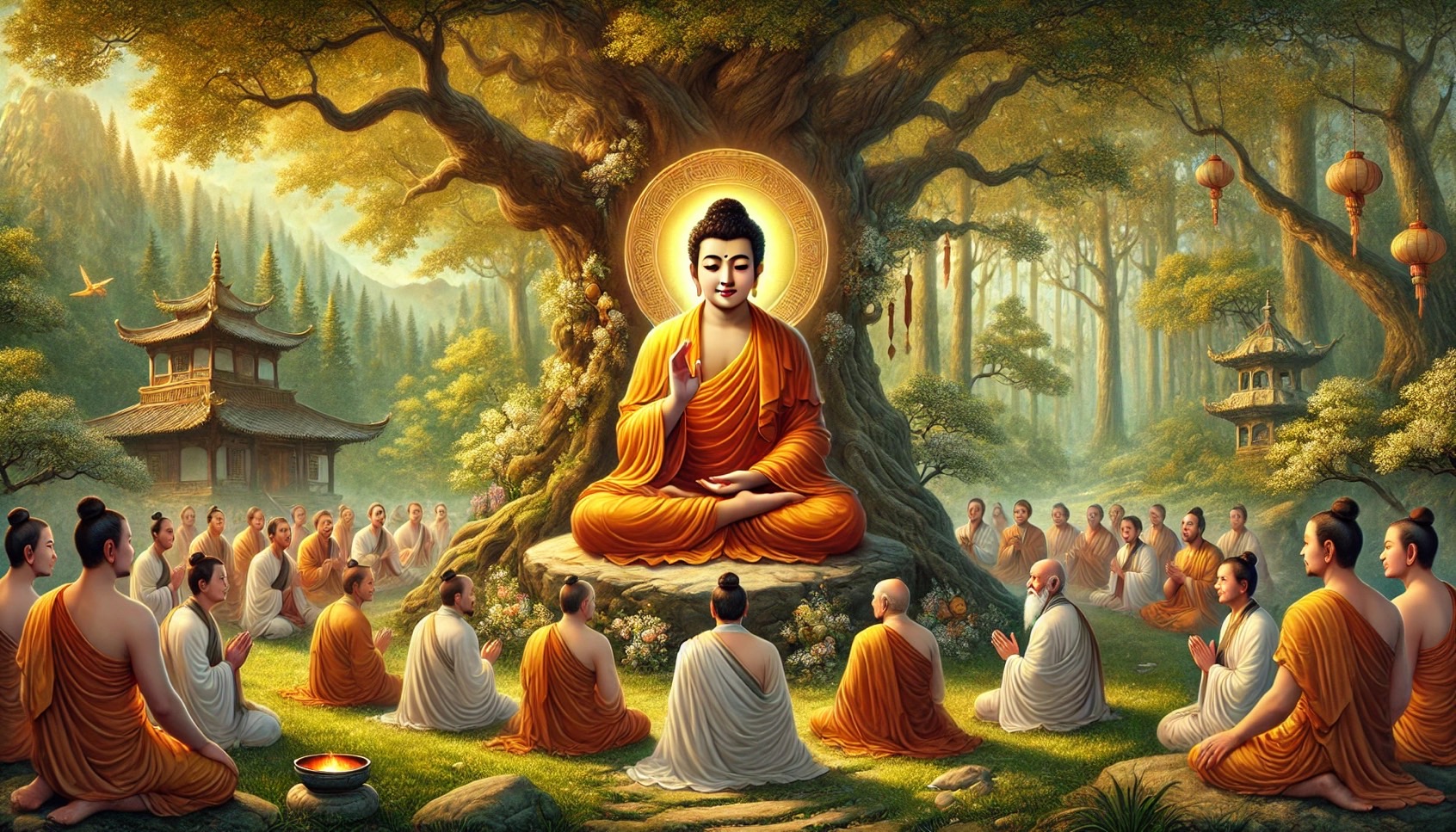
有一次,佛陀到憍萨罗国游化,来到一个叫竹门村的婆罗门聚落,住在村子北边郊外的身恕林中。
竹门村里的婆罗门居士们,风闻来了一位叫瞿昙的释迦族沙门,被尊称为是应受供养者、圆满的觉悟者、真理与正行的实践者、完善幸福的终结生死者、彻底了知世间者、受调教人的无上领导者、天界人间的老师、觉他的自觉者、世间最尊贵者,而且,听说他是天上、人间一切众生中,能不经由老师教导而自知自证,又能教导别人悟入者,他的教导,从开始到结尾都是完善的,所教导的意涵与用词也都是完善的,又展露出他圆满纯净的圣洁生活,所以,大家纷纷地群集,来到佛陀的住处,有的上前礼敬佛陀,有的更加和善地问候寒暄,有的进一步地自我介绍,有的只是默默地坐在一旁。
待大家都坐定后,其中一位婆罗门,代表大众问佛陀说:
「瞿昙大师!我们都期望过着儿孙满堂,脸上有上好的檀香擦,头上有花缀戴,身上有香料涂,有充裕金银财宝收入的幸福在家生活,而且,期望死后能往生到更好的世界去,瞿昙大师!请教导我们达成这些愿望的方法。」
「居士们!我就来教导大家一个推己及人的自通之法,请大家注意听了!
什么是推己及人的自通之法?学习圣道的弟子们,应当这样的思惟:我想要活着,我不想死,期待着幸福,而排斥着缺憾的痛苦,所以,我不喜欢被杀。我自己不喜欢被杀,同理,其它众生也不喜欢被杀,这样,我怎能去杀害众生呢?作了这样的思惟与抉择后,便要求自己离于杀生,也能劝人离于杀生,赞叹离于杀生。如此,其肢体行为就能在自己离杀、劝人离杀、赞叹离杀这三方面获得了清净。
同样的道理,我不喜欢被偷、被抢,不喜欢别人与自己的妻子通奸,不喜欢被诈欺,不喜欢亲友被挑拨而与自己疏远,不喜欢别人以粗话骂我,不喜欢别人对我说话轻薄,所以,便要求自己,也劝别人不偷不抢,不与人通奸,不诈欺,不挑拨离间,不骂粗话,言语不轻薄,也赞叹这些行为。如此一来,肢体与语言行为,就能在这三方面获得清净。
这七种约束自己肢体与语言的行为,就是通往圣道的戒行。
能够这样,再加上成就对佛、法、僧坚定不坏的净信,即是圣弟子的四不坏净成就。四不坏净成就的人,自己就能有把握地说,我证得了须陀洹,不会再往生地狱、畜生、饿鬼等一切恶处了,必定会趣向解脱,顶多在人间天界轮回七次,便能走到苦的尽头而证得解脱。」
在座的婆罗门长者们听了,都觉得十分欢喜。
Date: 06/22/2024 06/23/2024
Location: Star River Meditation Center
Teacher: Yunquan Huang
Dharma Talk
Empathy – the method of self-understanding
Once, Buddha visited the Kosala kingdom, stopping at a Brahmin settlement called Bambo Gate Village, where he resided in the Shenshu forest on the outskirts to the north of the village.
The Brahmins of Bambo Gate Village, having heard of a Sakyamuni named Gautama who was revered as the one worthy of offerings, the perfectly awakened one, the practitioner of truth and righteousness, the ultimate liberator from birth and death, the supreme knower of the world, the incomparable leader of men to be tamed, the teacher of gods and humans, the enlightened one, and the most venerable in the world, and moreover, known to be the one in heaven and on earth among all beings who without a teacher’s guidance could realize and testify the truth by himself and teach others to achieve enlightenment, and his teachings, from beginning to end, were perfect in meaning and expression, revealing his wholly pure and holy life. Therefore, they eagerly gathered at Buddha’s residence, some paying their respects, some greeting him warmly, some introducing themselves, and some sitting silently aside.
After everyone had settled, one of the Brahmins spoke on behalf of the group:
”Master Gautama! We all aspire to live a life filled with children and grandchildren, anoint our faces with the finest sandalwood, adorn our heads with flowers, scent our bodies with fragrances, possess abundant gold and treasure, and furthermore, hope to be reborn in a better world after death. Master Gautama, please teach us how to achieve these desires.”
”Brahmins! I will teach you a self-taught method that puts oneself in others’ shoes. Please listen carefully:
What is the self-taught method of putting oneself in others’ shoes? Disciples studying the holy path should reflect like this: I want to live, not die; I look forward to happiness and reject painful deficiencies, thus, I do not enjoy being killed. I do not like being killed; likewise, other beings do not enjoy being killed either. How could I then kill other beings? Having thought and decided this way, one should abstain from taking life oneself, urge others to abstain from killing, and praise abstention from killing. Thus, one’s physical actions can be purified in three respects: abstaining from killing oneself, encouraging others to abstain, and praising abstention.
Similarly, I do not enjoy being stolen from, robbed, others committing adultery with my spouse, being deceived, my relatives and friends being alienated by instigation, being insulted with foul language, or being spoken to frivolously. Therefore, one should seek for oneself and persuade others not to steal, rob, commit adultery, deceive, sow discord, curse, or speak frivolously and praise such behavior. In this way, physical and verbal actions can be purified in these three aspects.
These seven restraints of one’s physical and verbal actions are the precepts leading to the holy path.
If one can do so and also achieve unshakable and pure faith in the Buddha, Dharma, and Sangha, then it is the holy disciple’s four unbreakable purities. Those with the four unbreakable purities can confidently say that they have attained the Srotapanna, will not be reborn in hell, as animals, hungry ghosts, or any other evil realms, and will surely aim towards liberation. At most, they will cycle through human and heavenly realms seven more times before reaching the end of suffering and attaining liberation.”
Upon hearing this, the elder Brahmins present felt great joy.