时间:08/09/2025 08/10/2025
地点:星河禅修中心
主讲:黄云全
佛法修行
多闻第一的阿难陀
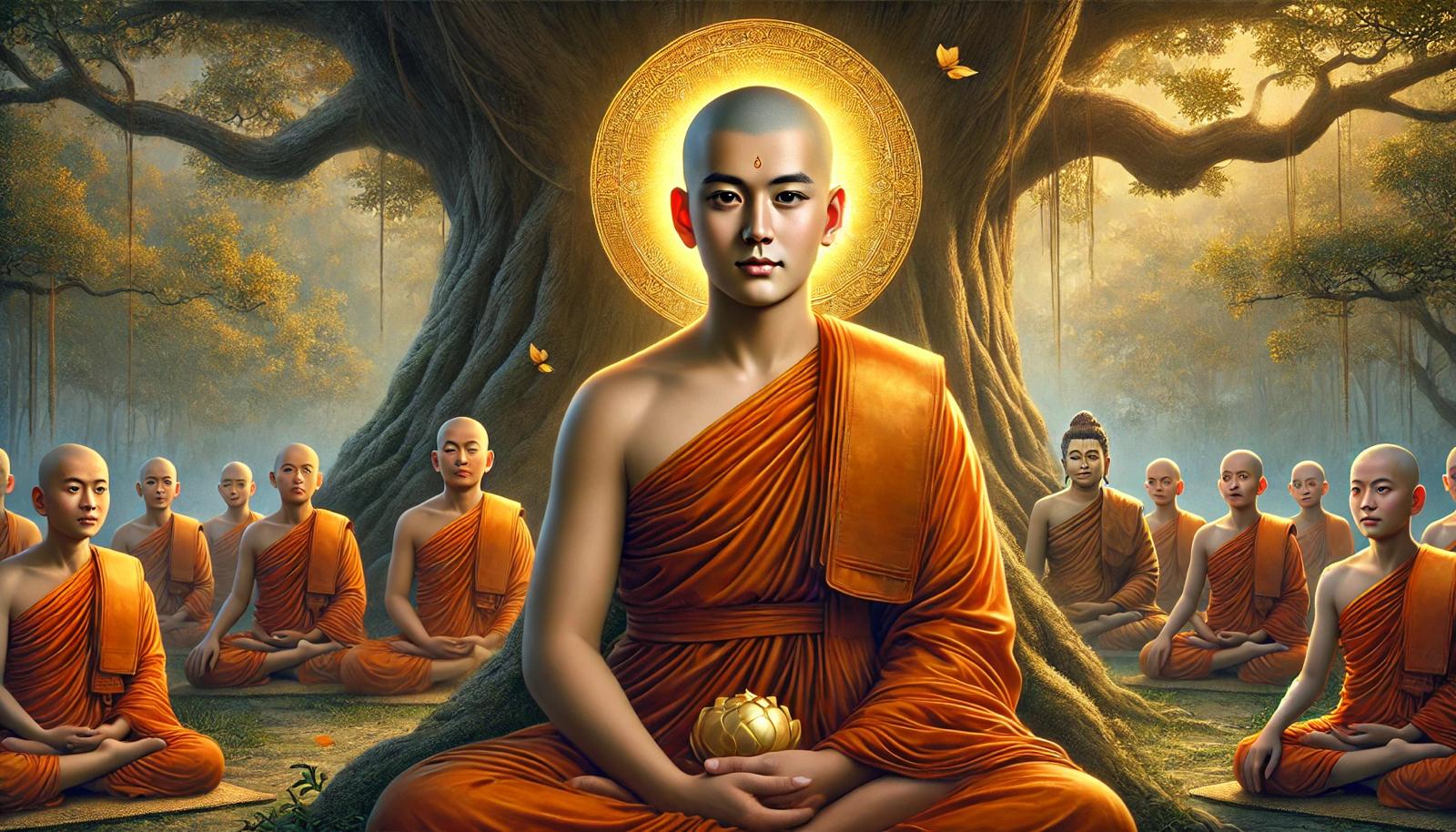
在佛陀所有的弟子中,相貌最庄严的,记忆力最强的,要算阿难陀尊者了。
关于阿难陀尊者,有着不平凡的一生,他对于当时的教团,以及今日的佛法,都有很深切的影响。
阿难陀和罗睺罗一样,所谓童年入道。在他儿童的时代就加入教团,他是和阿那律、跋提等一起出家的,最初释种七王子出家时,阿难陀以最小的年龄,参与其中。
阿难陀的父亲是白饭王,提婆达多就是阿难陀的哥哥,他所以能够在童年时加入僧团,可以说就是佛陀的希望。一个伟大的人物,在一生事业中最要紧的就是物色继承的人选,加以培植,加以提拔,在佛陀成道后不久,他就选上了阿难陀。因此,当机缘成熟时,阿难陀就和跋提王子等人一同加入僧团,披剃出家。阿难陀二十五岁出家,追随佛陀二十五年,一直侍奉在佛陀身边。
佛经中对阿难陀的赞扬很多。《增一阿含经》说他「知道时机,明白事物,所做的事都没有疑问,记忆中的事不会遗忘,而且学识广博又多闻,能忍而敬奉圣人。」
在教团里渐渐长大的阿难陀,有着温和慈悲的天性,以及动人的俊容。他是教团里里外外最受女众尊敬的人,对比丘尼,他尽心关切;对在俗的信女,他给予安慰。也因为有阿难陀的请求,僧团才有女众出家。
因为阿难陀在佛陀心目中是绍隆佛种的人,为了让阿难陀能够把持自己,专心修道,佛陀就想叫阿难陀做自己的侍者。
这是佛陀成道的第二十二年,佛陀已经五十三岁了,那时佛陀正住在竹林精舍,阿难陀被选为佛陀的侍者。在这以前,佛陀没有常随的侍者,侍奉佛陀都是由诸比丘轮流。
这时目犍连知道佛陀的意思,他和舍利弗来劝阿难陀道:
「阿难陀比丘!佛陀的意思是要你做他的侍者,譬如楼阁东面开窗,朝日必定先照到西壁,你年轻有为,聪明温和,我们希望你能够承担!」
阿难陀听后,以任重而推辞,经过目犍连、舍利弗的劝说,阿难陀提出三个条件:
一、佛陀的衣服,无论新旧,他不要穿著。
二、如有信众请佛陀应供,他不侍奉前去。
三、不是去见佛陀的时候,他不去见,此外都愿侍奉佛陀。
目犍连和舍利弗把阿难陀的意思转呈给佛陀,并向佛陀转达阿难陀的条件,佛陀非但没有生气,而且非常欢喜地赞叹道:
「阿难陀真是有品格的比丘,他提出的要求,是为了避免讥嫌,是必要的预防。因为阿难陀比丘是怕别人批评,说阿难陀是为了穿衣、为了食物才侍奉佛陀的,他知道预防,才有这样的要求。」
从此阿难陀就做了佛陀的侍者,这时他的年龄也只二十多岁。在他侍奉佛陀二十七年的岁月里,皆遵照佛陀的意旨行动,依教奉行,并跟随在佛陀的身后,到各地弘化。以这样的因缘,如大海似的佛法,完全流入阿难陀的心中。
年轻的阿难陀,每天跟随着佛陀,俨然成为佛陀与诸比丘之间的调和者。在僧团里,他经常保持着谦虚、虔敬、惭愧的心理。有不少的信众,都因为阿难陀的关系而皈依了佛教。
阿难陀集虔诚、质朴、勤劳、谨慎、谦虚、廉洁、守戒、寡欲、敏慧于一身,对佛法的了解也最为透彻,可是他在佛门的地位却不高。四大声闻,十六罗汉中都没有他。在佛陀十大弟子之中,他是博学多闻第一,也就是知识最渊博的弟子,但是却排在最后一位。
佛陀成道的四十九年,由动归静,佛陀宣布将在迦毗罗卫城三十余里的拘尸那迦罗城的娑罗双树间进入涅槃。阿难陀跪在佛陀的枕边,轻轻地问道:
「佛陀!我们以后对女众应采取什么态度?请佛陀再说一次给我听!」
佛陀看看跪在床四周的诸大弟子,然后对阿难陀说道:
「阿难陀!想要离烦恼证悟的人,是不可以把女众放在心中的。你要将老的女众看做自己的母亲,将年长的女众看做姐姐,将年轻的女众看做妹妹,阿难陀!你千万要记住啊!」
佛陀回答上面的问题以后,又把荼毗、建塔等的事一一加以说明。感情脆弱的阿难陀,想到这是佛陀最后的遗诫,一阵心酸,不觉流出眼泪来,他不敢再跪在佛陀的床前,赶快跑到园中哭了一场!
阿难陀想到佛陀将要涅槃,别的大弟子们都已开悟,唯有他,今后依谁来证悟呢?想到从今以后,再没有恩师给他服侍,他像断肠一样的伤心!
佛陀看到阿难陀不在身边,就叫人去把他叫来,又再对他说:
「阿难陀!你不要悲伤!有相会就有别离,有繁荣就有衰微,我不是常对你说吗?世间是无常的,有生必定有死,坏了的车子用修补来维持,那也不是长久的办法,有为的色身要坏,佛陀会在法性中照顾你们。你服侍我那么久,勤劳而能忍耐,你对我没有什么缺陷,我将以这个功德报答你。你用心精进修道,不久之后就会离开烦恼的系缚,能开悟证果!」
佛陀说到这里,阿难陀感激得泣不成声,佛陀又看看大家,对大家说道:
「诸比丘!阿难陀非常忠实地侍奉我多年,他很温和而善良,他听闻大法不忘,他的功德将来能在世间上发出光辉!」
阿难陀用手蒙着脸,悲泣地离开佛陀。在场的每一个人都流泪不止,可是像这样的流泪有什么用?要紧的是提出有关如何使正法久住的问题来请示佛陀才对,大家商量以后,又把阿难陀找回,公推他请问佛陀道:
「第一、佛陀涅槃后,以谁为师?
第二、佛陀涅槃后,以什么安住?
第三、佛陀涅槃后,恶人如何调伏?
第四、佛陀涅槃后,经典的结集,如何才能叫人起信?」
佛陀仍像往常一样,慈祥恺悌地回答道:
「阿难陀!你和大家好好记住,你们应依戒为师,依四念处安住,遇到恶人时,默摈置之,经首安立如是我闻,就叫人起信。你们依法而行,就是我的法身常在之处!」
佛陀的话,大家听了更感动!更伤心!
这是多么有权威的声音啊!
佛陀就这么进入安养的涅槃了!
四面八方的弟子听到佛陀涅槃的消息,都集拢而来,阿难陀想到佛陀生前,很少有妇人能到面前来参拜,于是他就先让比丘尼和在家信女来亲礼佛身,由此可知他永远是妇女们的同情者!
佛陀涅槃后,摩诃迦叶主持法会时,在众弟子面前当场指责阿难陀:「余垢未尽,不可住此。」阿难陀只得表示自己会深自反省。
当天晚上,他发奋用功修行,冥思默想,把一切放下,于中夜即开悟证果。阿难陀立即去找迦叶,迦叶紧闭着房门不开,只答应让阿难从钥匙孔里进来。阿难陀果然从钥匙孔进入房中,这样的神通力证明他已经得道了,迦叶便让他升坐到狮子座讲述经典。
最初结集的经典,所谓《长阿含经》、《中阿含经》、《杂阿含经》、《增一阿含经》,以及《譬喻经》、《法句经》等,都是这有名的第一次结集圣典大会,由阿难陀尊者诵出来的。
据《大唐西域记》记载,阿难陀在涅槃之前离开了摩揭陀国,前往毗舍离国。这时摩揭陀国的阿阇世王正要和毗舍离国开战,阿难心想,如果在摩揭陀国入灭,遗骨就不会分给毗舍离,如果到毗舍离入灭,他们也不会将遗骨分给摩揭陀国,所以他打算在两国交界处的恒河中间上空进入涅槃。
当阿难陀在渡过两国之间的界河时,便从船上飞升到空中入放光三昧,放出种种色光,进入涅槃,圣体并分成两半,使骨灰舍利分别落在河的两岸。两国国王于是各自拾取舍利,在自己的国内建造佛塔供奉,一个是在毗舍离城北方的大林重阁讲堂,一个是在王舍城外竹林精舍的旁边,称为阿难尊者半身舍利塔。
摩揭陀和毗舍离两国因为阿难陀入灭的因缘,遂释嫌修好,不再战争,救了千万人的生命财产。阿难陀尊者的牺牲,真是伟大崇高!虽然阿难陀尊者入灭了,但他对佛陀的功劳,对佛法的贡献,以及温和善良、谦虚忍让的圣格,永远活在佛弟子心中。
Date: 08/09/2025 08/10/2025
Location: Star River Meditation Center
Teacher: Yunquan Huang
Dharma Talk
Ānanda, Foremost in Extensive Learning
Among all the disciples of the Blessed One, the one of most handsome appearance and supreme memory was the Venerable Ānanda.
Venerable Ānanda lived an extraordinary life. His influence upon the Saṅgha of his time, and upon the Dharma today, is both deep and lasting.
Like Rāhula, Ānanda entered the path in his youth. As a child he joined the monastic community, renouncing the household life alongside Aniruddha, Bhaddiya, and others. When the seven princes of the Śākya clan first went forth, Ānanda, the youngest among them, was included.
His father was the King of White Rice, and his elder brother was Devadatta. It is said that he entered the monastic life in his youth because he was regarded by the Blessed One as a vessel for the Dharma. For a great teacher, the most urgent matter is to choose and nurture a worthy successor. Thus, shortly after attaining enlightenment, the Buddha selected Ānanda. When the time was ripe, Ānanda, together with Prince Bhaddiya and others, received the tonsure and entered the Saṅgha.
He renounced the world at the age of twenty-five and served the Blessed One for the next twenty-five years, remaining ever by his side.
The sūtras offer many praises of Ānanda. The *Ekottarika Āgama* says:
“He knows well the appropriate times, understands all phenomena, holds no doubts in his undertakings, forgets nothing he has heard, and is vast in learning and hearing. He is patient and reverent toward the noble ones.”
Growing in the community, Ānanda exhibited a gentle and compassionate nature, along with a radiant countenance. Among the monks and laity alike, he was most admired by women. To the bhikṣuṇīs, he offered heartfelt concern; to laywomen, he gave comfort and encouragement. It was through Ānanda’s repeated requests that the Saṅgha opened the path of ordination for women.
Because the Buddha regarded Ānanda as the one who would uphold the lineage of the Dharma, he wished that Ānanda, in self-restraint and concentration, would serve him directly as his attendant.
In the twenty-second year after enlightenment, when the Buddha was fifty-three years old, residing at the Bamboo Grove Monastery, Ānanda was chosen to serve as his personal attendant. Before this, the Buddha had no fixed attendant; various bhikṣus took turns attending to him.
Knowing the Buddha’s intention, Mahāmaudgalyāyana and Śāriputra approached Ānanda, saying:
“Bhikṣu Ānanda, the Blessed One wishes for you to be his attendant. Just as the rising sun first strikes the western wall when windows face east, so too do we hope you, in your youth, brilliance, and gentleness, will accept this responsibility.”
Ānanda, feeling the weight of the task, declined. But after their sincere persuasion, he offered three conditions:
1. He would not wear the Blessed One’s robes, whether new or old.
2. When lay followers invited the Buddha for offerings, he would not accompany him.
3. Unless summoned, he would not approach the Buddha of his own accord.
Mahāmaudgalyāyana and Śāriputra conveyed these conditions to the Buddha. Far from being displeased, the Buddha was delighted and praised him:
“Ānanda is indeed a bhikṣu of integrity. His conditions are born of foresight, so as to avoid suspicion. He fears others might accuse him of seeking food and clothing by serving me, and thus he speaks as he does.”
Thus, Ānanda became the Buddha’s personal attendant. Though in his twenties, he served the Tathāgata with utmost diligence for twenty-seven years, acting in accordance with his master’s will, faithfully upholding the teachings, and following the Buddha in his wanderings and teachings across the land.
By such a cause and condition, the boundless Dharma of the Buddha flowed entirely into Ānanda’s heart, like the ocean receiving all rivers.
Day after day, the youthful Ānanda followed the Buddha, serving as a bridge between the Buddha and the Saṅgha. Within the monastic community, he maintained a spirit of humility, reverence, and shame-consciousness. Many lay followers came to the path due to Ānanda’s presence and influence.
He embodied sincerity, diligence, modesty, restraint, wisdom, and deep understanding of the Dharma. Yet, in the hierarchy of the Saṅgha, his standing was not prominent. He was not among the Four Great Disciples or the Sixteen Arhats. Among the Buddha’s ten chief disciples, he was placed last—but honored as Foremost in Extensive Learning.
In the forty-ninth year of the Buddha’s teaching, as he turned from activity to stillness, he announced that he would enter parinirvāṇa between the twin śāl trees near Kuśinagara, some thirty yojanas from Kapilavastu.
By the Buddha’s pillow, Ānanda knelt and asked:
“Blessed One, how should we relate to women in the future? I pray you instruct me once more.”
Looking at the great disciples gathered by the bedside, the Buddha said to Ānanda:
“Ānanda, one who seeks to transcend affliction and attain realization should not hold women in mind. Regard the elderly among them as mothers, those older than you as elder sisters, and the young as younger sisters. Ānanda, remember this well!”
Having answered, the Buddha spoke of the cremation, the building of stupas, and other final matters. Ānanda, moved by this last instruction, felt a surge of sorrow. He could no longer remain by the bedside and ran into the garden, weeping.
He thought: “The Buddha is about to enter parinirvāṇa. Among the senior disciples, all have realized the Path—only I have not. Who now will guide me to realization? Who will I serve henceforth?” His grief tore at his heart.
When the Buddha noticed Ānanda absent, he summoned him and said:
“Ānanda, do not grieve. All meetings end in parting, all flourishing ends in decline. Have I not often told you that all conditioned things are impermanent? What is born will surely die. Just as a broken chariot is patched to keep moving, this body too must decay. The Tathāgata will remain with you through the Dharma.
You have served me faithfully, with diligence and endurance. You have committed no fault toward me. For this merit, I shall reward you. Apply yourself to the practice; soon you shall be free from the fetters of affliction and realize the fruit.”
Hearing this, Ānanda wept with gratitude. The Buddha then addressed the Saṅgha:
“O bhikṣus, Ānanda has served me for many years with unwavering loyalty. Gentle and kind, he retains all he hears of the great Dharma. His merit will shine in this world.”
Covering his face with his hands, Ānanda withdrew in tears. All present also wept, yet tears alone were not sufficient. What was needed now was to ask the Blessed One the essential questions concerning the future of the Dharma. After discussion, they brought Ānanda back and nominated him to ask:
“First, after the Buddha’s parinirvāṇa, whom shall we regard as teacher?
Second, upon what should we rely?
Third, how shall we deal with those of evil conduct?
Fourth, how shall the sūtras be compiled in a way that evokes faith?”
The Buddha, as always, answered with calm compassion:
“Ānanda, remember this well:
Let the precepts be your teacher.
Dwell in the Four Foundations of Mindfulness.
When encountering evil persons, maintain silent distance.
Begin the sūtras with ‘Thus have I heard’—this will inspire faith.
If you act according to the Dharma, then my Dharma-body shall remain with you always.”
All who heard these words were deeply moved.
Such was the voice of supreme authority.
Thus, the Buddha entered the serenity of parinirvāṇa.
Disciples from all directions gathered at the news of his passing. Remembering that few women had ever been permitted near the Buddha’s presence, Ānanda first allowed the bhikṣuṇīs and laywomen to pay homage to the sacred body—ever the compassionate ally of women.
After the Buddha’s passing, when Mahākāśyapa presided over the Council, he publicly rebuked Ānanda before the Saṅgha:
“Your impurities are not yet ended; you cannot remain among us.”
Ānanda, humbled, vowed to reflect and correct himself.
That night, he practiced with fervent diligence. In deep contemplation, he released all attachments. By midnight, he awakened and attained realization.
He immediately sought Mahākāśyapa, but the elder had locked his door. Ānanda entered through the keyhole by supernatural power—proof of his attainment. Mahākāśyapa then permitted him to ascend the lion’s seat to recite the sūtras.
Thus, during the First Council, the Dīrgha Āgama, Madhyama Āgama, Saṃyukta Āgama, Ekottarika Āgama, Avadāna Sūtras, Dhammapāda, and others were all recited by Venerable Ānanda.
According to the Great Tang Records on the Western Regions, before entering nirvāṇa, Ānanda left Magadha and went to Vaiśālī. At that time, King Ajātaśatru of Magadha was preparing for war against Vaiśālī. Ānanda thought:
“If I enter parinirvāṇa in Magadha, my relics will not be shared with Vaiśālī. If I pass away in Vaiśālī, they will not share with Magadha. Better that I pass away in the sky above the Ganges between both lands.”
As he crossed the river, he rose from the boat into the air, entered the Samādhi of Radiant Light, emitted various colored rays, and entered parinirvāṇa. His body split into two halves, and the relics fell upon both banks of the river.
The kings of both lands collected the relics and built stupas—one in the north forest lecture hall of Vaiśālī, and the other beside the Bamboo Grove Monastery outside Rājagṛha—each enshrining half the body.
Due to Ānanda’s passing, the two nations reconciled and ceased warfare, saving countless lives and wealth. Truly, the sacrifice of Venerable Ānanda was noble and sublime.Though Venerable Ānanda has entered parinirvāṇa, his merit in service to the Buddha, his contribution to the Dharma, and his gentle, humble, and patient character shall forever live on in the hearts of the Buddha’s disciples.