时间:10/04/2025 10/05/2025
地点:星河禅修中心
主讲:黄云全
佛法知识
佛法与婚姻
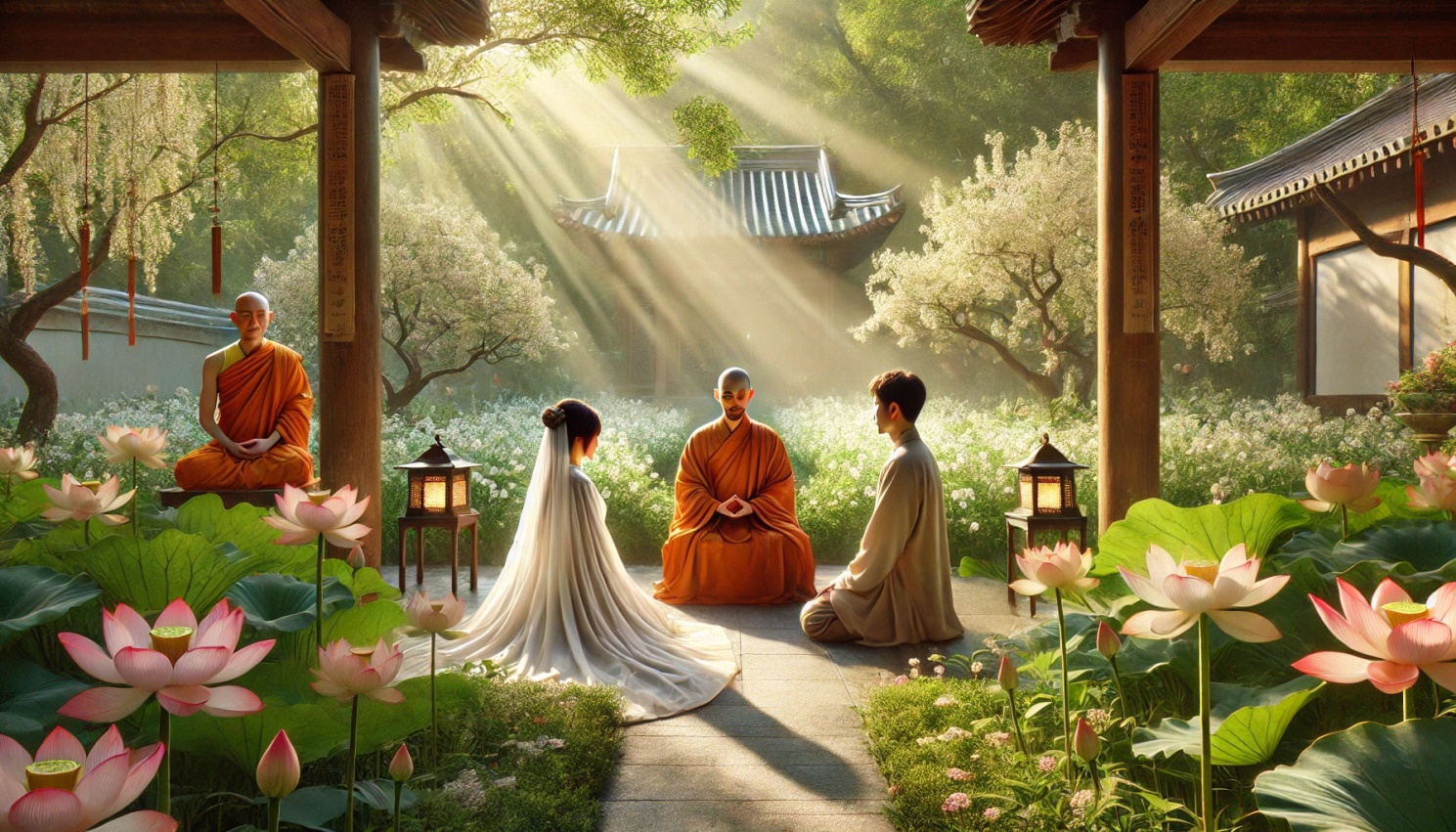
在许多人心中,佛法强调出离、放下与觉悟,而婚姻则被视为世俗情感与责任的结合,似乎两者天然存在张力。然而从佛法的真实精神来看,婚姻并非修行的障碍,也不是觉悟的对立面。相反,婚姻若以正见来经营,恰恰是一处极为真实、深刻而具体的修行道场,是佛法在世间生活中的重要落实之处。
佛法看待婚姻,首先不是从“满足我”的角度,而是从因缘与责任的角度来理解。两个人能够相遇、相识、相伴,并非偶然,而是业力、性格、需求与时机等多重因缘的和合。明白这一点,婚姻便不再只是浪漫或契约,而是一段需要被珍惜与承担的生命因缘。当我们以因缘心看待伴侣,便少了理所当然的索取,多了理解与尊重。
婚姻中的痛苦,往往不是因为对方不够好,而是因为“我执”过重。期待对方符合自己的想象,要求关系必须不断满足自己的情绪与需求,一旦落空,便生起失望、抱怨甚至对立。佛法指出,痛苦的根源不在外境,而在执着。若能在婚姻中学习观照自心,看清贪、嗔、控制欲与不安的来源,关系本身就成为照见自我的明镜。
从佛法的角度看,真正稳固的婚姻,并不建立在激情或占有之上,而建立在善意、理解与共同成长之上。夫妻之间若能以慈悲心对待彼此的脆弱,以智慧看待彼此的局限,婚姻就不再是一种束缚,而成为支持修行的力量。佛法强调“和合”,并非没有差异,而是在差异中不对立、不伤害、不相互消耗。
在沟通层面,佛法中的正语对婚姻尤为重要。许多关系的裂痕,并非来自重大事件,而是来自日积月累的言语伤害、冷漠与误解。学会在情绪中暂停,在语言中留有余地,说真实而不尖锐的话,说关怀而非指责的话,本身就是修行的体现。当语言变得温和而清明,关系自然会松动紧张的结。
佛法也不把婚姻理想化。它承认无常,承认变化,承认人心会动摇、环境会改变。正因为如此,佛法教导我们不要把安全感完全寄托在关系的稳定上,而要回到内在的觉知与承担。若婚姻顺缘具足,便以感恩心珍惜;若因缘转变,也能以清明心面对,不以怨恨结束一段曾经的同行。
更深层来看,婚姻是学习无我与利他的重要场域。两个人长期相处,最容易触动自我中心,也最有机会松动自我中心。一次次放下坚持、一次次选择理解、一次次为整体而非只为自己着想,都是无形中的修行。当这种心态成熟时,婚姻不再只是情感关系,而成为生命彼此成就的同行之路。
因此,佛法与婚姻并不冲突。佛法并不要求婚姻必须完美,而是引导人在婚姻中保持觉知、学习放下、培养慈悲。若能如此,婚姻既不会吞没自我,也不会阻碍觉悟,反而能让佛法在真实的人间关系中落地生根,使两个人在烟火日常中,共同走向更清明、更自在的人生。
Date: 10/04/2025 10/05/2025
Location: Star River Meditation Center
Teacher: Yunquan Huang
Dharma Knowledge
Buddhism and Marriage
At first glance, Buddhism—often associated with renunciation and liberation—may seem incompatible with marriage, which is rooted in worldly commitments, emotions, and responsibilities. Yet from the true perspective of the Dharma, marriage is not an obstacle to practice, nor is it opposed to awakening. On the contrary, when approached with right understanding, marriage becomes one of the most direct and powerful arenas for spiritual growth.
In Buddhism, marriage is not viewed primarily as a vehicle for personal fulfillment, but as a karmic and relational bond shaped by causes and conditions. Two people come together through a convergence of past actions, shared tendencies, and present circumstances. Understanding this helps shift the relationship away from entitlement and expectation toward responsibility and care. Marriage then becomes not “what can you give me,” but “how can we support one another wisely.”
Much of the suffering in marriage does not arise from the partner’s shortcomings, but from self-centered attachment. When we expect our partner to fulfill our emotional needs, validate our identity, or conform to our ideals, frustration is inevitable. Buddhism teaches that suffering comes not from others, but from clinging. A marriage grounded in Dharma practice invites each person to observe their own craving, anger, fear, and control—and to work with these patterns with honesty and compassion.
From a Buddhist point of view, a healthy marriage is not sustained by passion or possession alone, but by goodwill, understanding, and shared growth. When spouses relate with patience and kindness, recognizing each other’s limitations without judgment, the relationship becomes supportive rather than restrictive. Harmony does not mean sameness; it means respecting differences without turning them into sources of conflict.
Communication is another area where Buddhist principles are essential. The teaching of right speech—truthful, gentle, timely, and beneficial communication—can transform a marriage. Many relationships erode not through major betrayals, but through habitual harsh words, silence, or misunderstanding. Learning when to pause, how to speak without blame, and how to listen with presence is a profound form of practice that directly nurtures trust and intimacy.
Buddhism does not idealize marriage. It openly acknowledges impermanence and change. Feelings evolve, circumstances shift, and no relationship is guaranteed to last unchanged. Recognizing this, the Dharma encourages us not to anchor our entire sense of security in the permanence of the relationship, but to cultivate inner stability and awareness. When conditions are harmonious, we appreciate them with gratitude. When they change, we face them with clarity rather than resentment.
On a deeper level, marriage offers a unique training ground for selflessness and compassion. Living closely with another person brings the ego to the surface—its demands, defenses, and fears. Yet this same proximity offers countless opportunities to soften the self, to choose understanding over reactivity, and to act for the well-being of the whole rather than for personal gain. In this way, marriage becomes not merely a personal relationship, but a path of mutual awakening.
Thus, Buddhism and marriage are not in opposition. The Dharma does not require marriage to be perfect, nor does it demand withdrawal from relational life. Instead, it offers guidance on how to live marriage with mindfulness, wisdom, and compassion. When practiced sincerely, marriage does not entangle us further—it refines the heart, clarifies the mind, and brings the principles of the Dharma into the most intimate dimensions of human life.