时间:08/02/2025 08/03/2025
地点:星河禅修中心
主讲:黄云全
佛法知识
情绪的佛法观察
在佛法的修行体系中,情绪并不被视为敌人,也不被简单地归类为“好”或“坏”。佛陀并没有教导我们去压抑情绪,也没有教我们盲目跟随情绪,而是引导我们以觉知与智慧去观察情绪、了解情绪、超越情绪。情绪不是必须消灭的障碍,而是修行中一扇极重要的门。透过对情绪的如实观照,我们可以更深入地认识自己、看见执著的根源,并开启通向解脱的道路。
首先,佛法承认情绪作为五蕴之一的“受”,是众生体验世界不可避免的一部分。我们之所以生起情绪,是因为感官与外境接触所引发的感受,再经由想(概念)、行(反应)而形成情绪波动。例如,我们听到批评,心中立刻感到委屈或愤怒;看到喜欢的事物,心生欢喜与贪恋。这一切过程,迅速而自动,令人容易迷失其中。然而佛陀并不否定这种自然的心理现象,而是鼓励我们训练心的“觉知”,在情绪生起之时,能够“知正在生起”,不被其牵着走。
佛法对情绪的观察,不是用“对错”去评价情绪的本身,而是观察它的因缘性与无常性。任何情绪,无论是喜、怒、哀、乐,都不是凭空出现的,它们都有其生起的条件:外境的触发、内心的习气、潜藏的执著、过往的经验。当我们明白“情绪是因缘和合的产物”,就不会再把它当作“我是谁”的一部分,也不会落入“我就是这样”的固化认同。
此外,佛法提醒我们,情绪虽然真实,却不具永恒性。当我们痛苦的时候,常会以为这种状态会一直持续下去,甚至因此产生绝望。但通过持续的禅修与观照,我们可以发现:即便是最剧烈的情绪,也如潮起潮落,终将过去。如《金刚经》所言:“一切有为法,如梦幻泡影。”情绪虽然强烈,却不是实有,正是因为它无常,所以我们有可能与它共处而不被它吞没。
修行中,面对情绪的第一步,是承认它的存在,不压抑、不否认。很多人以为修行就不该有情绪,反而在内心压制情绪,结果让情绪转为更深层的苦结。佛法教我们“照见五蕴皆空”,其中第一步便是对“受”(感受)的如实照见。我们不需要立刻改变情绪,只要能够清清楚楚地知道:“我正在生气”“我正在害怕”“我现在很难过”,这种觉知本身,就已经是修行。
第二步,是观察情绪的来去过程。愤怒是怎么升起的?它从哪里开始?是否与某种期待或执著有关?它是否引发了其他反应?当我们用这样的方式去看情绪,情绪就不再是一股压倒性的力量,而变成一串可以被观察、被理解的因果链。这种观照,不是分析或评判,而是带着慈悲心去“陪伴”这个情绪。
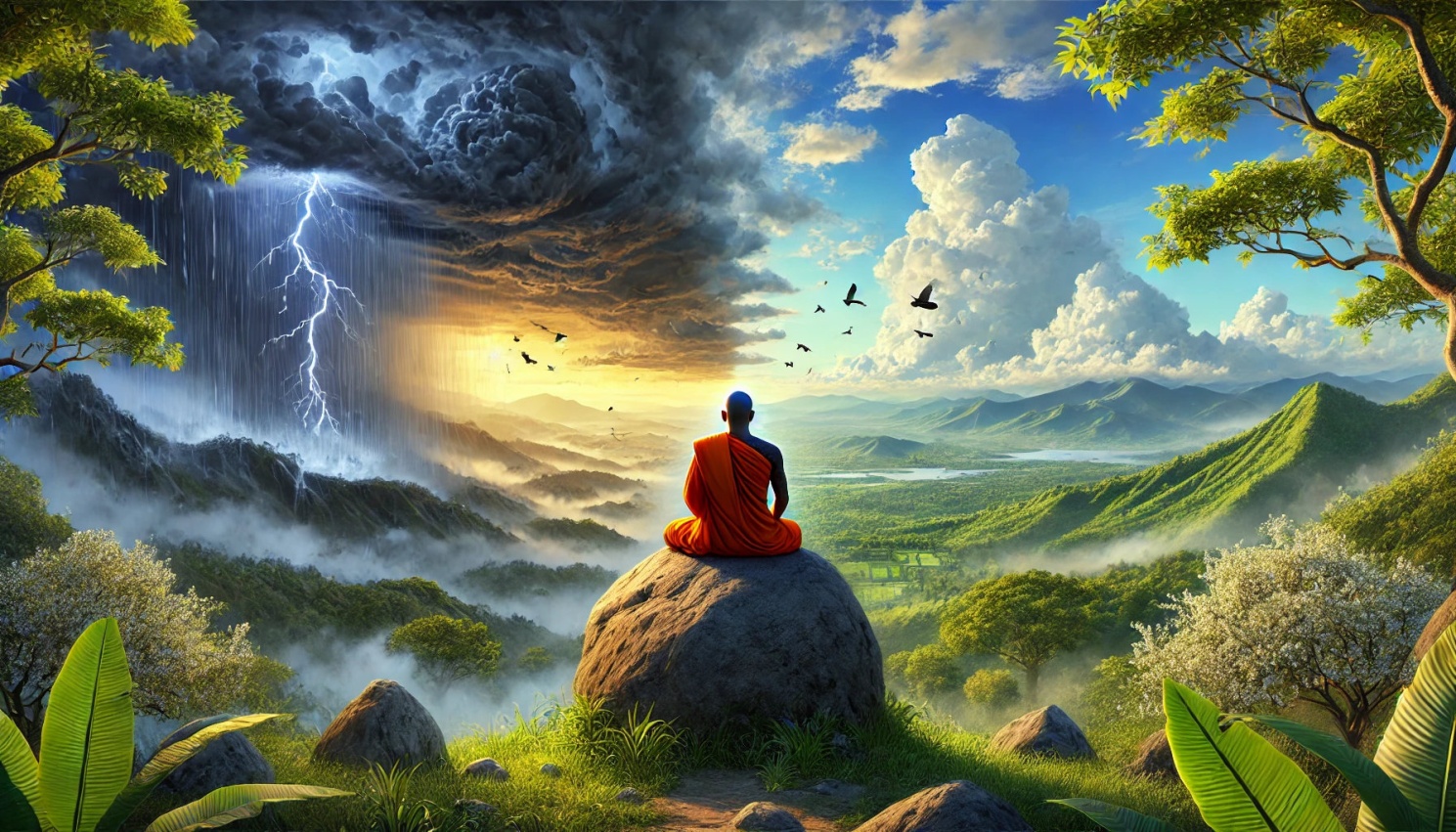
佛法所强调的“正念”,正是帮助我们在情绪中保持觉照的力量。不是“用正念压住情绪”,而是“用正念包容情绪”。当我们有能力在情绪风暴中保持一份清明,我们就不会立刻被推着走,而能多一份选择的空间。这种空间,就是解脱的起点。
最终,我们会发现,情绪本身并不可怕,可怕的是我们对它的误解、对它的抗拒、以及对它的认同。当我们不再把情绪当成敌人,也不再当成自我时,我们便得以在每一次情绪中觉察因缘,在每一次波动中看见执著,在每一次痛苦中练习慈悲。
因此,情绪不是障碍,而是觉醒的道场。透过佛法的观察,我们学习如何与情绪共处,如何在情绪中保持觉知,如何从情绪的波动中看到自我执著的痕迹。如此一来,情绪不再是烦恼的根源,而成为智慧与慈悲的修炼之地。
Date: 08/02/2025 08/03/2025
Location: Star River Meditation Center
Teacher: Yunquan Huang
Dharma Knowledge
Observing Emotions through the Lens of the Dharma
In Buddhist practice, emotions are not seen as enemies, nor are they simply labeled as good or bad. The Buddha did not teach us to suppress emotions or blindly follow them, but rather to observe them with mindfulness and wisdom. Emotions are not obstacles to be eliminated—they are valuable teachers, gateways through which we can understand ourselves more deeply, see the roots of attachment, and walk the path of liberation.
First, Buddhism recognizes emotions as part of the aggregate of feeling (vedanā)—one of the five skandhas or components of human experience. Emotions arise naturally from contact between the senses and the world. A sound, a word, a memory, or an internal thought can trigger a whole cascade of emotional responses. These responses often occur automatically, before we even realize it. But rather than condemning this process, the Buddha encouraged us to train the mind to be aware of what is arising, moment by moment.
In the Dharma, emotions are not judged by moral value, but observed in terms of their causal nature and impermanence. All emotions—joy, anger, sadness, desire—arise due to causes and conditions. They are not “you.” They are not permanent. They are not absolute. They come, they stay for a time, and they pass. When we see that emotions are conditioned phenomena, we stop clinging to them as part of our identity. We no longer say, “I am angry,” but rather, “Anger is arising.”
This is crucial: emotions are real, but not lasting. When we’re caught in a powerful emotion, it feels like it will never end. But meditation reveals their nature: they rise and fall like waves on the ocean. As the Diamond Sutra reminds us: “All conditioned phenomena are like dreams, illusions, bubbles, shadows.” When we see this truth, we can relate to emotions with patience and steadiness, rather than panic or suppression.
The first step in working with emotions is acknowledging their presence. This means we don’t deny, repress, or shame ourselves for feeling. Some people think being a “spiritual person” means having no anger or fear. But the Buddha never said that. He taught us to observe emotions—not to pretend they don’t exist. Simply recognizing “Sadness is here” or “Jealousy is arising” with calm presence is already a powerful step in practice.
The next step is to observe the process of emotion: How did this arise? What triggered it? Is it linked to a desire, an expectation, a belief? What story is the mind telling right now? This kind of observation does not mean overanalyzing, but gently tracking the emotional current, without being swept away by it. We learn to stay with the feeling, to be present with it, to breathe with it. That presence itself is transformative.
This is the power of mindfulness. Not to fight emotions, but to embrace them with clarity. When we are mindful in the midst of emotional storms, we can stop reacting blindly. We begin to see choice. We learn that we are not the emotion—we are the awareness holding it. And in that space, insight is born.
Over time, we realize that emotions themselves are not the problem. The problem lies in our misunderstanding, resistance, and identification. When we no longer resist emotions, when we stop saying, “This should not be happening,” we free ourselves. When we no longer define ourselves by what we feel, we recover our vastness.
Thus, emotions are not barriers to awakening—they are opportunities for awakening. Through Dharma practice, we learn to befriend our emotions, observe them skillfully, and discover the deep truths they carry. In doing so, emotions no longer pull us into suffering—they become fertile ground for cultivating wisdom, compassion, and inner freedom.