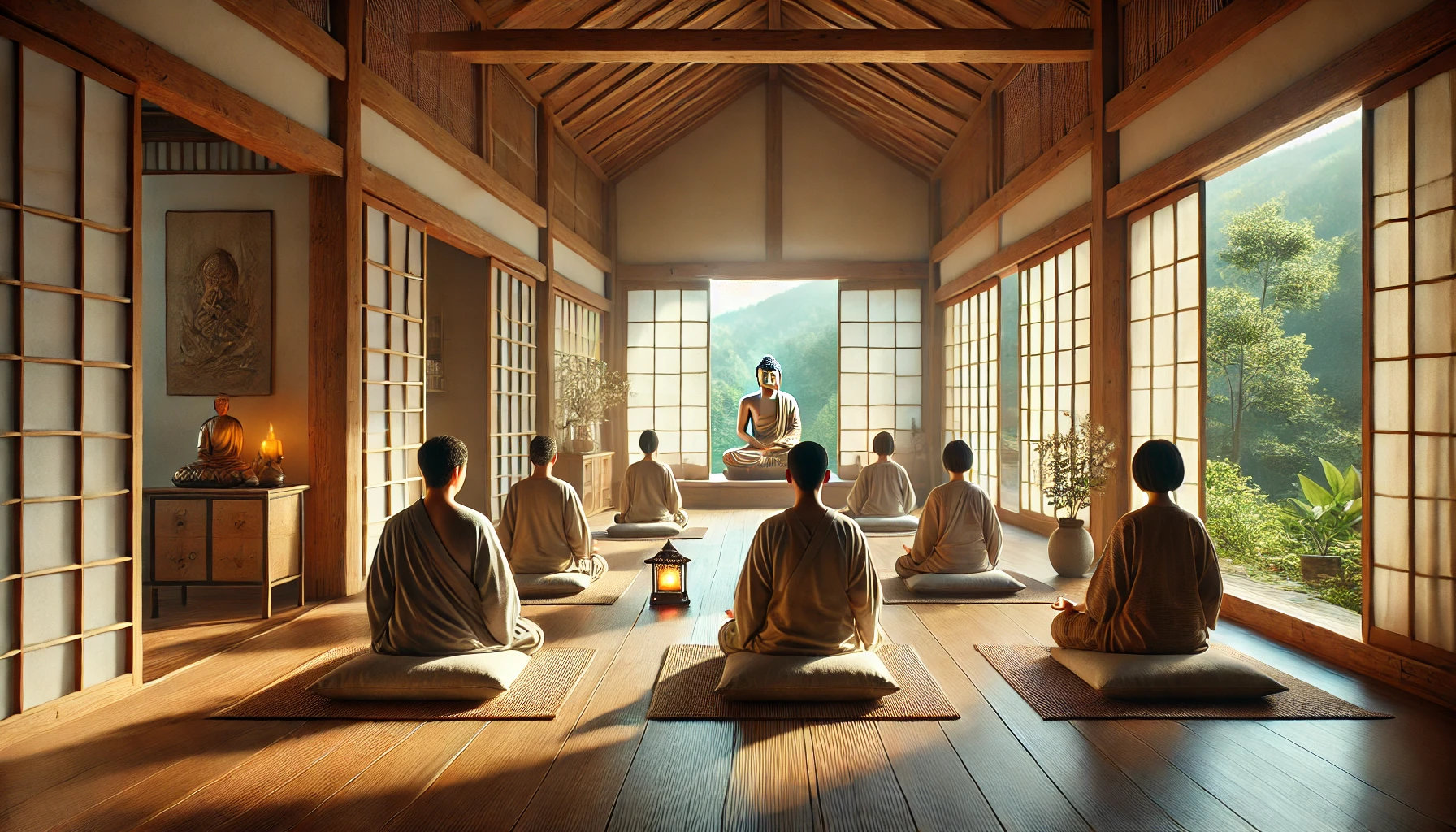
时间:01/11/2025 01/12/2025
地点:星河禅修中心
主讲:黄云全
佛法知识
在家学佛的原则
在家学佛,是将佛陀的教法落实于世俗生活之中,不离家庭、不离社会、不舍工作、不逃责任,却能于日常之中修心转念、种善培福、趋向解脱。佛法并不是出家人的专利,而是一切有情众生都能学习与实践的智慧之道。对在家居士而言,虽然无法如出家人般专心专注地修道,但若能把握正确的原则,也一样可以在红尘中走向觉悟之路。
第一项原则是“以信为根”。在家学佛的第一步,是对佛、法、僧三宝生起正信。信佛,不是将佛陀神化成万能救世者,而是信佛所证的觉悟与慈悲,值得效法;信法,是信因果、信缘起、信四圣谛、八正道之真实不虚;信僧,是信依佛修行的清净僧团,乃至身边持戒奉法的善知识。正信是护持修行的灯塔,能使我们在繁忙的生活中不迷失方向。
第二项原则是“以戒为本”。在家学佛者虽不受比丘戒,但五戒十善却是最基本的修行根基。五戒为:不杀、不盗、不邪淫、不妄语、不饮酒,这些不仅是自我保护,也是与人和合共处的基石。在家人若能持戒清净,身心自然安稳,行为自然合道,便为修定修慧打下良好基础。戒不是限制自由,而是引导生命趋向清净与尊严。
第三项原则是“以行持为要”。学佛不能停留在理论上,更不能只是嘴上功夫,而要落实于行为中。布施、持戒、忍辱、精进、禅定、智慧,皆需在生活中真实践行。比如在家庭中实践慈悲包容,在职场中守持诚信正念,在困境中生起忍辱智慧,这些都是修行。佛法若不能在家庭、人际、工作中开花结果,便只是空谈。
第四项原则是“以正念为核心”。在家修行的最大挑战,是生活琐事繁杂、干扰频多,容易使心散乱失念。因此,培养正念至关重要。正念是当下的清醒,是对身心起动的如实觉知。刷牙、开车、煮饭、工作、交谈,皆可成为正念训练的场所。正念一旦培养稳固,即便身在喧嚣红尘,心中亦有安定之地。
第五项原则是“以因果为指南”。佛教讲“因果不虚”,凡事皆由因缘所成。在家学佛者应常以因果观来反省自己,种善因得善果,种恶因得苦果。不怨天尤人,不强求果报,而是回归当下,种下清净、利他、觉知的种子。当一个人深信因果、谨慎造业,他的命运自然也会逐步转向光明。
第六项原则是“以家庭为道场”。在家修行,不必远离亲人、远离社会,而是在现有的生活环境中修心转念。把家庭视为最真实的道场,把配偶、父母、子女视为修忍辱与慈悲的对象。把经济责任视为布施的机会,把生活琐事视为正念的磨炼处。如此,处处皆道场,事事皆修行。
第七项原则是“亲近善知识、随缘听法”。在家学佛不容易,必须不断获得法的滋养与引导。要主动亲近有德行的善知识,参与共修法会,听闻正法经典。哪怕再忙,也要安排时间读经、禅修、听闻佛法开示,保持法喜与正见的增长。正如水常流不腐,心常闻法不乱。
第八项原则是“以菩提心为方向”。真正的佛弟子,不应只求自利解脱,更应发愿利他救苦。在家居士虽身处世间,但可以发愿广行布施、护持三宝、教育子女、推广善法、帮助有需要的人。发大心、行小事,在在都是菩萨行。唯有大心者,方能成就大德。
总结而言,在家学佛,并不是受限者的权宜之计,而是脚踏实地、契合现代生活的修行方式。它不是把佛法变浅,而是让佛法深入每一个起心动念;不是把生活变枯,而是让生活本身成为修行的泉源。只要发心真切,依教奉行,无论在何处、身份为何,都能走向清净、觉醒、圆满的人生。
Date: 01/11/2025 01/12/2025
Location: Star River Meditation Center
Teacher: Yunquan Huang
Dharma Knowledge
Guiding Principles for Lay Buddhist Practice
Practicing Buddhism as a layperson means bringing the Dharma into everyday life—without leaving family, society, or responsibilities. It is not about escaping the world, but about transforming one’s relationship to it. Lay practice is not a lesser form of Buddhism. It is a path of integration, where spiritual cultivation is harmonized with daily living. With sincerity and commitment, lay followers can walk the path toward awakening just as fully as monks or nuns. The following are key principles that guide this journey.
The first principle is“faith as foundation.” To begin practicing the Dharma, one must establish confidence in the Three Jewels: the Buddha, the Dharma, and the Sangha. Faith in the Buddha is not blind worship, but trust in his awakened mind and compassionate example. Faith in the Dharma is confidence in the truths of impermanence, dependent origination, karma, and the path to liberation. Faith in the Sangha is respect for those who sincerely follow the path and can guide us. Faith keeps us oriented when life becomes confusing.
The second principle is“ethics as the root.” While laypeople do not follow monastic vows, the Five Precepts are the moral cornerstone: abstaining from killing, stealing, sexual misconduct, false speech, and intoxicants. These create a safe, harmonious life and serve as the groundwork for meditation and wisdom. Upholding these precepts is not about restriction—it is about living with dignity, awareness, and compassion.
The third principle is“practice through daily conduct.” Buddhism is not just philosophy or ritual—it must be lived. Generosity, patience, mindfulness, and insight are practiced not only in temples but in homes, workplaces, and streets. Forgiving your spouse, speaking truthfully at work, helping a neighbor—these are all acts of Dharma. If the teachings don’t manifest in our actions, they remain theoretical.
The fourth principle is“mindfulness as the core.” The biggest challenge for laypeople is the busyness of modern life. Cultivating mindfulness helps us stay centered. Mindfulness means being aware of what we are doing, feeling, and thinking in each moment. Walking, cooking, driving, talking—all become opportunities to train attention and develop insight. With mindfulness, even chaotic life becomes a path of peace.
The fifth principle is“karma as guidance.” Understanding cause and effect keeps our practice grounded. When we recognize that every thought and deed has consequences, we become more intentional and responsible. Instead of blaming others or complaining about fate, we focus on planting seeds of kindness, truth, and clarity. A deep trust in karma leads to wise living and inner strength.
The sixth principle is“the home as the practice ground.” Lay practice doesn’t require isolation. Your family, career, and community are your training grounds. Parenting becomes a practice of patience and love; earning money becomes a practice of ethical livelihood; household tasks become mindfulness exercises. Wherever you are, you can practice.
The seventh principle is“learning from good teachers and staying connected to the Dharma.” Laypeople must nourish their understanding regularly. This means listening to Dharma talks, reading sutras, and joining communities of practice. Even if life is busy, consistent exposure to the teachings protects the mind and keeps the path alive. Like water for a plant, the Dharma sustains our growth.
The eighth principle is“bodhicitta as the compass.” True Buddhists don’t practice for themselves alone. Even as laypeople, we can cultivate the wish to help all beings. This means doing good in the world—donating, volunteering, spreading the Dharma, raising kind children, or simply being a good friend. Small acts done with a big heart are the essence of the Bodhisattva path.
In summary, being a lay practitioner is not a compromise—it is a living expression of the Dharma. It is not about doing less; it is about doing with intention. Lay life, with all its complexities, offers countless opportunities for insight, compassion, and transformation. With right understanding and sincere effort, the household becomes a temple, daily life becomes a path, and the heart becomes boundless.