时间:06/22/2024 06/23/2024
地点:星河禅修中心
主讲:黄云全
佛法知识
佛教在印度的传播
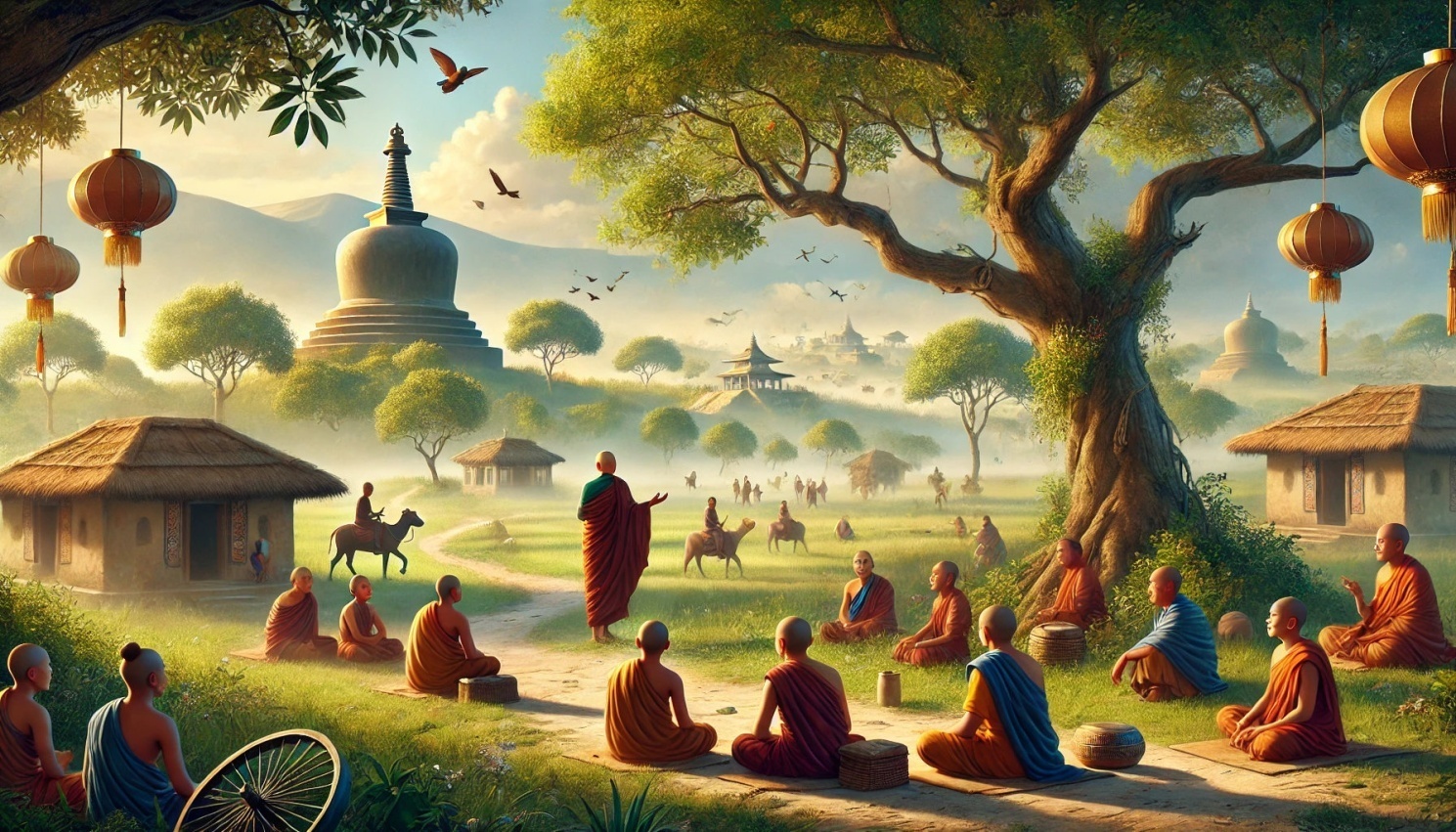
佛教的传播起始于公元前6世纪释迦牟尼佛在印度北部弘法之后。佛陀成道后,以四处游行教化的方式,将其所证悟的“苦集灭道”四圣谛传授给弟子与世人,逐渐形成了以比丘僧团为核心的修行与弘化系统。这种修行团体不仅维系佛法的延续,也成为佛教向外传播的基础。在佛陀灭度后的数百年间,佛教在印度迅速扩展,并成为次大陆最重要的宗教与思想传统之一,其传播轨迹与多重因素息息相关,包括王权护持、僧团制度、教理实践以及语言转译等。
佛陀圆寂后,弟子们为保存其教法,举行了结集大会,最初的经典被口耳相传地保存于比丘群体之间。随着时间推移,佛教逐步形成了多个流派,如上座部与大众部。这些分化虽体现理解与实践上的不同,但也促成了佛法的丰富与多元。早期佛教在摩揭陀、拘萨罗等地扎根,依靠僧团游行托钵、讲法布道的方式,让佛法渗透至广大民间。
佛教传播的一大转折点,是孔雀王朝的阿育王登基。作为古印度最具影响力的帝王之一,阿育王在加冕初期穷兵黩武,但在征服羯陵伽国的惨烈战争后,深感杀戮之苦,因而皈依佛教。他不仅亲自奉行佛法,还将其推为治国根本。他下令修建佛塔、寺院,刻石立碑传播佛教道理,派遣使团至全国各地及海外弘法,包括今日的斯里兰卡、中亚乃至东南亚等地。这使佛教由区域性宗教跃升为跨文化、跨语言的精神体系。
与此同时,随着佛教典籍由巴利文、摩揭陀语逐渐转译为其他地区语言,佛法更能被不同族群接受。寺院不但成为修行中心,也兼具教育、医疗与文化传播功能,是印度古代社会不可或缺的组成。尤其是在那烂陀、室利尸罗等地建立的大型佛教大学,吸引了南亚与中亚众多学者僧侣前来求学、辩经、著述,使佛教成为知识交流的桥梁。
在教理层面,随着大众需求的变化,佛教思想不断演进。从原始佛教的四谛八正道逐步发展出更为庞大的菩萨理想、大乘教义,如般若、中观、唯识等思想体系。这些思想推动佛教适应更广泛的社会阶层,使其影响不限于出家众,也进入了王室、商人、农人、艺术家等领域,表现于诗歌、雕刻、绘画与建筑中,如阿旃陀石窟、婆罗浮屠等遗产即为明证。
然而,约自公元7世纪后,佛教在印度逐渐走向衰微。一方面,教义繁复与僧团腐化削弱了其社会基础;另一方面,婆罗门教的复兴与融合,使印度社会再度回归吠陀传统;再加上穆斯林入侵破坏寺院制度,使佛教在印度本土失去广泛基础,最终几近消失。但其精神与文化已深植于南亚土壤,并由印度走向世界各地,成为全球性的重要宗教与哲学传统。
总之,佛教在印度的传播是一个从民间出发、由僧团组织维系、在王权推动下广泛扩张、在思想交锋中不断演化的过程。虽然它在印度的辉煌逐渐凋零,但佛陀的觉悟之道并未湮灭,反而通过这一传播历程,为世界文明增添了深远的人文光辉。
Date: 06/22/2024 06/23/2024
Location: Star River Meditation Center
Teacher: Yunquan Huang
Dharma Knowledge
The Spread of Buddhism in India
The spread of Buddhism in India began in the 6th century BCE, following the enlightenment and teachings of Siddhartha Gautama, known as the Buddha. After attaining awakening under the Bodhi tree, the Buddha spent the remainder of his life wandering through northern India, sharing the Dharma—the Four Noble Truths and the Eightfold Path—with people of all backgrounds. His teachings attracted a diverse group of followers, leading to the formation of monastic communities that became the foundation of Buddhist transmission.
After the Buddha’s passing (Parinirvana), his disciples convened councils to preserve and systematize his teachings. These early councils marked the beginning of a dynamic oral tradition, which eventually gave rise to various schools such as the Theravāda and Mahāsāṃghika. Despite doctrinal differences, these schools shared a common emphasis on ethics, meditation, and liberation from suffering. Buddhist monks traveled across the Indian subcontinent, spreading the teachings through public discourses, debates, and the example of monastic life.
A pivotal moment in the expansion of Buddhism came during the reign of Emperor Ashoka in the 3rd century BCE. After witnessing the devastation caused by his conquest of Kalinga, Ashoka converted to Buddhism and adopted it as a guiding principle for governance. He supported the construction of stupas and monasteries, inscribed edicts on pillars and rocks to promote ethical conduct, and dispatched missionary emissaries to various regions, including Sri Lanka, Central Asia, and Southeast Asia. Under Ashoka, Buddhism transformed from a regional tradition into a widespread transnational movement.
The transmission of Buddhism was further enabled by linguistic adaptation. Teachings originally conveyed in vernacular dialects such as Magadhi were later translated into Pāli and Sanskrit, making them accessible to wider audiences. Monasteries became not only centers of spiritual practice but also hubs of education, healthcare, and cultural exchange. Prestigious institutions like Nālandā and Vikramaśīla attracted scholars from across Asia, fostering a rich tradition of philosophical debate and scholarly production.
As the teachings evolved, new doctrinal developments emerged to meet the spiritual needs of broader society. Mahāyāna Buddhism introduced the ideal of the bodhisattva and emphasized compassion, universal salvation, and expansive cosmological visions. These teachings resonated with laypeople, royalty, merchants, and artisans alike, leading to the incorporation of Buddhist ideas into literature, sculpture, and monumental architecture. Sites such as the Ajanta Caves and Borobudur reflect the deep integration of Buddhism into cultural life.
However, from the 7th century onward, Buddhism in India began to decline. Internal factors such as doctrinal complexity and monastic laxity weakened its social support. The resurgence of Brahmanical traditions, which gradually absorbed or challenged Buddhist practices, further diminished its influence. Additionally, the arrival of Islamic invasions led to the destruction of many monasteries and educational centers. By the 13th century, Buddhism had nearly disappeared from its land of origin, surviving only in isolated regions.
Despite its decline in India, Buddhism’s legacy endured. Its philosophies, artistic expressions, and ethical principles had already taken root in other parts of Asia, where they continued to flourish. Today, Buddhism remains a global tradition, with millions of followers drawing inspiration from teachings that were first shared in the forests and villages of ancient India.
Thus, the spread of Buddhism in India was a profound historical journey shaped by spiritual insight, royal patronage, institutional development, and intercultural dialogue. Although its physical presence in India diminished, the Dharma it carried has traversed time and space, illuminating countless lives with the light of wisdom and compassion.