时间:05/11/2024 05/12/2024
地点:星河禅修中心
主讲:黄云全
佛法知识
佛陀与弟子的关系
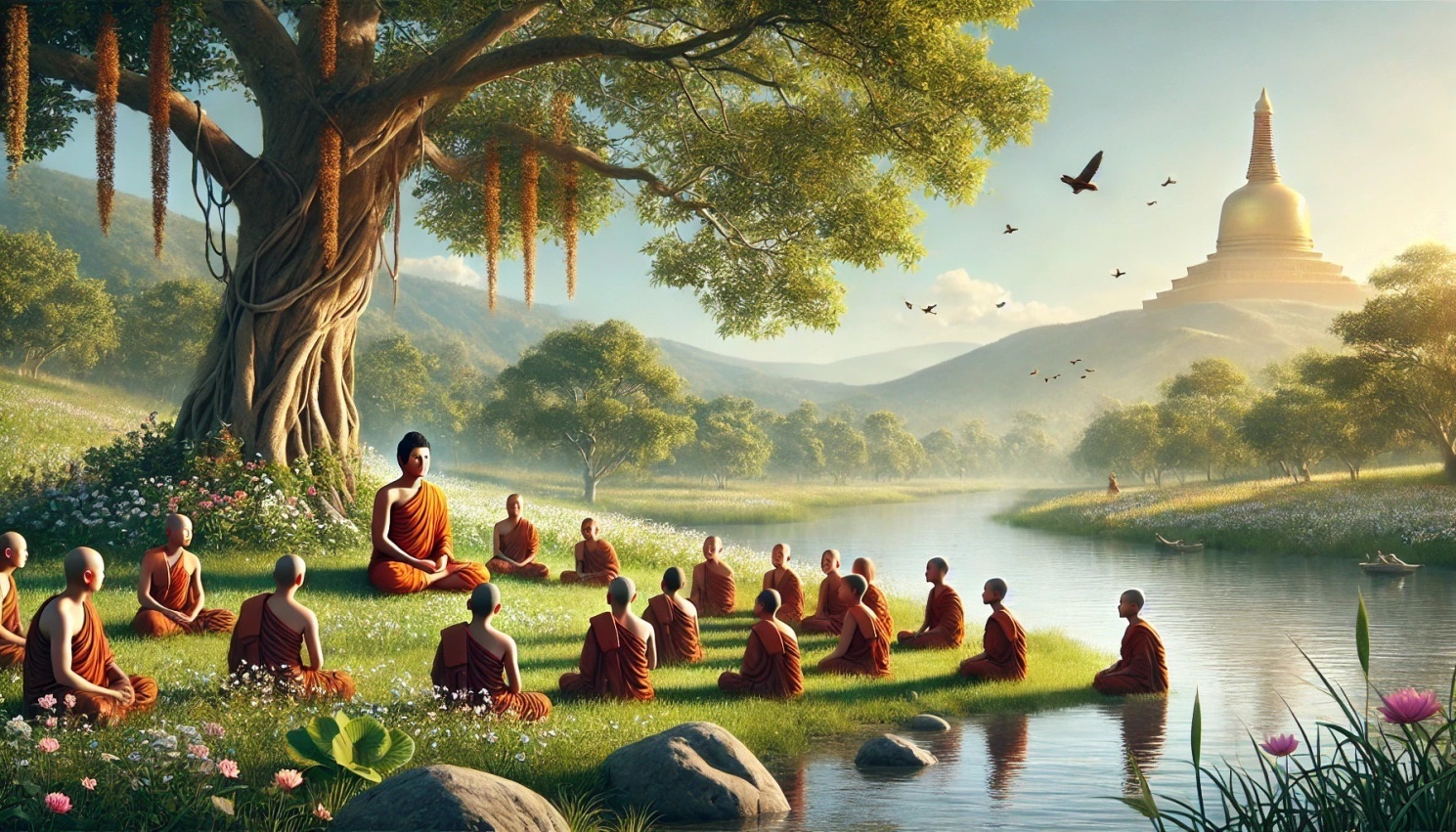
佛陀与弟子的关系,并非建立在权威崇拜或绝对服从之上,而是一种以觉悟为核心、以解脱为目标的导师与行者之间的关系。这种关系既亲近又不依赖,既有引导又不控制,体现了佛法中智慧与慈悲并行的精神。佛陀不是塑造“追随者”,而是培育“觉醒者”;他与弟子的关系,从一开始就指向弟子自身的独立觉知与自证之路。
佛陀作为导师,最重要的角色不是给予答案,而是指出方向。他清楚地知道,觉悟无法被转让,也不能由他人代替完成。因此,他从不要求弟子无条件接受自己的教导,而是反复强调观察、思考与实践的重要性。佛陀曾明确表示,应“依法不依人”,即依止真理本身,而不是依赖某一个人,包括他自己。这种态度,使佛陀与弟子的关系从根本上脱离了个人崇拜的结构,建立在理性、体验与责任之上。
在教化过程中,佛陀与弟子之间充满了对话与互动,而非单向的灌输。弟子可以提问、怀疑、困惑,甚至提出不同见解,佛陀皆以耐心回应。有时他直接解答,有时以譬喻引导,有时则保持沉默,让弟子自行体悟。这种教学关系,既尊重弟子的思考能力,也锻炼其内在判断力,使修行不依赖外在权威,而逐渐建立内在的智慧。
佛陀对弟子的关怀,体现为深切而清醒的慈悲。他关心弟子的身心状态,关注他们在修行中遇到的困难,但并不纵容懈怠或错误。当弟子犯错或偏离正道时,佛陀会及时指出,甚至严厉劝诫。这种看似严格的态度,并非缺乏慈悲,而是对解脱之路的尊重。佛陀的关怀,不是让弟子感觉舒适,而是帮助他们走向真实与成熟。
值得注意的是,佛陀并不以“圣者”的身份高高在上,而是以平等心与弟子共住同行。他过着与僧团同样简朴的生活,持守同样的戒律,接受同样的考验。弟子们所见到的,不只是佛陀“说”的法,更是他“活”的法。这种身教,使弟子在日常相处中自然学习到安忍、节制、觉知与慈悲,而非仅停留在语言层面。
随着弟子修行的成熟,佛陀并不将他们长期留在自己的庇荫之下,而是鼓励他们独立弘法、独立实践。许多著名弟子在证悟之后,各自承担教化之责,成为他人的导师。这表明佛陀与弟子的关系,并非永恒的依附关系,而是一种阶段性的引导关系,最终目标是让弟子不再需要“佛陀在身边”,而能以法为依,以觉为师。
在佛陀入灭前,他没有指定继承者,也没有设立至高权威,而是郑重嘱托弟子:“以戒为师,以法为师。”这一嘱托,正是对佛陀与弟子关系最清晰的总结。他所希望的,不是弟子永远怀念他的存在,而是能够在没有他的情况下,依然安住于正法,持续修行,觉照自心。
因此,佛陀与弟子的关系,是一种指向解脱的同行关系,是一种由引导走向独立、由依止走向自证的成熟关系。佛陀以智慧开路,以慈悲相伴,却从不替弟子行走人生之路。正因如此,释迦牟尼与弟子之间的关系,不仅成就了无数觉者,也为后世树立了一种最健康、最自由的师生典范。
Date: 05/11/2024 05/12/2024
Location: Star River Meditation Center
Teacher: Yunquan Huang
Dharma Knowledge
The Relationship Between the Buddha and His Disciples
The relationship between the Buddha and his disciples was not founded on authority, blind devotion, or unquestioning obedience. Rather, it was a relationship centered on awakening and oriented toward liberation. It combined closeness with independence, guidance with freedom, and compassion with responsibility. The Buddha did not seek to create followers, but to cultivate awakened individuals capable of seeing the truth for themselves.
As a teacher, the Buddha’s primary role was not to provide final answers, but to point out the path. He fully understood that awakening cannot be transferred from one person to another, nor can liberation be achieved on someone else’s behalf. For this reason, he never demanded belief or loyalty to himself. Again and again, he emphasized that one should rely on the Dharma—the truth—rather than on any individual person, including the Buddha himself. This principle freed the teacher-student relationship from dependency and grounded it in personal insight and responsibility.
The Buddha’s relationship with his disciples was dialogical rather than hierarchical. Disciples were encouraged to ask questions, express doubts, and explore difficulties openly. The Buddha responded with patience and discernment—sometimes offering direct explanations, sometimes guiding through parables, and at other times remaining silent, allowing insight to arise naturally. This approach respected the intelligence and autonomy of the learner, strengthening the disciple’s capacity for inner discernment rather than external reliance.
His care for his disciples was both compassionate and discerning. The Buddha paid close attention to their physical and mental well-being, and he was deeply concerned with their progress on the path. However, his compassion did not take the form of indulgence. When disciples strayed, became complacent, or held mistaken views, the Buddha corrected them firmly when needed. This apparent strictness was itself an expression of compassion—one that valued liberation over comfort and truth over approval.
Importantly, the Buddha did not place himself above his disciples in daily life. He lived among them, followed the same rules, accepted the same discipline, and shared the same simplicity. His teaching was not confined to formal discourse; it was embodied in his conduct. Through observing how he walked, spoke, ate, responded to conflict, and met suffering, disciples learned the Dharma as a living reality. His life was a continuous lesson.
As disciples matured in understanding, the Buddha did not keep them close out of attachment. On the contrary, he encouraged independence and entrusted many realized disciples with the responsibility of teaching others. This demonstrates that the Buddha saw the teacher-disciple relationship as transitional—a means to awakening, not an end in itself. The ultimate goal was for disciples to stand on their own, guided by the Dharma rather than by a person.
Before his passing, the Buddha made this principle unmistakably clear. He did not appoint a successor or establish a central authority. Instead, he instructed his disciples to take the Dharma and the discipline as their teacher. With this, he affirmed that the true relationship between the Buddha and his disciples was never based on personal presence, but on shared commitment to truth and practice.
Thus, the relationship between the Buddha and his disciples can be understood as a partnership on the path—a relationship that begins with guidance and culminates in freedom. The Buddha walked alongside his disciples with wisdom and compassion, yet never walked in their place. Through this relationship, countless individuals awakened, and a timeless model of healthy, liberating mentorship was offered to the world.