时间:04/06/2024 04/07/2024
地点:星河禅修中心
主讲:黄云全
佛法知识
菩提树下的觉悟
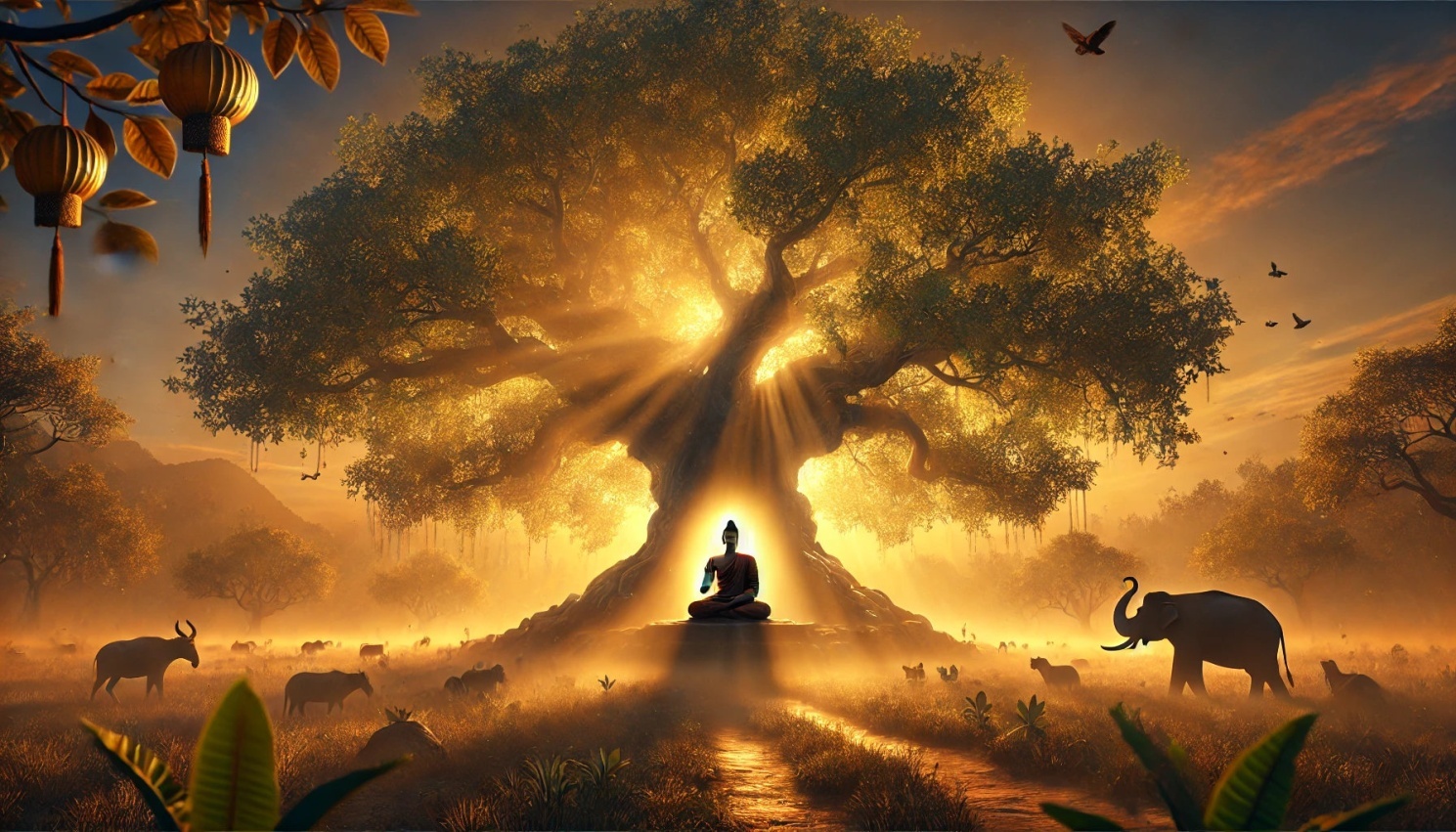
在古印度尼连禅河畔的一棵菩提树下,悉达多太子静坐七日七夜,终于彻见万法实相,证得无上正等正觉。这一刻,不仅改变了他自己的人生,也点燃了人类精神史上一盏永不熄灭的智慧之灯。从此,人们尊称他为“佛陀”——觉悟者。而“菩提树下的觉悟”,也成为象征人类内在潜能得以圆满开启的庄严意象。
觉悟不是神秘的赐予,不是某种宗教仪式的恩典,而是透过深观自身生命、宇宙法则而生起的智慧光明。佛陀在菩提树下的觉悟,是建立在多年修行与深刻内省的基础之上。他经历了奢华的王子生活,也苦行至极限,最终发现真正的解脱之道,既不在感官欲望之中,也不在自我折磨之中,而是在“中道”——既不过度放纵,也不极端压抑,以正念、正定、正慧为指引,深入内心深处,观察一切现象的生灭流转。
在那七日七夜中,佛陀进入极深的禅定状态。他首先回忆自己过去无数世的生死经验,亲见轮回之苦不绝如缕;随后他洞见众生因业力造作而感得不同命运,明了因果法则的严密与无误;最后,他彻悟缘起之法——一切法无自性,皆因缘和合,生灭无常,无有真实不变的“我”。从这无明破裂的一瞬,佛陀获得究竟的清凉、无碍、解脱的心境。这不是逃避世界的虚无,而是彻见世界实相后的彻底平和。
菩提树下的觉悟,是对“我执”的松动,是对“常见”的超越,是对“苦集灭道”的彻证。佛陀明白,众生之所以受苦,不是因为外境本身多恶,而是因为对现象的误认、对自我的执取、对无常的抗拒。只要这一念误解不破,一切解脱皆无从谈起。觉悟的核心,并不是获得某种知识或体验,而是彻底放下对一切实相的误会。这种“放下”,不是否定,不是逃避,而是看清真相之后自然的无执。
菩提树下所开启的,不仅是佛陀个人的觉醒之路,更是一条可以被众生重复实践的觉悟之道。他没有将成道的经验私藏为个人的成就,而是选择起身前行,将所见所证化为可理解、可操作的“法”,传授给一切愿意听闻的人。他知道,众生虽被无明覆盖,但皆具“佛性”,只要引导得法,也能逐渐破迷启悟。这种出于悲心的弘法精神,使得佛陀不只是“自觉”,更是“觉他”,乃至“觉行圆满”。
菩提树下的觉悟,不是一个遥远的神话,而是一种时时刻刻可以被唤醒的生命潜能。当一个人停止对外界的投射,回到当下,照见自己的心念起灭;当一个人不再执著成败荣辱,而愿意看清“我”从何而来、执着如何生起;当一个人愿意承认苦,并深入追问其根源时,他便已在觉悟之路上。这颗“觉”的种子,原本就存在于每一个生命之中,等待的只是那一刻——如佛陀般,于沉静中安住,于菩提树下,破晓而见光。
Date: 04/06/2024 04/07/2024
Location: Star River Meditation Center
Teacher: Yunquan Huang
Dharma Knowledge
The Awakening Under the Bodhi Tree
Beneath the Bodhi Tree by the Nerañjarā River in ancient India, Prince Siddhartha sat in deep meditation for seven days and nights. At dawn on the final day, as the morning star appeared in the sky, he pierced through the veils of ignorance and awakened fully to the truth of existence. This moment not only transformed his own life but illuminated a path of liberation for countless beings. From that moment forward, he became known as the Buddha—the Awakened One. And “the awakening under the Bodhi Tree” became a timeless symbol of human potential for clarity, compassion, and freedom.
This awakening was not a miracle in the traditional sense. It was not a gift from the divine, nor the product of rituals or belief. It was the natural result of sustained inquiry, sincere practice, and profound inner observation. The Buddha’s enlightenment was built upon years of exploration—first through luxury and pleasure, then through severe asceticism—before discovering the Middle Way, a path that avoids extremes and leads toward balance, insight, and peace.
Under the Bodhi Tree, Siddhartha entered deep meditative absorption. He began by recollecting countless past lives, seeing the endless cycle of birth and death. He then perceived the law of karma—how beings are shaped by their intentions and actions, and how suffering arises not from punishment but from the seeds we ourselves plant. Finally, in the deepest hour of the night, he realized the truth of dependent origination: that all phenomena arise in dependence on causes and conditions, that nothing exists independently, that all things are impermanent, unsatisfactory, and without a fixed self. This was not an intellectual insight, but a direct, experiential seeing that shattered all delusion.
The awakening under the Bodhi Tree was not about gaining something new, but about letting go of illusions—especially the illusion of a permanent “self.” The Buddha saw clearly that clinging to identity, resisting change, and misperceiving reality were the roots of suffering. When these distortions fell away, the mind was no longer bound. It became vast, tranquil, luminous, and unshakable. This state was not withdrawal from the world, but a deeper harmony with its true nature.
The Buddha’s awakening was not meant to be a personal achievement to be guarded or celebrated in isolation. From the moment of his enlightenment, he was moved by deep compassion to share what he had discovered. He saw that all beings possess the same potential for awakening, though obscured by ignorance. Out of this recognition, he taught the Dharma—not as dogma, but as a map to help others find their own way. His teachings on the Middle Way, the Four Noble Truths, and the Noble Eightfold Path are practical instructions born of this deep insight.
The awakening under the Bodhi Tree is not just a historical event—it is a mirror for all of us. It reminds us that clarity is possible, that freedom from suffering is attainable, not by clinging to beliefs or identities, but by seeing deeply into the nature of mind and experience. Whenever we pause, turn inward, and observe the arising and passing of thoughts without grasping, we begin to awaken. Whenever we release the compulsion to control, and instead meet life with curiosity and compassion, we draw closer to that same light.
Within each of us lies the seed of awakening, just as it did in Siddhartha. The Bodhi Tree, in this sense, is not merely a tree in India—it is a symbol of the still point within, where truth can be realized. When we sit with sincerity, when we look without distortion, when we open the heart without defense, then even in the midst of this noisy world, the Bodhi Tree blossoms again—and the light of awakening dawns.