时间:12/21/2024 12/22/2024
地点:星河禅修中心
主讲:黄云全
打坐参禅
从“觉察者”进入“纯觉”
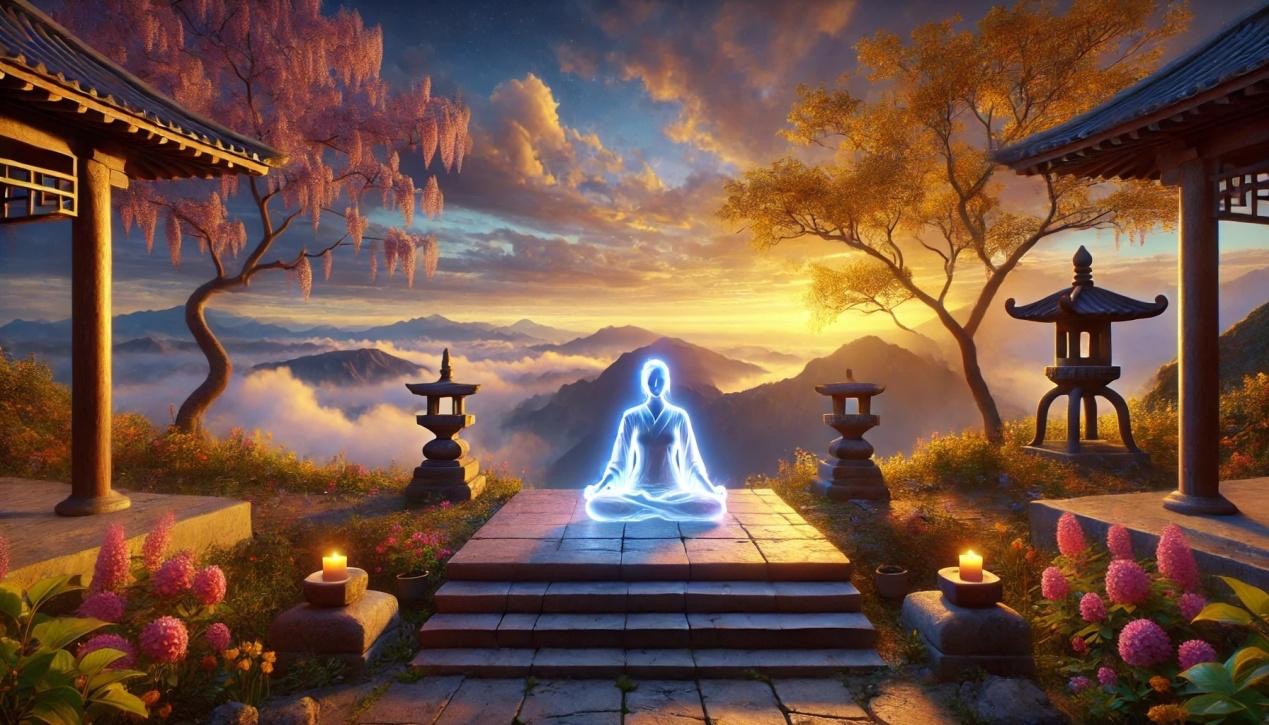
禅修过程中,修行者会先体验到“觉察者”——一个能观察念头、情绪、身体感受的内在位置。然而,这仍带有微细的主体感。进一步深入后,觉察者也会被看见、被放下,修行者便会进入更深的“纯觉”:无主体、无位置、无边界的纯然觉知。理解两者差别,是打开心性深处的重要一环。
一、什么是“觉察者”?
“觉察者”是禅修中很重要的阶段,它是从思维跳出、站在觉知视角的能力。
1.能观察念头的存在者
你不再被念头拖走,而是能看到“我在想”。
2.能观察情绪的存在者
情绪出现时,你能说:“愤怒在发生”,而不是“我在生气”。
3.有清晰的主体位置
仿佛有一个“我在觉察”的中心。
4.属于转变期的觉知
它比思维更深,但仍有微细的“我在看”的感觉。
觉察者是修行的关键桥梁,却不是终点。
二、什么是“纯觉”?
“纯觉”(Pure Awareness)不是主体,不是一个位置,而是:
1.没有观察者的觉知
觉知依然明亮,但没有“谁在觉察”的感觉。
2.没有界线的觉知
觉知没有内外,没有这里或那里,是全然开放的。
3.如镜子般照见一切
镜子不属于任何一方,却能完整呈现所有影像。
4.自然、不造作、无中心感
你不再“维持”觉知,觉知只是呈现。
5.不黏著、不判断、不干预
纯觉不参与体验,只让体验如实出现与消失。
纯觉不是要达成的状态,而是心本来如此。
三、“觉察者”与“纯觉”的关键差别
1.觉察者有“我在看”;纯觉没有“我”
觉察者仍带有主体感;纯觉只剩照见,无任何中心。
2.觉察者是阶段;纯觉是本质
觉察者是修出来的;纯觉是原本具足的。
3.觉察者靠定位;纯觉没有位置
觉察者像坐在椅子上看;纯觉像天空——无方向、无边界。
4.觉察者会疲惫;纯觉不会
因为觉察者是“被维持的”;纯觉是自然、无需用力的。
四、如何从“觉察者”进入“纯觉”?
1.看见“觉察者”本身也是被觉知的
试着感受:
“是我在觉察,还是觉知在呈现一切?”
当你能觉知“觉察者”,主体感开始松动。
2.放下“我要觉察”的努力
越用力,越是“觉察者”;越轻松,越接近“纯觉”。
觉不是做出来的,是让出来的。
3.不把觉知当成某种位置
不要找“觉知在哪里”。
觉知没有点、没有范围,它只是呈现。
4.让体验自己来、自己去
不抓住好的,不推开坏的。
觉知只照见,不参与。
当不再选择、评判、努力时,纯觉自然显现。
5.注意“无主体”的空性经验
当你突然感到:
心没有中心
没有“我”在做
只有清明的呈现
这就是纯觉的影子。
五、进入纯觉后会出现什么改变?
1.觉知轻盈、不费力
2.情绪更加容易松开
3.体验来去自如、无阻碍
4.心不再与任何内容认同
5.深度的安稳与开放感出现
最显著的特征是:没有“我在觉察”,但觉知更清晰。
总结
“觉察者”仍有微细“我在看”的中心;“纯觉”没有主体,只是开放的照见。进入纯觉不是用力,而是看见觉察者并让它松开。当连观察者都被觉知照亮,纯觉自然显现。
Date: 12/21/2024 12/22/2024
Location: Star River Meditation Center
Teacher: Yunquan Huang
Sitting Meditation
From the “Observer” to “Pure Awareness”
In meditation, practitioners first discover the “observer”—a position that watches thoughts, emotions, and sensations. But this stage still contains a subtle sense of self. Beyond it lies “pure awareness,” where the observer dissolves and only clear, centerless knowing remains. Recognizing this shift is essential for deep insight.
1.What Is the Observer?
The observer is a transitional form of awareness.
1.It sees thoughts arise
“I am thinking” becomes noticeable.
2.It recognizes emotions
Anger or fear is seen as “happening,” not “me.”
3.It has a sense of position
There feels to be someone behind the experience.
4.It is an important but incomplete stage
It frees you from thought, but still carries subtle identity.
The observer is a bridge, not the destination.
2.What Is Pure Awareness?
Pure awareness is not a self, a subject, or a place.
1.Awareness without an observer
Knowing is present, but without “someone” knowing.
2.Boundless openness
No center, no boundary, no inside or outside.
3.A mirror-like presence
Reflecting everything without belonging to anything.
4.Effortless and natural
Not maintained, not created.
5.Non-judging, non-interfering
Experience appears and disappears freely.
Pure awareness is what the mind always was.
3.Key Differences Between Observer and Pure Awareness
1.The observer has a center; pure awareness has none
“I am watching” dissolves into centerless knowing.
2.The observer is trained; pure awareness is inherent
One arises through practice; the other is innate.
3.The observer feels located; pure awareness does not
Pure awareness is spacious and unbounded.
4.The observer can tire; pure awareness cannot
Effort belongs to the observer, not to awareness itself.
4.How to Shift from Observer to Pure Awareness
1.Notice that the observer is also observable
If you can see the “one who watches,”
you are already beyond it.
2.Drop the effort to “maintain awareness”
Effort strengthens the observer.
Relaxation reveals pure awareness.
3.Stop looking for a location of awareness
Awareness is not in the head, chest, or anywhere.
It has no place.
4.Let experience arise and fade on its own
No grasping, no rejecting.
Just allowing.
5.Recognize the taste of “no center”
Moments when:
there is no doer
experience flows effortlessly
only clarity remains
These point to pure awareness.
5.Signs You Are in Pure Awareness
1.Awareness feels light and effortless
2.Emotions dissolve more easily
3.Experiences pass through without sticking
4.Identification weakens
5.A deep openness and calmness appears
Most importantly:there is knowing, but no knower.
Conclusion
The observer still carries a subtle sense of self;pure awareness is centerless, effortless knowing.The shift happens when even the observer is seen as an object of awareness.When the sense of “I am watching” dissolves, pure awareness naturally shines.