时间:05/09/2026 05/10/2026
地点:星河禅修中心
主讲:黄云全
佛法修行
求不死之火
在佛陀时代,有一位妇人,她只生了一个儿子,因此,她对这唯一的孩子百般呵护,特别关爱。可是,天有不测风云,人有旦夕祸福;妇人的独生子忽然染上恶疾,虽然妇人尽其所能的邀请各方名医来给她的儿子看病,但是,医师们诊视以后都相继摇头叹息,束手无策。不久,妇人的独生子就离开了人世。
这突如其来的打击,就像晴天霹雳,妇人完全无法接受这个事实。她天天守在儿子的坟前,夜以继日的哀伤哭泣。她形若槁木,面如死灰,悲伤的喃喃自语:
「在这个世间,儿子是我唯一的亲人,现在竟然舍下了我先走了,留下我孤苦伶仃的活着,有什么意思啊?今后我要依靠谁啊?……唉!我活着还有什么意义呢?」
妇人决定不再离开坟前一步,她要和自己心爱的儿子死在一起!四天、五天过去了,妇人一粒米也没有吃,她哀伤的守在坟前哭泣,爱子就此永别的事实如锥刺心,实在是让妇人痛不欲生啊!
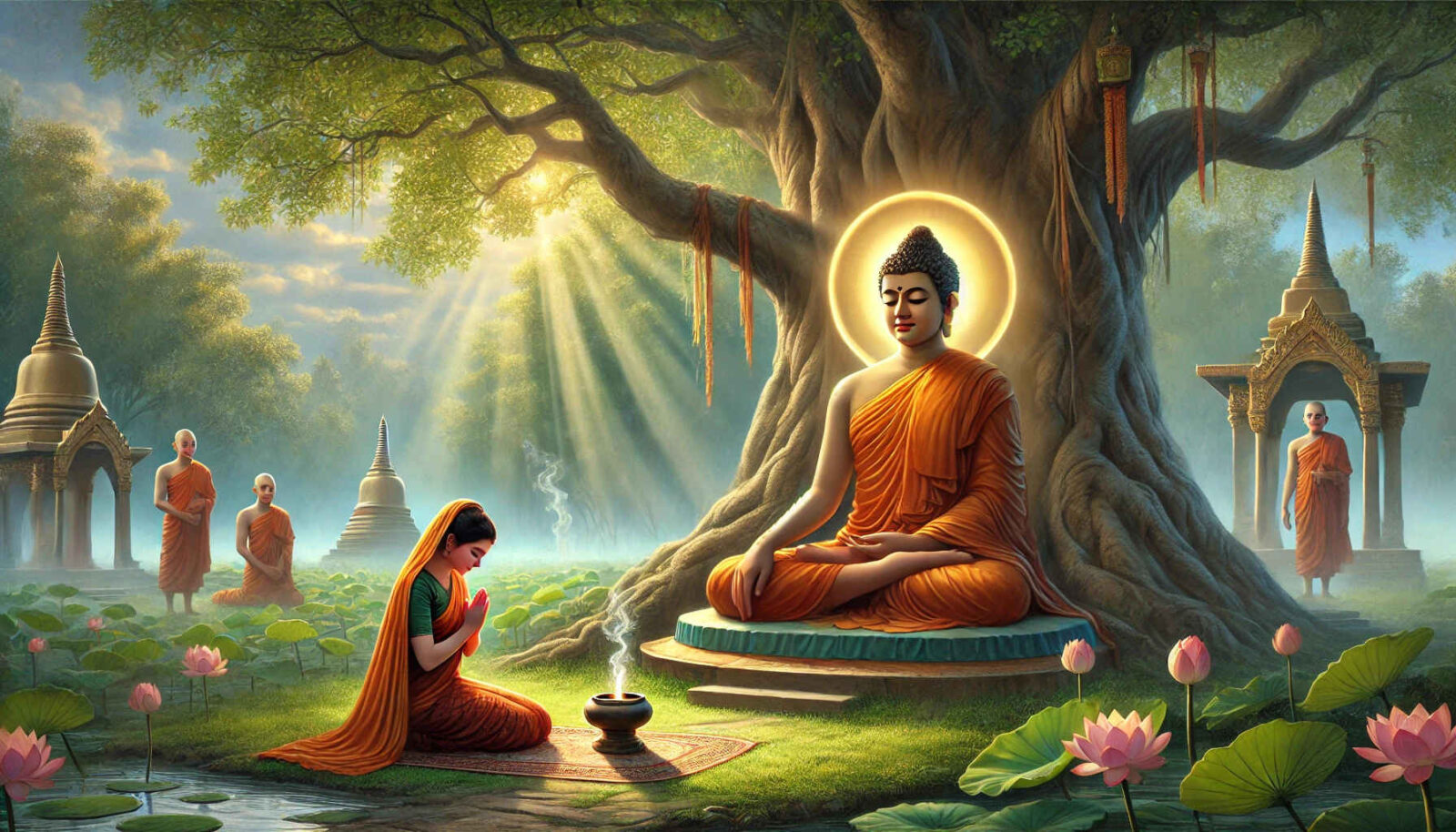
这时,远方的佛陀在定中观察到这个情形,就带领了五百位清净比丘前往墓冢。佛陀与比丘们是这么样的安详、庄严,当这一行清净的队伍宁静的从远处走过来时,妇人远远的就感受到佛陀的慈光摄受,她认出了佛陀!她忽然想到世尊的大威德力,正可以解除她的烦忧。于是她迎上前去,向佛陀五体投地行接足礼。佛陀慈愍地望着她,缓缓的问道:「你为什么一个人孤单的在这墓冢之间呢?」妇人忍住悲痛回答:「伟大的世尊啊!我唯一的儿子带着我一生的希望走了,他走了,我活下去的勇气也随着他走了!」
佛陀听了妇人哀痛的叙述,便问道:「你想让你的儿子死而复生吗?」「世尊!那是我的希望!」妇人仿佛是水中的溺者抓到浮木一般。
「只要你点着上好的香来到这里,我便能咒愿,使你的儿子复活。」佛陀接着嘱咐:「但是,记住!这上好的香要用家中从来没有死过人的人家的火来点燃。」
妇人听了,二话不说,赶紧准备上好的香,拿着香立刻去寻找从来没有死过人的人家的火。她见人就问:「您家中是否从来没有人过世呢?」「家父前不久刚往生。」「您家中是否从来没有人过世呢?」「妹妹一个月前走了。」「您家中是否从来没有人过世呢?」「家中祖先乃至于与我同辈的兄弟姊妹都一个接着一个过世了。」妇人始终不死心,然而,问遍了村里的人家,没有一家是没死过人的,她找不到这种火来点香,失望地走回坟前,向佛陀说:「大德世尊,我走遍了整个村落,每一家都有家人去世,没有家里不死人的啊……」
佛陀见因缘成熟,就对妇人说:「这个娑婆世界的一切万事万物,都是遵循着生灭、无常的道理在运行;春天,百花盛开,树木抽芽,到了秋天,树叶飘落,乃至草木枯萎;这就是无常相。人也是一样的,有生必有死,谁也不能避免生、老、病、死、苦,并不是只有你心爱的儿子才经历这变化无常的过程啊!所以,你又何必执迷不悟,一心寻死呢?能活着,就要珍惜可贵的生命,运用这个人身来修行,体悟无常的真理,从苦中解脱。」老妇人听了佛陀为她宣说无常的真谛立刻扭转了自己错误的观念知见,顿时断尽见惑入圣人之流,证得声闻乘四果中的初果——须陀洹道。此时围绕在冢间观看的数千人群,在听闻佛法真理的当下,也一起发起了无上菩提心。
Date: 05/09/2026 05/10/2026
Location: Star River Meditation Center
Teacher: Yunquan Huang
Dharma Talk
The Fire That Seeks Deathlessness
During the time of the Buddha, there was a woman who had only one son. Because he was her only child, she cherished and protected him with utmost care and affection. Yet calamity comes without warning, and fortune and misfortune shift in an instant. Suddenly, her son was stricken with a grave illness. Though she invited many skilled physicians from all directions and did everything within her power to save him, the physicians, after examining him, could only shake their heads and sigh, for they were helpless. Before long, her only son passed away.
This sudden blow was like a thunderclap from a clear sky. The woman could not accept the reality. Day after day, she remained beside her son’s grave, weeping in grief without ceasing. Her body withered like dry wood, her face ashen as death. She murmured to herself in sorrow:
“In this world, my son was my only kin. Now he has left me behind and gone first, leaving me alone and destitute. What meaning is there in living on? Upon whom shall I rely in the days to come? Alas! What purpose remains for my life?”
The woman resolved never to leave the grave again. She wished to die together with her beloved son. Four days, five days passed—she did not take a single grain of food. She remained there, crying in anguish. The fact that her beloved son had departed forever pierced her heart like a sharp blade, and she was overwhelmed with unbearable suffering.
At that time, the Buddha, from afar, perceived this situation while abiding in meditation. He then led five hundred pure bhikṣus to the burial ground. The Buddha and the bhikṣus appeared serene and majestic. As this pure assembly approached in quiet dignity, the woman, from a distance, felt the compassionate radiance of the Buddha embracing her. She recognized him at once. Suddenly recalling the great spiritual power of the World-Honored One, she realized that he could relieve her suffering. She hastened forward, prostrated herself fully at his feet, and paid homage.
The Buddha gazed upon her with compassion and gently asked,
“Why do you remain here alone among these graves?”
The woman restrained her grief and replied,
“O Great World-Honored One! My only son has departed, taking with him all the hope of my life. With his passing, my courage to live has also vanished!”
Having heard her sorrowful account, the Buddha asked,
“Do you wish for your son to return to life?”
“World-Honored One, that is my only hope!” the woman answered, as though a drowning person had grasped a floating log.
The Buddha said,
“If you can bring here fine incense and light it, I shall recite blessings, and your son may be restored to life.”
He then instructed her further:
“But remember—this incense must be lit with fire taken from a household in which no one has ever died.”
Hearing this, the woman did not hesitate. She quickly prepared fine incense and set out at once to find a household where no one had ever died. She asked everyone she met:
“Has anyone in your household ever passed away?”
“My father died not long ago.”
“Has anyone in your household ever passed away?”
“My younger sister passed away a month ago.”
“Has anyone in your household ever passed away?”
“My ancestors and even my own siblings have all passed away, one after another.”
Still unwilling to give up, the woman continued her search. Yet after asking throughout the entire village, she found not a single household untouched by death. Unable to find such fire, she returned in despair to the grave and said to the Buddha:
“Great World-Honored One, I have searched throughout the entire village. In every household, someone has died. There is no home where death has not occurred…”
Seeing that the conditions were now ripe, the Buddha said to her:
“All things in this world of suffering follow the law of arising and ceasing, of impermanence. In spring, flowers bloom and trees sprout; in autumn, leaves fall and vegetation withers. This is the mark of impermanence. So too with human beings—where there is birth, there must be death. No one can escape birth, aging, sickness, and death. It is not only your beloved son who undergoes this impermanent transformation. Why then do you cling in delusion and seek death? While you still live, you should cherish this precious human life, use it to cultivate the path, realize the truth of impermanence, and be liberated from suffering.”
Upon hearing the Buddha expound the true principle of impermanence, the woman immediately overturned her erroneous views. In that very moment, she eradicated the afflictions of wrong views and entered the stream of the noble ones, attaining the first fruit of the Śrāvaka path—the stage of Srotaāpanna.
At that time, the thousands of people gathered around the burial ground, upon hearing the truth of the Dharma, all together aroused the unsurpassed Bodhi mind.