时间:10/11/2025 10/12/2025
地点:星河禅修中心
主讲:黄云全
佛法知识
佛法与亲子教育
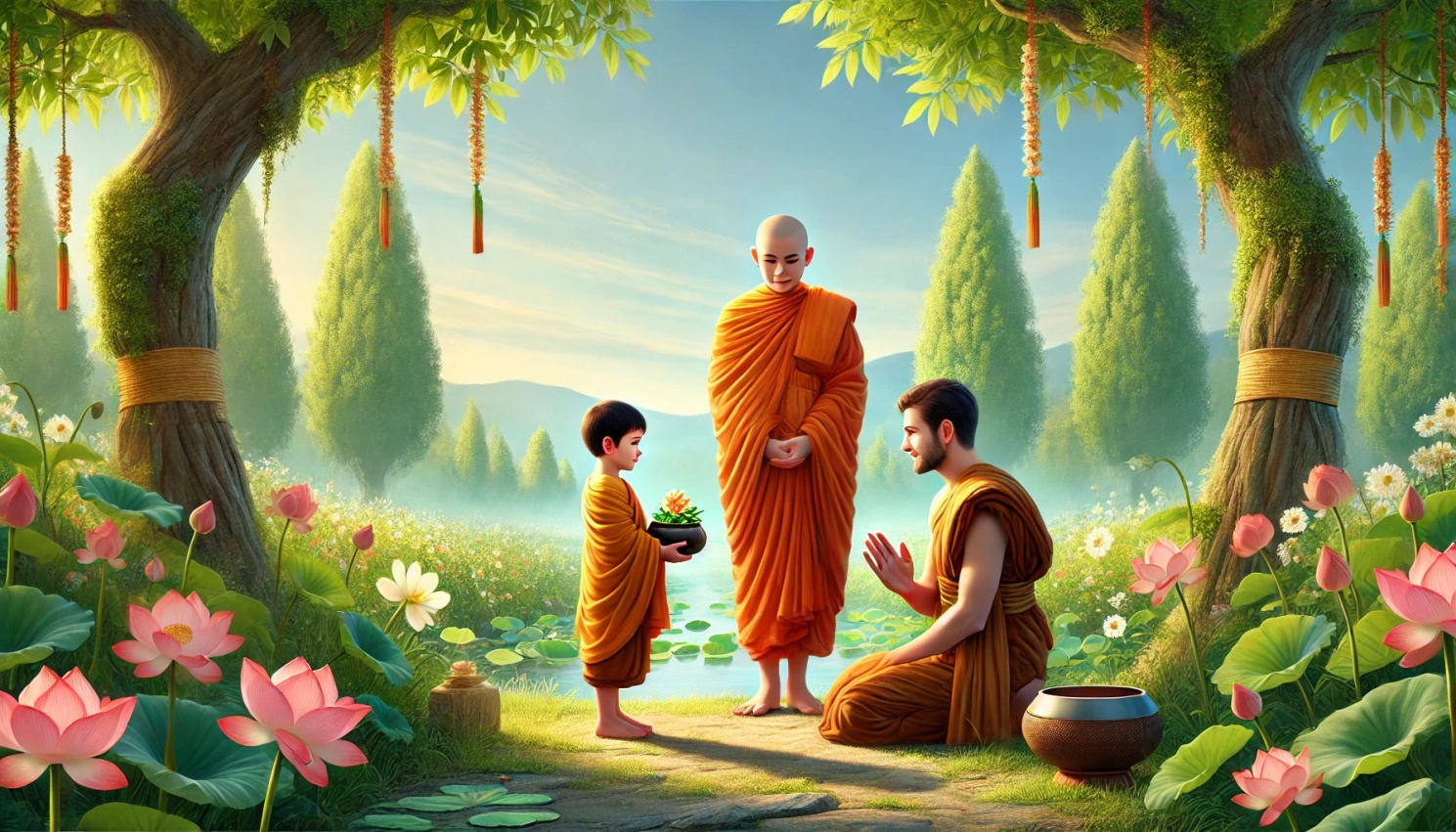
在佛法的视角中,亲子关系并非单向的教育或管理,而是一段深具因缘意义的生命同行。父母与子女的相遇,不只是血缘的结果,更是业力、性格、愿力与时机的交汇。因此,佛法并不把孩子视为“需要被塑造的对象”,而是视为需要被理解、陪伴与尊重的独立生命。当亲子教育建立在这样的正见之上,教育本身便不再只是技巧,而成为一条修行之路。
佛法中的亲子教育,首先强调的是父母的自我修行。佛陀并未主张用强制或权威来改变他人,而是反复强调“自度而后度人”。孩子的行为与情绪,往往是父母内在状态的映照。父母若常处于焦虑、比较与控制之中,孩子自然难以安定;父母若能在情绪中保持觉知,在冲突中不被嗔心带走,孩子便在无声中学会安稳与自省。因此,最好的教育,不是说教,而是父母自身的身教。
佛法并不鼓励溺爱,也不支持严苛,而是走中道的教育观。慈悲不等于纵容,智慧也不等于冷漠。真正的慈悲,是在尊重孩子感受的同时,清楚地立下界限;真正的智慧,是在理解孩子因缘的基础上,给予适当的引导。比如,当孩子犯错时,佛法并不主张用羞辱、威吓来“纠正”,而是帮助孩子看清行为与后果的因果关系,使其从理解中生起责任感,而非从恐惧中被动服从。
佛法的因果观,对亲子教育尤为重要。孩子的成长,不可能脱离因果规律。良好的习惯、稳定的情绪、正直的品格,都需要长期的善因累积;同样,不当的行为,也会自然带来相应的结果。父母若能以平静的态度,引导孩子认识“行为—结果—责任”的关系,孩子便能逐渐学会为自己的选择负责,而不是依赖外在奖惩。这种教育方式,培养的是内在的道德感,而非外在的服从性。
在情绪教育方面,佛法提供了极其深刻的智慧。孩子并不是“不懂事”,而是尚未学会如何与情绪相处。佛法并不要求情绪消失,而是教人觉察情绪、理解情绪、不被情绪主导。父母若能在孩子情绪爆发时,不急于压制或评判,而是先陪伴、命名情绪、引导觉知,孩子便会慢慢学会:情绪可以被看见,而不是必须被发泄或压抑。这种能力,将成为其一生受用的内在力量。
佛法也提醒父母放下“替孩子活人生”的执着。每个孩子都有自己的因缘、节奏与方向,父母能提供的是条件与支持,而不是控制结果。过度的比较、规划与干预,往往源于父母自身的不安,而非真正的关爱。佛法中的“无常”与“无我”,帮助父母看清:孩子不是自己的延伸,也不是用来证明成功的工具。当父母愿意松开控制,孩子反而更有空间成长为完整的人。
从更深的层面看,亲子关系本身就是一场修行。孩子的任性、反抗、依赖,常常正中父母的执着之处,让人看见自己的急躁、恐惧与固执。若能以佛法的眼光来看,这些并非“麻烦”,而是修心的教材。每一次不被理解、每一次被挑战,都是练习忍辱、正念与慈悲的机会。
因此,佛法与亲子教育并非一套外在方法,而是一种内在转化。当父母以觉知活着,以慈悲待人,以智慧引导,教育便不再是一场拉扯,而成为彼此成就的过程。孩子在这样的环境中成长,不一定事事顺遂,却能学会安住、负责与关怀;父母也在陪伴孩子的过程中,逐渐放下执着、增长智慧。亲子关系,便在这样的因缘中,共同走向成熟与清明。
Date: 10/11/2025 10/12/2025
Location: Star River Meditation Center
Teacher: Yunquan Huang
Dharma Knowledge
Buddhism and Parenting
From a Buddhist perspective, the parent-child relationship is not a one-sided act of control or instruction, but a shared journey shaped by causes and conditions. Parents and children do not meet by chance; their relationship arises from karmic connections, mutual tendencies, and the unfolding of life itself. Therefore, Buddhism does not view children as objects to be molded, but as independent beings who deserve understanding, guidance, and respect. Parenting, in this view, becomes a profound spiritual practice.
The foundation of Buddhist parenting lies in the parent’s own cultivation. The Buddha emphasized that transformation begins within oneself. Children learn less from what parents say and more from how they live. When parents act from anxiety, comparison, or control, children naturally absorb these patterns. When parents respond with mindfulness, patience, and emotional clarity, children learn these qualities instinctively. Thus, the most powerful education is not instruction, but example.
Buddhism advocates a middle way in parenting—avoiding both indulgence and harshness. Compassion does not mean permissiveness, and wisdom does not imply emotional distance. True compassion respects a child’s feelings while maintaining clear boundaries; true wisdom understands a child’s limitations while offering steady guidance. When a child makes a mistake, Buddhist parenting does not rely on blame or intimidation. Instead, it helps the child understand cause and effect, allowing responsibility to arise naturally rather than through fear.
The Buddhist teaching on karma plays a vital role in education. A child’s development follows natural laws of cause and effect. Healthy habits, emotional stability, and ethical character are formed through consistent nurturing over time. When parents calmly guide children to see the connection between actions and consequences, children develop internal responsibility instead of dependence on external rewards or punishments. This nurtures conscience rather than compliance.
Emotional education is another area where Buddhist wisdom is invaluable. Children struggle not because they are irrational, but because they lack the skills to work with emotions. Buddhism does not demand emotional suppression; it teaches awareness and understanding of feelings. When parents respond to emotional outbursts with presence rather than judgment, helping children name and observe their feelings, children gradually learn that emotions are manageable experiences—not something to fear or act out. This emotional intelligence becomes a lifelong asset.
Buddhism also encourages parents to let go of the urge to control their children’s lives. Each child has their own path, pace, and potential. Parents can provide guidance and support, but cannot live on their child’s behalf. Excessive comparison, pressure, and over-planning often stem from the parent’s own insecurity. Through the understanding of impermanence and non-self, parents can see that children are not extensions of themselves or trophies of success. When control loosens, genuine growth becomes possible.
At a deeper level, parenting itself is a powerful path of practice. Children naturally trigger a parent’s attachment, impatience, and fear. But these moments are not failures—they are invitations to cultivate mindfulness, patience, and compassion. Each challenge becomes a mirror, revealing where growth is still needed. In this way, children are not obstacles to practice; they are teachers.
Ultimately, Buddhism offers not a parenting technique, but a transformative way of being. When parents live with awareness, kindness, and wisdom, education becomes less about control and more about relationship. Children raised in such an environment may not be spared from life’s difficulties, but they develop inner stability, responsibility, and care for others. Parents, too, mature through the process, gradually releasing attachment and deepening insight. In this shared journey, parenting becomes a path of mutual awakening—quiet, demanding, and profoundly meaningful.