时间:04/13/2024 04/14/2024
地点:星河禅修中心
主讲:黄云全
佛法知识
佛陀的一生概要
佛陀的一生,是从王子到觉者、从个体追寻到利益众生的全过程。他不是神祇,也不是超自然的化身,而是一位曾经经历人生种种、最终觉悟真理的普通人。他的生命历程,不仅是佛教徒修行的典范,更是整个人类面对苦难与寻找智慧的真实写照。
佛陀原名悉达多·乔达摩,出生于公元前六世纪左右的古印度迦毗罗卫国,父亲是净饭王,母亲是摩耶夫人。太子自出生起即显非凡,相传他出生七步,每步下生莲花,并宣称“天上天下,唯我独尊”,象征其将来的觉悟使命。由于婆罗门相士预测他将成就非凡,要么为转轮圣王治理天下,要么为彻底觉者出世弘法,父王希望他走王者之路,因此极力为他营造舒适华丽的宫廷生活,以避其见世间之苦。
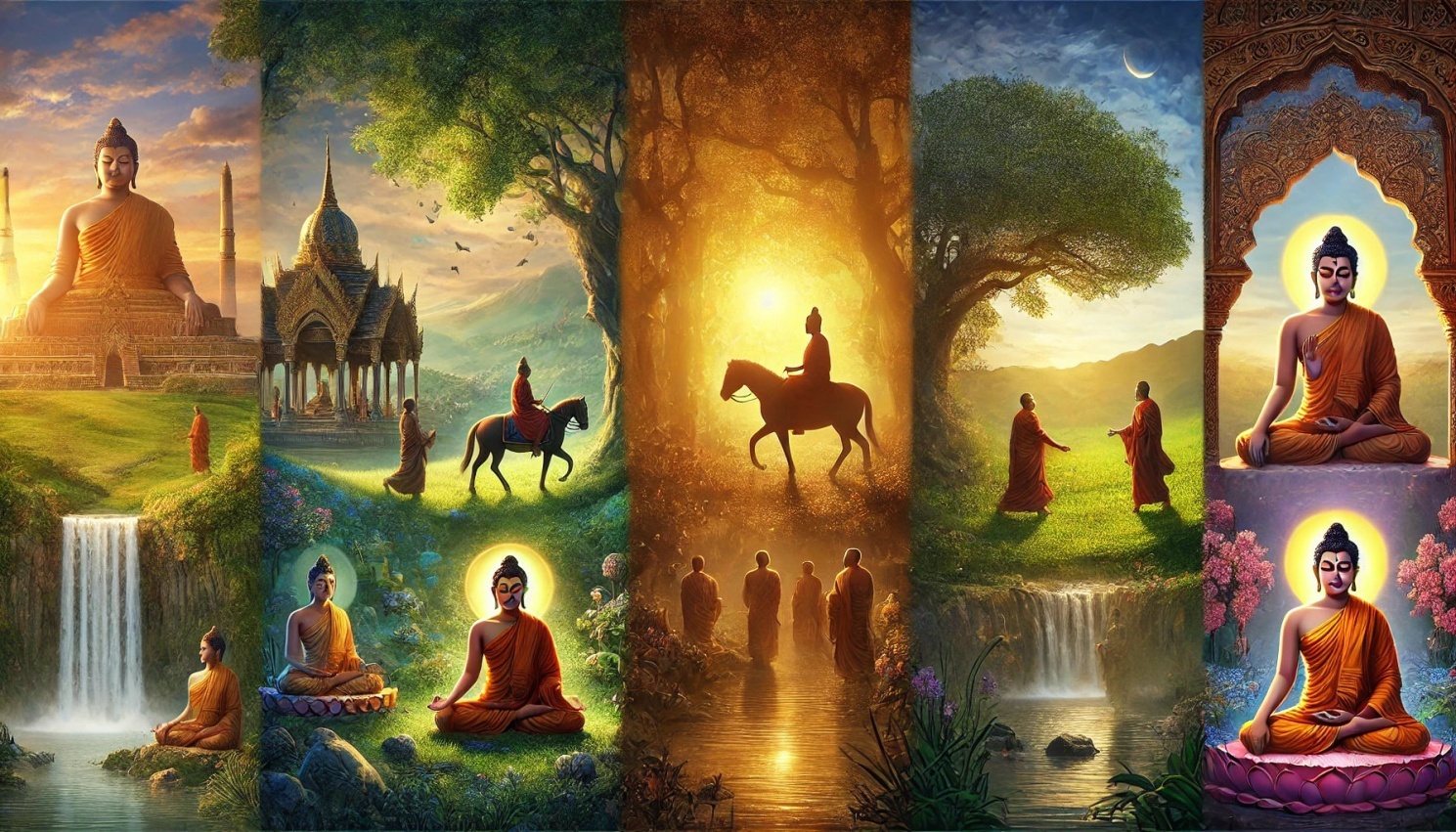
然而,成年后的悉达多在四次城外出游中,先后目睹了老人、病人、死人与出家修行者,深受震撼。他由此意识到:即便再尊贵富足的人生,也无法逃避生老病死的命运。他开始反思生命的本质,思索是否存在一种超越痛苦、终极安稳的道路。最终,在29岁时,他告别家庭、妻儿与王位,夜半出城,踏上修行之途。
出家后的悉达多,先拜访印度当时知名的禅定与哲学导师,迅速掌握他们的教法,但意识到这些仍不足以解脱根本之苦。于是他转向极端苦行,长年不食、静坐冥思,直至身体瘦弱几近崩溃。最终,他悟到苦行与欲乐皆为极端,不是解脱之道,因而恢复饮食,提出“中道”理念——既不放纵欲望,也不压抑身体,以平衡智慧为引导。
在菩提树下,他结跏趺坐、立誓不证觉不起座,经历七日七夜的深度禅观,彻见生死因缘与缘起之理,彻底破除无明,证得无上正等正觉,时年三十五岁。从此,人称他为“佛陀”——觉悟者。他的觉悟并非来自外力,而是内在观察与智慧实践的自然成果。他洞见一切众生皆具佛性,皆有觉悟的可能,因此决定将自身证悟的法门广传于世。
成道后,佛陀前往鹿野苑,为五位旧日苦行同伴初转法轮,讲说“四圣谛”与“八正道”,标志着佛教教法的正式开端。此后四十五年间,佛陀广行教化,游行于恒河流域的村落与城镇之间,不分种姓贵贱、宗教背景,一律平等接引。他教导的不仅是出家人,更包括国王、长者、农夫、妇女、儿童,乃至最底层的清道夫与罪人。他用具体、生动、逻辑清晰的语言,为众生开示苦的根源与灭苦之道。
佛陀一生未建立神权或教条制度,而是强调依法不依人、依智慧不依信仰。他一再强调每个人都必须依靠自己的观察、实践与觉知,亲证真理。他也不鼓励盲信,不以奇迹惑人,而以理性、慈悲与修行为基础,建立起一套完整而开放的修行系统。佛陀晚年时,面对弟子们对他将涅槃的惶恐,他坦然说:“法与律即是我在世。”显示他将教法而非个人崇拜留在人间。
佛陀于八十岁时,在拘尸那罗的娑罗双树间安详入灭,称为“般涅槃”。他最后的教诲是:“诸行无常,勤修精进。”提醒弟子万法皆无常,修行不可懈怠。他的一生,以觉悟始,以慈悲终,不为自己积累名利,而为众生铺就觉醒之路。佛陀从王子走向圣者,从求真者成为导师,他的一生是解脱之道的活例,也是人类心灵进化的灯塔。
Date: 04/13/2024 04/14/2024
Location: Star River Meditation Center
Teacher: Yunquan Huang
Dharma Knowledge
A Summary of the Buddha’s Life
The life of the Buddha, from prince to awakened teacher, is a profound journey of renunciation, realization, and compassionate action. He was not a god nor a supernatural figure, but a human being who directly confronted the nature of suffering and attained complete freedom. His life is not only the foundation of Buddhism but a timeless inspiration for all who seek wisdom and liberation.
The Buddha was born as Siddhartha Gautama around the 6th century BCE in the kingdom of Kapilavastu, in present-day Nepal or northern India. His father was King Suddhodana, and his mother was Queen Māyā. According to legend, Siddhartha’s birth was accompanied by auspicious signs—he took seven steps and declared, “I alone am the world-honored one,” symbolizing his future awakening. A prophecy at his birth foretold that he would either become a great king or a fully enlightened sage. Hoping for the former, his father shielded him from all forms of suffering and immersed him in luxury.
However, Siddhartha’s life took a decisive turn when, at the age of 29, he encountered the “four sights” during excursions outside the palace: an old man, a sick man, a dead body, and a wandering ascetic. These experiences revealed to him the inevitability of aging, illness, and death, and awakened a deep spiritual crisis. He began to question the purpose of life and whether there existed a path beyond suffering. Determined to find answers, he left his royal life, his wife Yasodharā, and his newborn son Rāhula, and entered the forest to live as a renunciant.
In his quest, Siddhartha studied under renowned meditation masters and achieved high levels of concentration, but realized that mental absorption alone could not free him from suffering. He then practiced extreme asceticism, nearly starving himself to death. But this too failed to bring liberation. Recognizing the futility of extremes, he adopted the Middle Way—a balanced approach that avoids both indulgence and self-torture, emphasizing mindfulness, ethical conduct, and wisdom.
Sitting beneath the Bodhi Tree near the Nerañjarā River, Siddhartha made a solemn vow not to rise until he attained the truth. After seven days and nights of deep meditation, he realized the nature of existence: the cycles of birth and death, the workings of karma, and the interdependent arising of all phenomena. He saw that suffering originates from ignorance and craving, and that liberation is possible through insight and letting go. At age 35, he became the Buddha—the Fully Awakened One.
The Buddha did not keep this realization to himself. Out of compassion, he resolved to teach others what he had discovered. His first discourse, delivered at Deer Park in Sarnath to five former companions, introduced the Four Noble Truths and the Noble Eightfold Path, laying the foundation of the Dharma. For the next 45 years, the Buddha traveled across northern India, teaching kings and beggars alike, crossing castes and boundaries with a message of universal compassion and wisdom.
He accepted disciples from all walks of life—men, women, rich, poor, and outcasts. He founded the monastic community (Sangha), not as a hierarchical institution, but as a living embodiment of the Dharma. He emphasized direct experience over dogma, reason over blind faith, and ethical living as the root of spiritual growth. He encouraged people to “be a lamp unto yourselves,” urging personal inquiry rather than dependence on authority.
In his final days, the Buddha remained serene and mindful. At age 80, he entered parinirvana beneath twin sal trees in Kusinagara. His final words were: “All conditioned things are impermanent. Strive with diligence.” Rather than leaving behind a religion of worship, he left a path of practice and transformation—a legacy of awakening available to all.
The Buddha’s life was a living example of the path he taught. He moved from worldly comfort to spiritual hardship, from solitude to compassionate teaching. He renounced privilege not out of rejection, but out of love for all beings. His story shows that awakening is not confined to mystics or gods, but lies within the reach of anyone who seeks truth, lives mindfully, and cultivates the heart. His life is a beacon that continues to guide countless beings on the path of freedom.