时间:04/20/2024 04/21/2024
地点:星河禅修中心
主讲:黄云全
佛法知识
佛陀为何说法四十九年
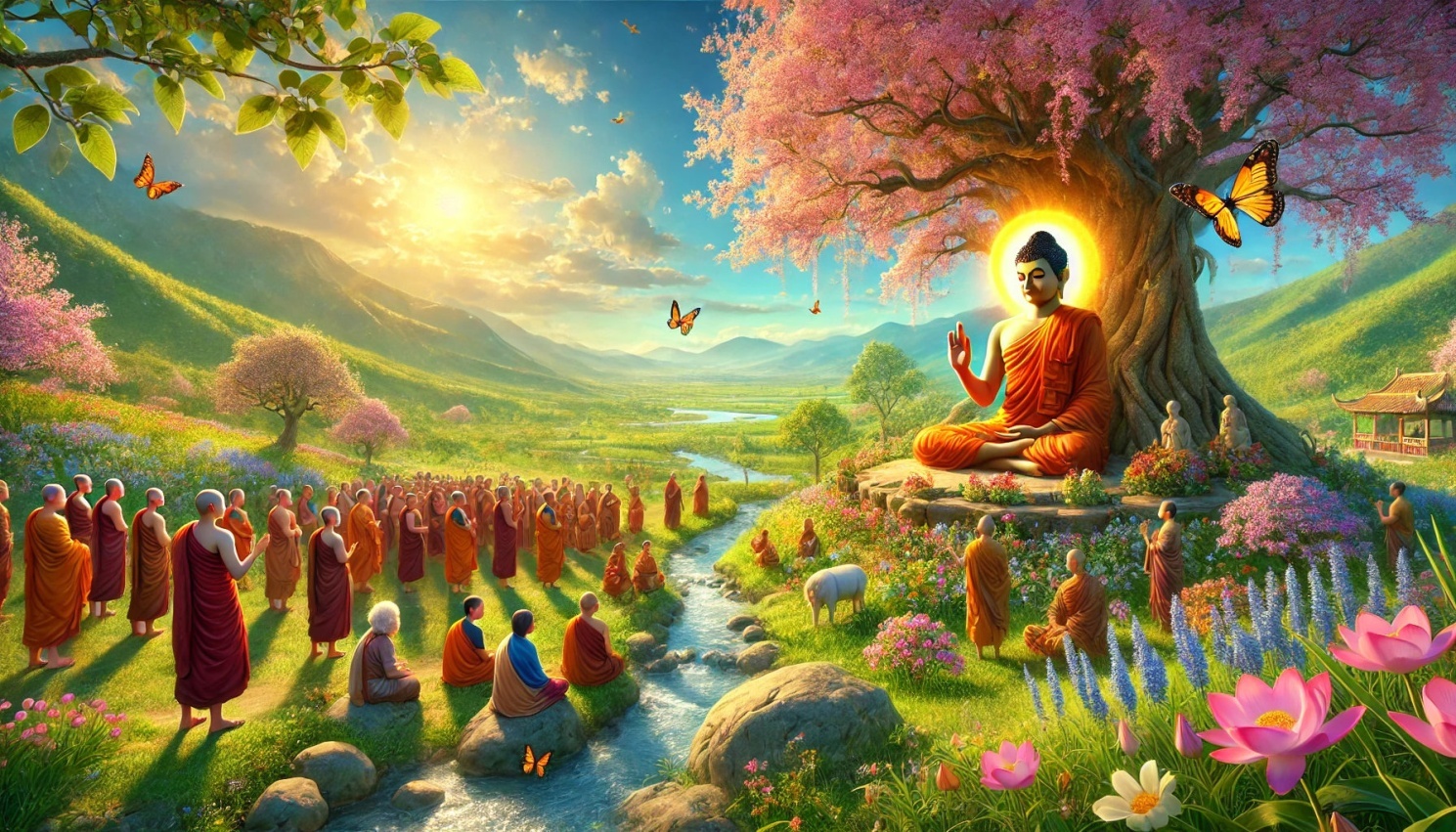
佛陀成道之后,并未沉浸于个人解脱的宁静中,也没有选择独自隐居于山林之中,而是毅然走入世间,开启长达四十九年的弘法生涯。这并不是因为他有所“义务”必须教导他人,而是出于一种深切的悲愿与智慧——他彻底觉知了生命的真相,也清晰看见众生在无明中的轮回苦海,因此生起了大悲心,希望众生同得解脱之道。这份愿力,使佛陀超越了自我得失、时间疲惫,四处奔走、不辞辛劳,昼夜不断地教化众生,直到生命的最后一刻。
佛陀曾在成道后沉思:“我所证悟的法深妙寂静,非语言所能表达,众生烦恼深重,难以理解。若我说法,恐无一人能解;若我不说,世间将永无此道。”正是在这思维之中,梵天现身恳请佛陀转法轮,指出虽然众生多被无明覆蔽,但亦有“少尘少垢者”,能闻法而觉醒。佛陀因而决定弘法利生,不为世人所求,不图名利回报,只为众生早日出离苦海,得证涅槃。
四十九年中,佛陀的足迹遍布恒河流域。他不住寺庙宫殿,而在林间精舍、路旁树下、村庄城镇之间弘讲正法。他面对的不是理想化的弟子,而是形形色色的人群:王公贵族、刽子手、妓女、外道、农夫、儿童,甚至凶暴的强盗与病苦的乞丐。佛陀平等接引,不分贵贱、不论出身,用契理契机的方式说法,或讲经、或对答、或以譬喻、或以沉默,因人施教、因时而变。
佛陀说法四十九年,是因为众生根机各异,障碍不同,需要不同层次、不同风格的开示。对慧根深利者,他直说空性、中道、无我之法;对情执深重者,他讲因果、轮回、福报;对初学之人,他教戒律、五戒十善;对在家众,他教居士法、布施修福、善护家庭。正因为佛陀的说法非一律而施、非僵化而定,而是活活泼泼、灵活应机,所以能真正引导不同众生走上正道。
此外,佛陀说法四十九年,也是他践行“以身教为本”的过程。他不仅是说法者,更是实践者。他严持戒律,过午不食、三衣一钵,日行托钵乞食,从不以自己为特殊者。他对弟子的过失耐心指正,对外道的攻击温和应对,对世俗的苦难不舍不离。他以自己的身心为法的载体,让弟子与世人见法于人,不只听闻而已。这种言教与身教合一,使佛法成为活生生的真实道,不是空谈理论,也不是神秘信仰。
佛陀说法四十九年,并非因他有所执著,而是因他彻底放下自我,真正活出了“无我”的大悲。他没有建寺称王,也未立教称祖;他传法不为统治,不求繁荣,只为一件事:众生离苦得乐。他知众生无边烦恼,如草芥般在生死中翻腾,而他所证之法,恰能止息其苦、拔除其根。正是这种不舍众生的愿心,使他愿意一次又一次开示同一个问题,面对一次又一次的误解、拒绝与挑战,而不退初心。
佛陀入灭前对弟子说:“我所说法,皆为度脱,譬如筏喻,法尚应舍,何况非法。”他说法四十九年,最终也教导弟子超越文字语言、超越执著形式,回归内心的觉知与实修。这四十九年,并非历史的漫长,而是智慧与慈悲最极致的绽放,是一位觉者为人类留下一条清晰、可行、真实的解脱之路。
Date: 04/20/2024 04/21/2024
Location: Star River Meditation Center
Teacher: Yunquan Huang
Dharma Knowledge
Why the Buddha Taught for Forty-Nine Years
After attaining enlightenment beneath the Bodhi Tree, the Buddha did not remain in the serenity of personal liberation, nor did he retreat into silence or isolation. Instead, he made a courageous and compassionate decision to re-enter the world and share what he had realized. For forty-nine years, he traveled tirelessly across the plains of northern India, teaching the Dharma to people from all walks of life. This was not out of obligation or desire for recognition, but from a profound compassion and clarity—seeing the depth of suffering in the world, and knowing that the path to freedom could be taught and practiced.
At first, the Buddha hesitated. In the immediate aftermath of his awakening, he reflected: “This Dharma that I have realized is deep, peaceful, beyond reasoning, subtle, and not accessible by mere intellect. Beings are bound by craving and ignorance; they may not understand it.” But then, according to the tradition, the great god Brahmā appeared and implored the Buddha to teach, assuring him that among the many confused beings, there were also those with “little dust in their eyes”—capable of seeing the truth. Moved by compassion, the Buddha agreed to set the Dharma Wheel in motion.
Thus began his forty-nine-year mission of teaching. He walked from village to city, from forest to palace, without establishing a temple or central authority. He taught under trees, in marketplaces, in cremation grounds, in monasteries and homes. He did not discriminate—he taught kings and beggars, Brahmins and outcasts, householders and renunciants, murderers and monks, with equal regard and presence. His speech was clear, compassionate, and adaptive. He used direct instruction, skillful parables, silence, or even a single flower to express the inexpressible.
Why did the Buddha teach for so long? Because he saw that beings have different capacities, different obstacles, and different karmic backgrounds. Some could grasp profound truths about emptiness and non-self; others needed to begin with ethical conduct, cause and effect, or simple teachings about generosity, kindness, and mindful living. The Buddha’s genius lay not in rigid dogma, but in responsive wisdom—he taught not one fixed doctrine, but the medicine appropriate to the illness before him.
Throughout his forty-nine years of teaching, the Buddha never claimed divine authority. He did not present himself as a savior, but as a guide who pointed to the path. He constantly encouraged personal investigation and direct experience: “Do not believe something simply because I have said it. Test it for yourself.” He invited doubt, inquiry, and reflection—not blind faith. He urged disciples to take refuge not in him as a person, but in the Dharma, the truth itself, and in their own capacity for wisdom.
He lived by example. He followed the very discipline he taught. He ate only one meal a day, wore simple robes, and went on alms rounds. He offered his body and mind as living testimony to the path he taught. He corrected his disciples with patience, responded to criticism without anger, and comforted the suffering without condescension. His life was not separate from his teaching; it was the teaching.
The Buddha continued teaching until the age of eighty. Even in his final days, weak and ill, he offered guidance to monks and lay followers. His last words were: “All conditioned things are impermanent. Strive with diligence.” These words encapsulate his entire forty-nine-year teaching career: a reminder that nothing lasts, and that freedom comes through effort, awareness, and inner clarity.
The Buddha taught for forty-nine years not because he needed to, but because he saw clearly that beings suffer, and that suffering can be ended. His teaching was not meant to create an institution, a following, or a religion, but to awaken. He was not interested in building empires or dogmas, but in planting seeds of wisdom in the minds of those ready to see. Each of his teachings, whether to a king or a beggar, was an expression of love without attachment, clarity without pride, and compassion without exhaustion.
Those forty-nine years are more than history. They are the radiant unfolding of a mind that had seen the truth and refused to keep it to itself. The Buddha taught because he cared. He taught because he knew the path. He taught because he saw, in each and every being, the same potential for awakening that he had realized. And through his words, actions, and silence, that invitation still echoes today.