时间:03/30/2024 03/31/2024
地点:星河禅修中心
主讲:黄云全
佛法知识
佛陀成道的经过
佛陀的成道,是一段由求索、实践、反省与觉悟层层递进而成的生命历程,并非神秘的偶然降临,而是在人类经验范围内,通过真实而彻底的修行所完成的觉醒。成道,意为“觉悟真理”,是对生命与宇宙运行法则的如实洞见。佛陀成道的过程,正是人类从无明走向觉照的典范。
出家之后,悉达多太子广泛参访当时著名的修行者与导师,系统学习禅定与苦行法门。他很快在禅定层面达到极高成就,却发现仅靠深定并不能断除烦恼的根本;随后又投入极端苦行,长期断食、忍受身心折磨,身体消瘦到触摸脊骨的程度。然而,严苛的苦行同样未能带来究竟的解脱。正是在濒临崩溃的体验中,他生起了重要的觉察:放纵与苦行,皆是两种极端,皆不能通向觉悟。
基于这一反省,他放下苦行,接受乳糜恢复体力,提出后来被称为“中道”的修行原则——不沉溺于欲乐,也不自我折磨,以清明、稳健、持久的方式修行。这一转折,标志着他从外在方法的追逐,转向对内心实相的深度观照。
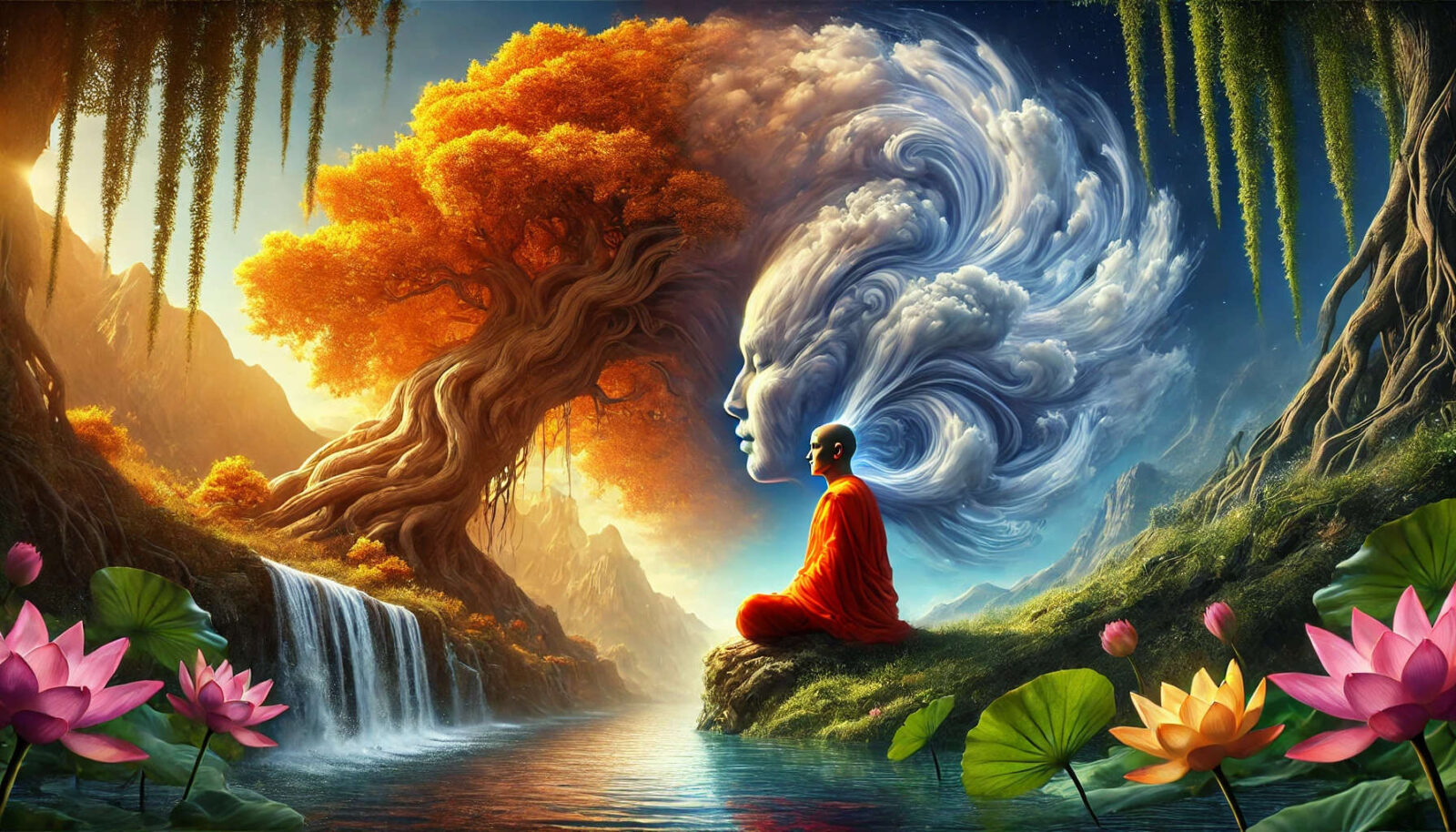
在尼连禅河畔的菩提树下,悉达多太子结跏趺坐,立下誓愿:若不证得究竟觉悟,誓不起此座。进入深定之后,他依次证入清净而稳定的禅定层次,心逐渐远离散乱、恐惧与执著。随后,在彻底清醒的觉知中,他回观自身生命的流转,照见无量世以来的生死因缘,体悟一切众生在轮回中相续不息的苦。
在夜半时分,他以明彻的智慧洞见业与因果的法则,看见众生依其行为与心念,感得各异的生命境遇,没有外力主宰,唯有因缘自作自受。至黎明前的最后一刻,他彻底证悟缘起法:一切现象皆因缘和合而生,无常、无我;无明缘行,行缘识,辗转相生,构成生死之流;而当无明止息,行亦随之止息,苦的根源便被彻底截断。
随着无明的破除,贪、嗔、痴尽数熄灭,心获得前所未有的清凉与自在。在晨星初现之时,悉达多太子圆满觉悟,成就无上正等正觉,成为世人所尊称的释迦牟尼。此一觉悟,并非获得某种超凡身份,而是彻底认识了生命的实相,超越了生死轮回的束缚。
佛陀成道之后,并未沉浸于个人解脱的寂静之中,而是生起大悲之心,思惟众生亦能觉悟,只因无明深重而未能自见真理。于是,他选择走入世间,将自己所证悟的中道、四圣谛、八正道等法门,化为清晰可行的教导,使他人亦能循此路径止苦得乐。
因此,佛陀的成道,不是一瞬间的奇迹,而是一条可被理解、学习与验证的觉醒之路。它向世人昭示:觉悟并非遥不可及,只要以正见为导引,以实践为根本,以觉照为核心,任何人皆有可能走出无明,证得内在的清明与自由。
Date: 03/30/2024 03/31/2024
Location: Star River Meditation Center
Teacher: Yunquan Huang
Dharma Knowledge
The Buddha’s Path to Enlightenment
The Buddha’s enlightenment was not a sudden mystical event, nor a divine bestowal from beyond human experience. It was the culmination of a long and rigorous journey of inquiry, practice, reflection, and direct insight. To attain enlightenment means to awaken to reality as it truly is, and the Buddha’s path to awakening stands as a complete and human example of that possibility.
After renouncing his princely life, Siddhartha diligently sought guidance from renowned teachers of his time, mastering profound states of meditative concentration with remarkable speed. Yet he soon realized that even the most refined absorption could not uproot ignorance and craving at their source. Turning next to extreme asceticism, he subjected himself to prolonged fasting and severe bodily hardship, reducing his body to near collapse. Despite these heroic efforts, liberation remained elusive. From this experience arose a decisive insight: neither indulgence in pleasure nor self-mortification could lead to true awakening.
With this realization, Siddhartha abandoned extreme practices and accepted nourishment, thereby restoring his strength. He articulated the principle later known as the Middle Way—a balanced path that avoids both sensual excess and self-denial. This marked a profound shift from external techniques to an inward investigation of the mind itself.
Seating himself beneath the Bodhi tree by the Nerañjarā River, Siddhartha made a resolute vow not to rise until he had realized ultimate truth. Entering deep meditative absorption, his mind became steady, luminous, and free from disturbance. With this clarity, he directed his awareness toward the nature of existence. He recalled innumerable past lives, seeing the continuity of birth and death and the pervasive suffering experienced by beings caught in cyclic existence.
In the middle of the night, he perceived with great clarity the law of karma, observing how actions rooted in intention shape the destinies of beings, without the intervention of any external creator. In the final hours before dawn, he penetrated the truth of dependent origination: all phenomena arise through causes and conditions; ignorance conditions volitional action, which in turn sustains the cycle of suffering. When ignorance is extinguished, the entire chain collapses, and suffering comes to an end.
With the complete eradication of ignorance, greed, hatred, and delusion were fully extinguished. The mind entered a state of unparalleled peace, freedom, and clarity. As the morning star appeared in the sky, Siddhartha attained complete enlightenment and became the Buddha, the Fully Awakened One. This awakening did not grant him supernatural status, but freed him entirely from the bondage of birth and death through perfect understanding of reality.
Following his enlightenment, the Buddha did not remain in solitary bliss. Moved by compassion, he reflected that other beings possessed the same capacity for awakening, though obscured by ignorance. Out of this insight arose his resolve to teach. He articulated the Middle Way, the Four Noble Truths, and the Noble Eightfold Path as practical guidance, enabling others to verify the truth for themselves and gradually bring suffering to an end.
Thus, the Buddha’s enlightenment was not an unattainable miracle, but a realizable path grounded in human effort, ethical clarity, meditative discipline, and wisdom. It stands as an enduring testament that liberation is possible—not through belief alone, but through insight born of sincere practice.